
Choosing a princess name is about more than finding something pretty. It is about discovering a name that feels graceful, carries a beautiful story, and captures the kind of magic you want it to hold.
Some princess names feel timeless and regal, like Victoria and Eleanor. Others are soft and dreamy, like Aurora and Arabella. Then there are mysterious, fantasy-inspired choices like Isolde and Seraphina, which feel as though they belong in an enchanted castle or a beloved fairytale.
Whether you are naming a baby girl, creating a fictional princess, choosing a character for a game, or looking for a royal-inspired username, the right name should feel special without losing its charm in everyday life.
This guide brings together beautiful princess names from different cultures, royal histories, mythology, literature, and modern fantasy. You will discover their meanings, origins, pronunciations, personalities, aesthetic appeal, and practical naming details to help you find a favorite.
What Makes a Name Feel Like a Princess Name?
A princess name does not have to belong to an actual royal family. It can feel royal through its history, sound, literary associations, or the emotions it evokes.
- Classic royalty: Eleanor, Victoria, Alexandra, and Catherine feel established and dignified.
- Fairytale romance: Aurora, Arabella, Anastasia, and Rosalie feel graceful and enchanting.
- Celestial beauty: Luna, Stella, Celeste, and Aurora evoke the moon, stars, or sky.
- Dark elegance: Isolde, Morgana, and Raven offer a mysterious, gothic atmosphere.
- Modern luxury: Alessia, Sienna, Amara, and Arabella feel polished and contemporary.
The important distinction is that a name’s documented meaning or historical background is not the same as its aesthetic impression. A name can feel magical without literally meaning magic, and a name can sound royal without having a royal origin.
Princess Names at a Glance

If you want to narrow your search quickly, start with the style that best matches your vision.
| Princess name | Meaning or association | Origin | Overall vibe |
| Aurora | Dawn | Latin | Dreamy, celestial |
| Amira | Princess, female ruler | Arabic | Regal, confident |
| Sarah | Princess, noblewoman | Hebrew | Timeless, graceful |
| Charlotte | Feminine form related to Charles | French | Classic, sophisticated |
| Eleanor | Traditional meaning uncertain; long royal history | Old French/Occitan tradition | Intellectual, elegant |
| Arabella | Etymology debated | Medieval European usage | Romantic, luxurious |
| Anastasia | Resurrection | Greek | Grand, mysterious |
| Leilani | Commonly interpreted as heavenly flowers | Hawaiian | Tropical, delicate |
| Victoria | Victory | Latin | Powerful, dignified |
| Luna | Moon | Latin | Minimalist, celestial |
| Seraphina | Related to the seraphim | Hebrew origin through Latin forms | Ethereal, ornate |
| Isolde | Medieval literary name; meaning disputed | Celtic and medieval European traditions | Gothic, romantic |
Meanings and origins are based on established name references, while the vibe descriptions are editorial interpretations. Royal and princess-themed name collections also distinguish between names borne by real royals, fictional princesses, and names whose literal meanings relate to royalty. Behind the Name and Nameberry are useful starting points for further research.
Beautiful Princess Names With Meanings
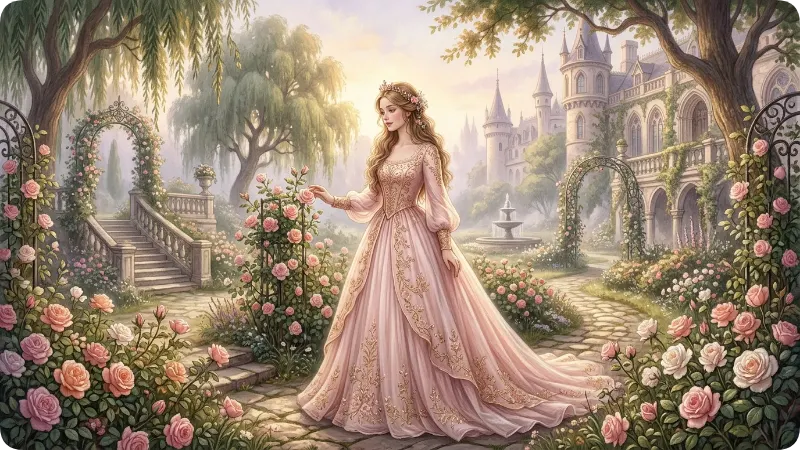
These names combine memorable sounds, meaningful histories, and the kind of elegance that works in a fairytale while remaining wearable in everyday life.
1. Aurora
Aurora
uh-ROAR-uh · Latin
Aurora means “dawn.” In Roman mythology, Aurora is the goddess of dawn, and the name is also associated with Disney’s Sleeping Beauty.
Its personality feels hopeful, luminous, and romantic. It suits parents who love celestial imagery, pastel aesthetics, and names with a little grandeur.
- Gender: Feminine
- Nicknames: Rory, Aura, Rora
- Aesthetic: Celestial, fairytale, romantic
- Social impression: Elegant, imaginative, memorable
- Modern vs. classic: Ancient roots with contemporary appeal
- Similar names: Aurelia, Luna, Stella, Arabella
- Sibling pairings: Aurora and Leo; Aurora and Theodore
- Cultural note: The Roman mythological connection is documented; its dreamy personality is an aesthetic interpretation.
2. Amira
Amira
uh-MEER-uh · Arabic and Hebrew usage
Amira can mean “princess” in Arabic and is the feminine form of Amir. It is also used in Hebrew, where it has a different linguistic background and interpretation.
Amira feels self-assured rather than overly delicate. It offers a direct royal association while remaining simple to spell and say in many languages.
- Gender: Feminine in this context
- Nicknames: Ami, Mira, Mimi
- Aesthetic: Modern royal, refined, minimalist
- Social impression: Warm, poised, confident
- Modern vs. classic: Traditional roots with a contemporary sound
- Similar names: Amirah, Samira, Amina, Zara
- Sibling pairings: Amira and Zayn; Amira and Layla
- Cultural note: Particularly meaningful for families familiar with Arabic naming traditions. Choose the spelling and pronunciation that fit your family’s language and heritage.
3. Victoria
Victoria
vik-TOR-ee-uh · Latin
Victoria means “victory.” It is also the name of the Roman goddess of victory and has a strong association with European royal history, particularly Queen Victoria of Britain.
This is a name for someone who loves strength wrapped in elegance. It sounds formal on paper but has approachable nickname options.
- Gender: Feminine
- Nicknames: Vicky, Tori, Via, Vita
- Aesthetic: Classic royal, polished, stately
- Social impression: Capable, composed, ambitious
- Modern vs. classic: A firmly established classic
- Similar names: Veronica, Valentina, Alexandra, Catherine
- Sibling pairings: Victoria and Arthur; Victoria and Elizabeth
- Cultural note: Its Latin meaning and historical royal connections are established, rather than symbolic interpretations created for naming purposes.
4. Arabella
Arabella
air-uh-BEL-uh · European usage
Arabella has an elegant, elaborate sound with a romantic literary atmosphere. Its exact etymology is debated, so it is better appreciated for its established usage and style than assigned a definitive literal meaning.
The name feels like handwritten letters, rose gardens, heirloom jewelry, and a princess in a historical romance.
- Gender: Feminine
- Nicknames: Bella, Ari, Belle, Ella
- Aesthetic: Vintage luxury, romantic, feminine
- Social impression: Graceful, expressive, sophisticated
- Modern vs. classic: Vintage in character, fresh in sound
- Similar names: Annabella, Isabella, Rosabella, Aurelia
- Sibling pairings: Arabella and Julian; Arabella and Sebastian
- Cultural note: Its romantic aura is an aesthetic association, not a verified literal meaning.
5. Eleanor
Eleanor
EL-uh-nor · Medieval European usage
Eleanor has been borne by influential queens and noblewomen, including Eleanor of Aquitaine. Its precise etymology remains uncertain.
Rather than relying on a delicate or decorative sound, Eleanor feels intelligent, grounded, and quietly commanding. It is ideal for parents who prefer understated royalty.
- Gender: Feminine
- Nicknames: Ellie, Nell, Nora, Nellie
- Aesthetic: Literary, vintage, understated luxury
- Social impression: Thoughtful, capable, dignified
- Modern vs. classic: Historic and enduring
- Similar names: Elinor, Helena, Adelaide, Beatrice
- Sibling pairings: Eleanor and Henry; Eleanor and Clara
- Cultural note: Its medieval royal associations are documented; its personality profile is subjective.
6. Anastasia
Anastasia
an-uh-STAY-zhuh · Greek
Anastasia means “resurrection.” It has a long history in Eastern Christian naming traditions and is associated with Russian imperial history and modern animated storytelling.
Its many syllables create a grand, dramatic sound. This is an excellent choice for someone who loves elaborate gowns, winter palaces, and stories of courage.
- Gender: Feminine
- Nicknames: Ana, Anya, Stasia, Nastya
- Aesthetic: Imperial, dramatic, vintage
- Social impression: Artistic, elegant, memorable
- Modern vs. classic: Historic with a cinematic feel
- Similar names: Alexandra, Natalia, Tatiana, Valentina
- Sibling pairings: Anastasia and Nikolai; Anastasia and Elena
- Cultural note: The name’s Greek etymology is distinct from its later Russian historical associations.
7. Seraphina
Seraphina
ser-uh-FEE-nuh · Hebrew roots through Latin
Seraphina is related to the seraphim, celestial beings described in biblical tradition. The name feels elaborate, luminous, and otherworldly.
It is especially appealing for parents who want something more unusual than Sarah or Sophia without choosing a completely invented name.
- Gender: Feminine
- Nicknames: Sera, Fina, Phina, Effie
- Aesthetic: Celestial, fantasy, romantic luxury
- Social impression: Artistic, distinctive, graceful
- Modern vs. classic: Historical roots with a fantasy-friendly sound
- Similar names: Serafina, Evangeline, Aurelia, Celestia
- Sibling pairings: Seraphina and Gabriel; Seraphina and Theodore
- Cultural note: The celestial connection comes from the name’s relationship to seraphim; other personality associations are interpretive.
8. Charlotte
Charlotte
SHAR-luht · French
Charlotte is the feminine form of Charles and is traditionally associated with the meaning “free man” through its masculine root.
The name feels balanced: formal enough for a royal portrait, familiar enough for a child, and flexible enough for an adult.
- Gender: Feminine
- Nicknames: Charlie, Lottie, Char, Lola
- Aesthetic: Classic royal, polished, versatile
- Social impression: Friendly, assured, sophisticated
- Modern vs. classic: A long-established classic
- Similar names: Caroline, Catherine, Louise, Eleanor
- Sibling pairings: Charlotte and James; Charlotte and Alice
- Cultural note: The name has been borne by European royals, including Princess Charlotte of Wales.
9. Leilani
Leilani
lay-LAH-nee · Hawaiian
Leilani combines Hawaiian elements associated with flowers or a flower garland and the heavens or sky. It is often interpreted as “heavenly flowers.”
Unlike the formal European princess style, Leilani feels sunlit, flowing, and connected to nature.
- Gender: Feminine in common modern usage; Hawaiian names can be used across genders
- Nicknames: Lei, Lani, Leila
- Aesthetic: Tropical, floral, soft
- Social impression: Warm, expressive, graceful
- Modern vs. classic: A culturally rooted name with a lyrical contemporary sound
- Similar names: Kailani, Noelani, Kalani, Alani
- Sibling pairings: Leilani and Kai; Leilani and Malia
- Cultural note: Hawaiian language and cultural context deserve respect; the name is more than a decorative island aesthetic.
10. Luna
Luna
LOO-nuh · Latin
Luna means “moon” in Latin and is the name of the Roman moon goddess.
Its short, clear sound makes it feel modern, mysterious, and effortlessly memorable. It suits parents who prefer celestial symbolism over elaborate royal styling.
- Gender: Feminine in common contemporary use
- Nicknames: Lu, Lulu
- Aesthetic: Celestial, minimalist, dreamy
- Social impression: Creative, gentle, independent
- Modern vs. classic: Ancient word with a modern naming feel
- Similar names: Stella, Celeste, Selene, Nova
- Sibling pairings: Luna and Orion; Luna and Iris
- Cultural note: Luna is a Latin word and Roman mythological name, not simply a modern fantasy invention.
More Princess Names to Explore
If one of the ten featured names feels close but not quite right, these additional choices offer different shades of royal character.
| Name | Meaning or established association | Origin or tradition | Best suited to |
| Alexandra | Defender of humankind | Greek | Strong, traditional royalty |
| Beatrice | She who brings happiness; blessed | Latin tradition | Vintage elegance |
| Catherine | Traditionally associated with purity, though the exact origin is debated | Greek/European tradition | Classic sophistication |
| Diana | Roman goddess of the hunt and moon | Latin/Roman | Grace and independence |
| Elizabeth | Traditionally interpreted as “my God is an oath” | Hebrew | Historic royalty |
| Isabella | Form of Elizabeth | Spanish, Italian | Romantic elegance |
| Josephine | Feminine form of Joseph | French | Regal vintage charm |
| Matilda | Strength in battle | Germanic | Brave, storybook royalty |
| Natalia | Born on or associated with Christmas | Latin tradition | Soft, refined beauty |
| Ophelia | Literary name made famous by Shakespeare | Greek-derived literary tradition | Dramatic romance |
| Rosalie | Rose-related name | French | Floral, vintage charm |
| Sophia | Wisdom | Greek | Intelligent, timeless grace |
| Stella | Star | Latin | Celestial simplicity |
| Tatiana | Traditional Roman name with a long history in Eastern Europe | Latin/Russian usage | Imperial elegance |
| Zara | Multiple possible origins and interpretations | Arabic, Hebrew, and other naming traditions | Modern, polished style |
Meaning notes can vary by historical language, spelling, and naming tradition. When a name has several possible origins, avoid treating one popular internet meaning as definitive.
Elegant Princess Names for a Timeless Royal Feel

Elegant princess names tend to have balanced sounds, graceful endings, and a history that gives them staying power. They are ideal for parents who want a name that feels special at birth and sophisticated in adulthood.
| Name | Meaning or association | Style | Nickname ideas |
| Adelaide | Noble, of noble kind | Vintage royal | Addie, Adele |
| Alexandra | Defender of humankind | Powerful classic | Alex, Lexi |
| Anastasia | Resurrection | Imperial | Anya, Stasia |
| Beatrice | Bringer of happiness, traditionally interpreted | Literary classic | Bea, Trixie |
| Cordelia | Literary and historically debated etymology | Romantic | Cora, Delia |
| Genevieve | Traditional French name of uncertain deeper etymology | French elegance | Gen, Vivi |
| Josephine | Feminine form of Joseph | Refined vintage | Josie, Jo |
| Louisa | Feminine form of Louis | Understated royal | Lou, Lulu |
| Philippa | Feminine form of Philip | Aristocratic | Pippa, Pip |
| Vivienne | French form related to Vivian, associated with life | Chic and polished | Vivi, Viv |
Best picks by personality: Choose Alexandra for strength, Adelaide for vintage charm, Josephine for warmth, and Vivienne for sleek sophistication.
A practical tip: try the full name with your surname before falling in love with its appearance. A name that looks beautiful in a list should also sound natural when spoken aloud.
Cute and Sweet Princess Names
Not every princess name needs to sound grand. Some of the most charming choices feel gentle, playful, and affectionate, with nicknames that grow naturally from childhood into adulthood.
| Name | Meaning or association | Cute nickname | Overall feel |
| Alice | Noble, of noble kind | Allie | Sweet and literary |
| Annie | Diminutive of Anne | Ann, Annie | Friendly and classic |
| Bella | Beautiful in Italian; also a short form of longer names | Belle | Romantic and simple |
| Daisy | Flower name | Daze | Cheerful and fresh |
| Ella | A short form of several names | Ellie | Light and versatile |
| Elsie | Diminutive of Elizabeth | Elle | Vintage sweetness |
| Lily | Flower name | Lil | Delicate and timeless |
| Maisie | Scottish diminutive of Margaret | Mae | Playful and warm |
| Rosie | Rose-related name or nickname | Rose | Floral and affectionate |
| Sophie | French form of Sophia | Soph | Soft and familiar |
These names suit parents who love the gentle side of princess culture: flower crowns, illustrated storybooks, pastel bedrooms, and the idea that elegance can be simple.
One useful naming test is to imagine three versions of the name: a child introducing herself at school, a teenager using it online, and an adult signing a professional email. The strongest choice often feels comfortable in all three settings.
Unique and Rare Princess Names
If you want something less expected than Charlotte or Aurora, consider names with literary roots, medieval associations, or distinctive sounds.
| Name | Meaning or background | Aesthetic | Why it stands out |
| Arianwen | Welsh name commonly interpreted as “silver” or “holy silver” | Mythic, lyrical | Strong Welsh character |
| Eulalia | Greek-derived name associated with “well-spoken” | Antique, ornate | Rare-feeling rhythm |
| Isolde | Famous through medieval romance traditions | Gothic, romantic | Dramatic literary history |
| Leonore | A form related to Eleanor | European royal | Refined and less familiar to some audiences |
| Melisande | Medieval French literary name | Enchanted, vintage | Delicate, storybook sound |
| Ottilie | German diminutive related to names built on the od element | Vintage, whimsical | Distinctive European charm |
| Rhiannon | Welsh mythological and literary name | Mystical, powerful | Deep cultural and literary associations |
| Theodora | Feminine form of Theodore, meaning “gift of God” | Imperial, scholarly | Formal with friendly nicknames |
| Xanthe | Greek name associated with “yellow” or “golden” | Artistic, striking | Short but unusual |
| Zephyra | Feminine form associated with Zephyr, the west wind | Airy, fantasy-inspired | A rare-feeling nature connection |
A note on rarity: A name’s popularity depends on country, language, and year. These are distinctive style suggestions, not a verified ranking of the rarest names worldwide. If rarity matters, check your country’s official birth-name statistics before deciding.
How to Choose a Rare Name Without Making It Difficult
- Look for a pronunciation you can explain in one sentence.
- Check whether the spelling changes substantially across languages.
- Consider whether the name has a recognized shorter form.
- Research its cultural background instead of relying on fantasy aesthetics alone.
- Say it aloud with your surname to catch awkward sound combinations.
A rare name should feel distinctive because it suits the person, not simply because other people have never heard it.
Dark, Gothic, and Mysterious Princess Names
Dark princess names have a different kind of beauty. They evoke moonlit towers, ancient legends, velvet gowns, stormy skies, and characters whose strength is hidden beneath a composed exterior.
| Name | Real background | Dark aesthetic interpretation |
| Belladonna | Italian word meaning “beautiful woman”; also the name of a poisonous plant | Beautiful but dangerous |
| Lenore | Literary name associated with Edgar Allan Poe’s poetry | Melancholy, haunting |
| Lilith | Figure in Jewish folklore and later literary traditions, with varied interpretations | Independent, mysterious |
| Morgana | Form associated with Morgan and Arthurian legend | Enchanted, powerful |
| Ophelia | Best known through Shakespeare’s Hamlet | Poetic, tragic, ethereal |
| Raven | English word for the black bird | Gothic, intelligent, dramatic |
| Rowena | Medieval literary name, notably associated with Walter Scott’s Ivanhoe | Regal, old-world |
| Selene | Greek goddess associated with the moon | Lunar, serene |
| Vesper | Latin word associated with evening | Minimalist, nocturnal |
| Winter | English season name | Cool, quiet, cinematic |
The distinction between a name’s origin and its dark aesthetic is especially important here. For example, Selene has a direct mythological connection to the moon, while Raven’s gothic character comes primarily from the bird’s appearance and its literary associations.
Best choices: Selene for celestial mystery, Lenore for literary melancholy, Morgana for legendary magic, and Vesper for understated darkness.
Fantasy and Fairytale Princess Names
Fantasy-inspired princess names work especially well for novel characters, role-playing games, animation, and people who want a name with an unmistakably magical atmosphere.
| Name | Inspiration or background | Character vibe |
| Arwen | Tolkien’s The Lord of the Rings | Noble, ethereal |
| Ariel | Hebrew-origin name and Disney princess association | Curious, adventurous |
| Aurora | Roman dawn goddess and Sleeping Beauty | Dreamy, hopeful |
| Eowyn | Tolkien’s The Lord of the Rings | Brave, independent |
| Elowen | Cornish name meaning “elm tree” | Woodland, gentle |
| Guinevere | Arthurian legend | Romantic, regal |
| Kida | Disney’s Atlantis: The Lost Empire | Adventurous, futuristic |
| Leia | Star Wars | Courageous, determined |
| Merida | Disney and Pixar’s Brave | Independent, spirited |
| Zelda | Traditional Germanic-origin name and video game association | Adventurous, iconic |
Choosing Between a Recognizable and an Original Fantasy Name
A familiar fictional association gives a name instant atmosphere. Arwen may suggest an elven world to Tolkien fans, while Leia signals a recognizable science-fiction heroine to many audiences.
An original name gives you more creative freedom, but it also requires you to decide how it is spelled, pronounced, and understood.
For an original princess, consider combining a familiar first name with an unusual middle name, or pairing a fantasy-inspired name with a grounded surname. That balance often makes a fictional character feel believable.
Keep in mind that a name appearing in fantasy does not automatically have a fantasy-language origin. Arwen and Eowyn, for example, belong to Tolkien’s constructed linguistic world, while Aurora predates Disney by centuries.
Royal Princess Names From Different Cultures
Royal naming traditions are not limited to European fairytales. Many cultures have names associated with nobility, leadership, beauty, celestial imagery, or actual royal figures.
The best approach is to choose a name for its genuine linguistic or cultural significance rather than treating cultures as interchangeable aesthetic themes.
Arabic and Persian-Inspired Princess Names
| Name | Meaning or association | Style |
| Amira | Princess or female ruler in Arabic | Regal, confident |
| Amirah | Variant spelling of Amira | Soft, traditional |
| Darya | Persian name associated with the sea | Flowing, elegant |
| Farah | Arabic name meaning joy or happiness | Warm, graceful |
| Laleh | Persian name for a tulip | Floral, refined |
| Malika | Arabic name meaning queen | Strong, royal |
| Noor | Arabic word for light | Minimalist, luminous |
| Soraya | Persian form of a name associated with the Pleiades | Celestial, sophisticated |
| Yasmin | Persian-derived form of jasmine | Floral, classic |
| Zahra | Arabic name associated with brightness, radiance, or a flower | Bright, elegant |
Amira and Malika have especially direct royal associations. Noor and Farah are excellent alternatives if you prefer a name that communicates beauty or warmth without explicitly meaning princess.
Indian and South Asian Princess Names
| Name | Meaning or association | Linguistic or cultural background |
| Aditi | Vedic figure associated with the divine and the infinite | Sanskrit, Hindu tradition |
| Ananya | Unique or without another, depending on interpretation | Sanskrit |
| Devika | Often interpreted as “little goddess” | Sanskrit |
| Jahanara | Historical Mughal princess’s name; Persian-derived elements relate to the world and adornment or honor | Persian and Mughal history |
| Lakshmi | Hindu goddess associated with prosperity and good fortune | Sanskrit, Hindu tradition |
| Noor Jahan | “Light of the world” | Persian; historical Mughal empress |
| Padma | Lotus | Sanskrit |
| Rani | Queen in several South Asian language contexts | South Asian usage |
| Rajkumari | Princess or royal daughter in Hindi and related usage | Sanskrit-derived, South Asian usage |
| Zara | Multiple possible etymologies, including Arabic-related interpretations | Cross-cultural usage |
These names are not interchangeable. Lakshmi has a specific religious significance, while Noor Jahan carries a historical connection to the Mughal court. Rani is a title or title-derived name in South Asian contexts. Families should consider pronunciation, regional meaning, and religious relevance when choosing among them.
European Royal Princess Names
| Name | Notable association | Naming style |
| Alexandra | European queens and princesses | Formal and strong |
| Beatrice | European royal families | Vintage and warm |
| Charlotte | British and European royal traditions | Familiar and elegant |
| Diana | Princess Diana and Roman mythology | Graceful and iconic |
| Elizabeth | British monarchy and centuries of royal history | Timeless and dignified |
| Grace | Grace Kelly, actress and Princess of Monaco | Minimalist, glamorous |
| Ingrid | Scandinavian royal history | Understated and strong |
| Leonore | European royal usage | Refined and distinctive |
| Margot | French form related to Margaret | Chic and vintage |
| Victoria | British and European royal history | Powerful and classic |
Royal associations are not the same as name meanings. Diana, for instance, connects to a Roman goddess and a modern royal figure, while Grace is an ordinary virtue name made especially iconic by its bearer.
Princess Names Inspired by Disney and Popular Culture
Fictional princesses influence how people imagine names. A character can make a name feel adventurous, romantic, rebellious, or magical even when its original meaning has nothing to do with royalty.
| Name | Pop culture connection | Personality association |
| Anna | Disney’s Frozen | Optimistic, loyal |
| Ariel | Disney’s The Little Mermaid | Curious, adventurous |
| Aurora | Disney’s Sleeping Beauty | Dreamy, graceful |
| Belle | Disney’s Beauty and the Beast | Intelligent, compassionate |
| Elsa | Disney’s Frozen | Independent, composed |
| Jasmine | Disney’s Aladdin | Confident, spirited |
| Leia | Star Wars | Courageous, decisive |
| Mulan | Disney’s Mulan and Chinese legend | Brave, resourceful |
| Rapunzel | The European fairytale and Disney adaptation | Creative, hopeful |
| Tiana | Disney’s The Princess and the Frog | Ambitious, practical |
For an actual baby name, consider whether you love the name independently of its character. That helps it remain meaningful if a film becomes less fashionable or your child’s interests change.
For fictional characters, however, a recognizable association can be an advantage. It gives readers or players an immediate emotional starting point.
Modern Princess Names and Online Aesthetics
Today’s princess aesthetic can mean many things. For some, it is delicate pink ribbons and pearls. For others, it is dark academia, fantasy gaming, vintage glamour, or quiet luxury.
These categories are useful for discovering names, but they are aesthetic interpretations rather than official linguistic classifications.
| Online aesthetic | Names to explore | Why they fit |
| Coquette and romantic | Bella, Rosalie, Arabella, Juliet | Soft sounds and romantic associations |
| Quiet luxury | Alexandra, Victoria, Vivienne, Catherine | Polished, established names |
| Celestial | Luna, Stella, Celeste, Selene | Moon, stars, and sky associations |
| Dark academia | Lenore, Eleanor, Ophelia, Beatrice | Literary and vintage atmosphere |
| Cottagecore | Daisy, Flora, Elowen, Hazel | Flowers, plants, and woodland imagery |
| Royalcore | Adelaide, Anastasia, Elizabeth, Theodora | Historic and regal associations |
| Fantasy gaming | Arwen, Zelda, Rhiannon, Morgana | Recognizable fictional or legendary connections |
| Minimalist | Eve, Iris, Noor, Claire | Short, clear, elegant forms |
Are Princess Names Trending on TikTok and Pinterest?
Social media can make certain naming styles more visible, particularly celestial names, vintage revivals, romantic aesthetics, and fantasy-inspired choices. However, visual popularity does not necessarily mean a name is rising in official birth statistics.
If you discover a name through a Pinterest mood board or TikTok naming video, use that discovery as a starting point. Then check its meaning, cultural background, pronunciation, and popularity in the country where the name will be used.
This approach lets you enjoy online inspiration without confusing an aesthetic trend with a verified naming trend.
Princess Names With Nicknames and Sibling Pairings
A princess name becomes more practical when you can imagine how it will work in everyday family life. Nicknames, surname rhythm, and sibling compatibility often matter more than a name’s elaborate appearance on a list.
| Full name | Possible nicknames | Sister-name pairing | Brother-name pairing |
| Anastasia | Anya, Ana, Stasia | Anastasia and Elena | Anastasia and Nikolai |
| Arabella | Bella, Ari, Ella | Arabella and Rosalie | Arabella and Julian |
| Aurora | Rory, Aura | Aurora and Stella | Aurora and Leo |
| Charlotte | Charlie, Lottie | Charlotte and Alice | Charlotte and James |
| Eleanor | Ellie, Nora, Nell | Eleanor and Clara | Eleanor and Henry |
| Elizabeth | Ellie, Liz, Beth | Elizabeth and Victoria | Elizabeth and Alexander |
| Seraphina | Sera, Fina | Seraphina and Celeste | Seraphina and Gabriel |
| Victoria | Tori, Via, Vicky | Victoria and Alexandra | Victoria and Theodore |
These are style-based suggestions, not rules. Some families prefer sibling names that sound coordinated, while others deliberately choose names with different sounds and cultural histories.
A Simple Test for the Right Princess Name
Say your favorite name in three ways:
- “This is my daughter, ___.”
- “___, could you come here?”
- “Dr. ___” or “Professor ___.”
If the name feels natural across these situations, it is more likely to age well.
Also check the initials, potential teasing, spelling variations, and whether the most obvious nickname is one you genuinely like.
Lucky Numbers, Colors, Gemstones, and Zodiac Associations
Some baby-name websites include lucky numbers, lucky colors, gemstones, days, zodiac signs, and numerology interpretations. These details can be enjoyable for readers who appreciate symbolic naming traditions, but they are not universal facts about a person’s name.
The distinction matters: a documented linguistic meaning can be researched, while a lucky number or personality prediction depends on a particular belief system or modern naming convention.
| Attribute | How to interpret it responsibly |
| Lucky number | Numerology systems may assign numbers using different calculation methods. |
| Lucky color | Often based on symbolic traditions, personal associations, or modern name guides. |
| Lucky stone or gemstone | May reflect birthstone traditions, astrology, or symbolic interpretation rather than the name’s origin. |
| Lucky day | Depends on the tradition or astrological system being followed. |
| Zodiac association | Usually determined by a person’s birth date, not their name. |
| Numerology | A symbolic or spiritual practice, not a scientifically established personality test. |
| Personality vibe | A subjective impression based on sound, culture, history, and associations. |
| Trend status | Should be checked against current official birth-name statistics for the relevant country. |
For example, Aurora’s connection to dawn is linguistically and mythologically grounded. Calling it a “golden” or “sunrise” aesthetic is an interpretation. Assigning it a specific lucky gemstone is a separate symbolic choice.
If you enjoy numerology or astrology, you can include those attributes in a personal naming worksheet, but identify the tradition used and avoid presenting the results as guaranteed predictions.
A Name-by-Name Enrichment Framework
For the most useful princess-name research, prioritize these attributes:
- Verified core: Meaning, origin, language, gender usage, pronunciation, and documented cultural or religious associations.
- Practical fit: Nicknames, spelling, surname compatibility, sibling names, and familiarity.
- Emotional appeal: Elegant, soft, powerful, mysterious, vintage, celestial, or fantasy-inspired.
- Cultural and historical context: Real royal bearers, mythology, literature, and fictional associations.
- Optional symbolism: Lucky numbers, colors, gemstones, and numerology, clearly labeled as tradition-dependent.
This framework provides more value than attaching a long list of arbitrary attributes to every name. It also helps readers distinguish factual research from the imaginative side of choosing a name.
Frequently Asked Questions About Princess Names
What are the prettiest princess names for girls?
Aurora, Arabella, Anastasia, Amira, Seraphina, Charlotte, and Victoria are beautiful options for different styles. Aurora feels dreamy, Arabella feels romantic, Amira has a direct royal meaning in Arabic, and Victoria feels strong and dignified.
The prettiest choice depends on whether you prefer softness, elegance, cultural significance, or a more dramatic fairytale sound.
What names actually mean princess?
Several names have a direct or established association with princesshood. These include:
- Sarah: Hebrew name meaning “princess” or “noblewoman.”
- Amira: Arabic feminine form associated with a princess or female ruler.
- Amirah: An alternative spelling of Amira.
- Malika: Arabic name meaning “queen.”
- Nkosazana: Xhosa name meaning “princess.”
- Princess: A modern English word name.
These names differ in meaning and cultural context, so choose one that fits your intended language and heritage.
What are some rare princess names?
Consider Isolde, Melisande, Eulalia, Leonore, Ottilie, Rhiannon, and Theodora. These names offer distinctive literary, medieval, mythological, or European historical associations.
Rarity varies by location and year, so check official birth-name statistics if you want a name that is demonstrably uncommon.
What are the best royal names for a baby girl?
For a traditional royal feel, consider Elizabeth, Victoria, Alexandra, Charlotte, Eleanor, and Adelaide. For a softer modern style, try Amira, Zara, Luna, or Leilani.
If you want a name with documented royal history, research its actual bearers rather than relying on its sound alone.
What are some cute princess names with nicknames?
Aurora can become Rory, Charlotte can become Lottie, Anastasia can become Anya, Arabella can become Bella, and Seraphina can become Sera.
Choose a full name you love in its own right, then treat the nickname as an added benefit.
What are good princess names for a fictional character?
Arwen, Morgana, Guinevere, Isolde, Rhiannon, and Seraphina work well for fantasy and historical fiction. Leia, Mulan, Merida, and Zelda are recognizable pop culture associations.
For original characters, consider how the name reflects the character’s personality, culture, world, and role in the story.
Which princess names work well in different languages?
Names such as Amira, Sarah, Zara, Luna, and Victoria are used across multiple linguistic communities, although pronunciation and cultural associations can vary.
Before choosing a cross-cultural name, check its meaning and pronunciation in the languages that matter to your family. Familiar spelling does not guarantee identical meaning in every language.
Should I choose a name because it has a lucky number or gemstone?
You can if those traditions are personally meaningful. Just remember that lucky numbers, colors, gemstones, and numerology interpretations depend on specific symbolic systems. They do not establish a name’s historical meaning or reliably predict personality.
How do I choose between a classic princess name and a modern one?
Classic names such as Elizabeth, Eleanor, and Victoria have extensive historical associations. Modern-feeling choices such as Luna, Amira, and Zara can offer a shorter or more contemporary sound.
Write down your five favorites, say them aloud with your surname, and compare their meanings, pronunciation, nicknames, and cultural relevance before making your final choice.
Finding the Princess Name That Feels Right
The best princess name is not necessarily the longest, rarest, or most elaborate. It is the one that connects with the qualities you value most.
Maybe you love the hopeful symbolism of Aurora, the confident elegance of Amira, the historic strength of Victoria, or the quiet sophistication of Eleanor. Perhaps your perfect name is a distinctive literary choice like Isolde or a celestial favorite like Luna.
Give yourself time to compare the sound, meaning, history, and everyday practicality of your shortlist. Think beyond the fairytale image and imagine the name belonging to a real person with a personality and story of her own.
A name can feel royal without being extravagant, magical without being invented, and distinctive without being difficult to live with. When the meaning, sound, and emotional connection come together, you may have found your perfect princess name.

Emma helps authors, screenwriters, and gamers find the perfect names for their fictional characters. She analyzes historical trends and linguistic styles to craft names that carry deep meaning. When she isn’t writing, she loves plotting her next fantasy novel at a local café.