Featured Snippet
To search obituaries free by name, enter the person’s first and last name into a free obituary database, newspaper website, or search engine. Adding a location, approximate death date, or relative’s name can help narrow the results and identify the correct obituary.
Finding an obituary can help uncover important details about someone’s life, family, and passing. It can also provide information for family history research, genealogy projects, or personal remembrance. Fortunately, several online resources make it possible to search obituaries free by name without purchasing a subscription.
An obituary may include a person’s full name, birth and death dates, family members, education, career, achievements, and funeral arrangements. However, the information available depends on the publication and the family’s decision about what to share. Some records are freely accessible, while others appear behind newspaper or genealogy website paywalls.
This guide explains how obituary searches work, where to find free records, and how to use names and other details to narrow search results. It also covers older obituaries, privacy considerations, and practical ways to verify that a record belongs to the correct person.
At a Glance

| Topic | Quick Information |
|---|---|
| Main search method | Search using a person’s full name |
| Cost | Many obituary records are free |
| Useful details | Name, location, death year, relatives |
| Online sources | Newspaper archives, funeral homes, obituary databases |
| Older records | Libraries, historical newspapers, genealogy collections |
| Search accuracy | Improves with additional identifying details |
| Common information | Birth date, death date, family, life history |
| Main limitation | Not every death has an online obituary |
Where to Search Obituaries Free by Name
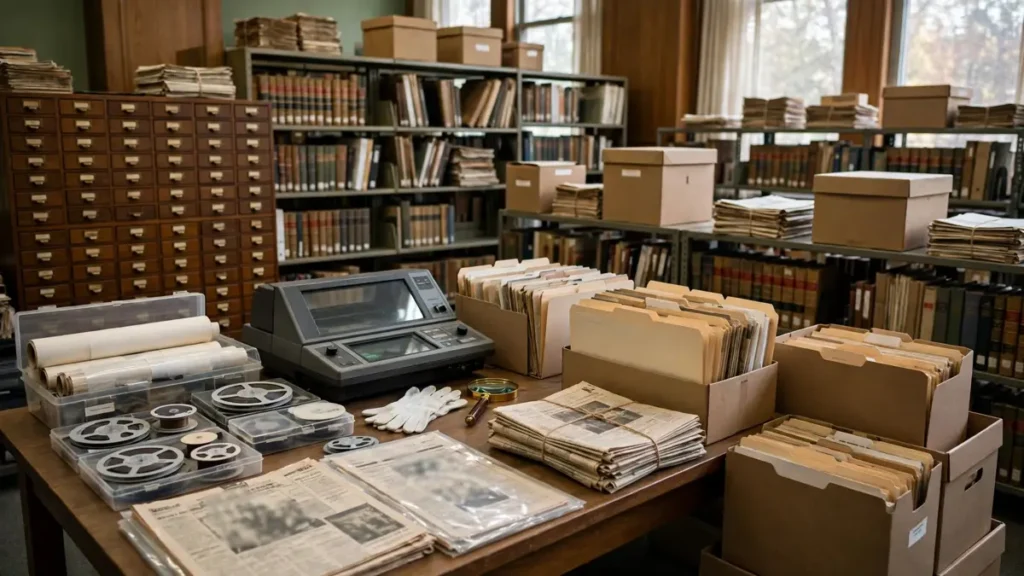
Several websites provide free access to obituary listings, historical newspaper records, and memorial information. Each resource has different coverage, so checking more than one source can improve the chances of finding a match.
1. Legacy.com
Legacy.com is a widely used obituary platform that collects notices from participating newspapers and funeral homes.
Useful search options include:
- First and last name.
- City or location.
- State or province.
- Newspaper.
- Date range.
- Keywords.
The website allows visitors to search and browse many obituary listings without a subscription. However, coverage depends on participating publishers and funeral homes.
Advice & Support+1
2. FamilySearch
FamilySearch is useful for finding older obituaries and researching family history.
Its obituary related collections may contain:
- Names of deceased individuals.
- Birth and death dates.
- Family relationships.
- Biographical information.
- Funeral and burial details.
- Digitized newspaper clippings.
How to search:
- Open the FamilySearch website.
- Select the Search section.
- Choose Records.
- Enter the person’s name.
- Add a location and approximate year.
- Narrow the results using available record filters.
Some collections are indexed and searchable by name, while others require browsing digitized images. A free account may be needed to use certain features.
FamilySearch+1
3. Find a Grave
Find a Grave provides searchable cemetery memorials contributed by users.
A memorial may include:
- Full name.
- Birth and death dates.
- Cemetery location.
- Grave photographs.
- Family connections.
- Obituary text or biographical notes.
Enter the person’s name and use location or cemetery information to narrow the search.
Not every memorial includes an obituary. Information is also contributor submitted, so important details should be checked against reliable records.
4. Funeral Home Websites
Funeral home websites are particularly helpful when searching for recent deaths.
Many funeral providers publish obituary notices and memorial pages that families can share with friends and relatives.
These listings may contain:
- The deceased person’s full name.
- Date of birth and death.
- Family information.
- Memorial service details.
- Funeral arrangements.
- Messages from friends and relatives.
A local funeral home may have a listing even when the obituary does not appear in a national database.
5. Library of Congress Newspaper Archives
The Library of Congress provides access to historical newspaper collections, including the Chronicling America project.
This resource is useful for researching older newspaper notices and historical family records.
Search methods include:
- Entering a person’s name.
- Searching a town or state.
- Using approximate publication dates.
- Trying alternative spellings.
- Searching newspaper text for family names.
Historical newspaper availability varies by collection and publication period. Not every newspaper or obituary is digitized.
FamilySearch+1
6. Local Newspaper Websites
Local newspapers can be valuable sources for obituary searches because death notices are often published near the deceased person’s hometown.
Search the newspaper website for an obituary or death notices section.
Useful information includes:
- The person’s name.
- Town or county.
- Approximate death date.
- Newspaper publication date.
- Names of relatives.
Some newspapers allow free access to obituary listings but charge for other archived articles or older newspaper content.
Comparison of Free Obituary Search Websites
| Website | Best for | Free access |
|---|---|---|
| Legacy.com | Recent obituary listings | Free search and browsing |
| FamilySearch | Historical obituaries | Free |
| Find a Grave | Cemetery memorials | Free |
| Dignity Memorial | Funeral home notices | Free browsing |
| Library of Congress | Historical newspapers | Free |
| Local newspapers | Community death notices | Varies |
How to Search Obituaries Free by Name Step by Step

Finding the right obituary becomes easier when the search follows a clear process. The following steps work well for recent and historical obituary research.
Step 1: Start With the Full Name
Enter the person’s first and last name into an obituary website or search engine.
For example:
“Michael Anderson” obituary
Quotation marks help search engines look for the exact name together.
If the name is common, add another identifying detail.
Step 2: Add a City or State
Location helps separate people with similar names.
Try searches such as:
- Michael Anderson obituary Chicago.
- Michael Anderson obituary Texas.
- Michael Anderson obituary New York.
The city where someone lived may be more useful than the location where the death occurred.
Step 3: Include the Approximate Death Year
A death year can make a large search list easier to manage.
For example:
“Michael Anderson” obituary 2022
If the exact year is unknown, search a range of nearby years.
Step 4: Search Different Name Variations
Some obituaries use nicknames, middle names, initials, or maiden names.
Try:
- Full legal name.
- First and middle name.
- Initials and surname.
- Maiden name.
- Married name.
- Common nickname.
This is particularly useful when searching for older family members.
Step 5: Check Multiple Websites
Do not rely on a single obituary database.
Search Legacy.com, FamilySearch, cemetery memorials, funeral home websites, and local newspapers.
Different websites collect information from different sources, so one may contain a notice that another does not.
Step 6: Verify the Obituary
Before accepting a result, compare the available identifying details.
Check:
- Full name.
- Age or birth date.
- Death date.
- Hometown.
- Family members.
- Burial or funeral information.
A matching name alone does not establish that an obituary belongs to the correct individual.
How to Find an Obituary With Only a Name

An obituary search can be challenging when only a person’s name is available. Common names may produce hundreds of unrelated results.
A few additional search techniques can help narrow the possibilities.
Search With Exact Name Matches
Place the full name inside quotation marks and add the word obituary.
Example:
“Sarah Elizabeth Miller” obituary
This can reduce unrelated search results.
Try Middle Names and Initials
A person may have been listed under a middle name or an abbreviated version of their full name.
Search different combinations rather than relying on one spelling.
Search the Person’s Family Names
If a possible relative’s name is known, include it in the search.
For example:
“Sarah Miller” obituary “John Miller”
Family names can help distinguish between people with similar names.
Look for Funeral Home Notices
Some funeral homes publish memorial pages independently of newspapers.
Searching a person’s name alongside a funeral home or town can reveal additional results.
How to Find Old Obituaries Online for Free
Older obituaries can require a different research approach because many historical newspapers have not been fully digitized.
The following resources can help locate older notices.
Search Historical Newspaper Collections
Historical newspapers may contain:
- Death announcements.
- Funeral notices.
- Family obituaries.
- Memorial tributes.
- Community announcements.
The Library of Congress and FamilySearch are useful starting points for historical newspaper research.
FamilySearch+1
Visit Local Libraries
Public libraries often preserve historical newspapers and local obituary indexes.
Some provide access to newspaper databases through a library card.
Possible resources include:
- Digitized newspaper collections.
- Microfilm archives.
- Local history collections.
- Genealogy databases.
- Newspaper clipping files.
A librarian may also help identify the newspaper that covered a particular town during a specific period.
Search Under Maiden and Married Names
Older obituaries may use different naming conventions.
For women, searching both maiden and married surnames may reveal records that a basic search misses.
Check Cemetery Records
Cemetery databases sometimes contain memorial information, photographs, and obituary clippings.
These records can provide useful clues when an original newspaper notice is difficult to locate.
What Information Can an Obituary Provide?
An obituary is more than a death announcement. It can offer a short account of a person’s background, relationships, and life experiences.
| Information | What it may reveal |
|---|---|
| Full name | Identity of the deceased |
| Birth date | Date of birth |
| Death date | Date of passing |
| Age | Approximate or stated age |
| Family members | Parents, spouse, children, siblings |
| Education | Schools and qualifications |
| Career | Occupation and professional history |
| Achievements | Awards, service, and accomplishments |
| Funeral details | Service dates and locations |
| Burial details | Cemetery or memorial information |
Not every obituary contains all these details. Families and publishers decide what information to include.
Free Obituary Search vs. Paid Obituary Websites
Some obituary platforms provide free searches but charge for access to certain historical newspaper articles, documents, or additional services.
Understanding the difference helps avoid unnecessary payments.
| Feature | Free resources | Paid resources |
|---|---|---|
| Basic name searches | Often available | Available |
| Recent obituary listings | Often available | Available |
| Historical newspaper scans | Limited collections | Often broader collections |
| Family history records | Varies | May include additional databases |
| Full newspaper articles | Depends on copyright and access | Often available by subscription |
| Library access | May be free with membership | Depends on library agreements |
Are Free Obituary Searches Reliable?
Free obituary searches can provide useful information, especially when the record comes directly from a funeral home, newspaper, library, or established archive.
However, free access does not automatically guarantee accuracy.
For important family history research, compare obituary information with other available records, such as cemetery records, newspaper reports, and official death records.
Why an Obituary May Not Appear in Search Results
Sometimes a name search produces no obituary, even when a person has died.
There are several possible explanations.
1. No Obituary Was Published
Not every family chooses to publish an obituary. Some families prefer private announcements or small memorial services.
2. The Record Is Not Digitized
Older newspaper notices may exist only in printed newspapers, microfilm, or physical library collections.
3. The Name Is Different
The obituary may use a nickname, maiden name, middle name, or spelling variation.
4. The Publication Is Behind a Paywall
Some newspapers restrict access to archived content. The obituary may exist even if the full article is not freely available.
5. The Location Is Incorrect
An obituary may have appeared in the deceased person’s hometown newspaper rather than the newspaper serving the place of death.
6. The Record Has Limited Search Information
Some websites contain obituary images that are not fully indexed by name. Browsing the relevant collection may be necessary.
Can You Search Obituaries by Name in Different Countries?
Yes. Online obituary searches are not limited to one country, although available websites and historical collections differ by location.
| Country | Useful starting points |
|---|---|
| United States | Legacy.com, FamilySearch, local newspapers |
| Canada | Legacy.com, funeral home websites, provincial archives |
| United Kingdom | Legacy.com, local newspapers, funeral providers |
| Australia | Legacy.com, local newspapers, funeral providers |
| Ireland | Legacy.com, local newspapers, genealogy collections |
For international searches, include the country, town, and approximate year with the person’s name.
For example:
“David Thompson” obituary London England
Local archives and genealogy organizations can also help locate records that are not included in international obituary databases.
Advice & Support+1
Tips for Finding the Correct Obituary
A careful search can save time and reduce the risk of confusing two people with similar names.
- Start with the person’s complete name.
- Include the hometown or state.
- Try different spellings and nicknames.
- Search approximate death years.
- Check both funeral home and newspaper websites.
- Look for maiden and married surnames.
- Compare relatives’ names when available.
- Verify important details using independent sources.
- Avoid assuming that a search result is accurate just because the name matches.
Privacy and Safety When Searching Obituaries
Obituaries often contain personal information about deceased individuals and their families.
Responsible research is important, particularly when records mention living relatives.
Keep these points in mind:
- Use legitimate obituary and archive websites.
- Avoid websites that promise secret or guaranteed personal information.
- Do not treat an obituary as an official death certificate.
- Be careful when sharing relatives’ personal information.
- Respect family preferences concerning memorial pages and private information.
- Check the source before repeating information publicly.
An obituary is generally a family or publisher created announcement, not a complete government record of someone’s death.
Fun Facts About Obituaries
Obituaries can reveal interesting historical and family information beyond the announcement of a person’s death.
- Obituaries can help identify several generations of a family through relatives’ names.
- Historical newspapers sometimes published death notices separately from full obituaries.
- Some funeral homes maintain online memorial pages long after funeral services.
- An obituary may include details about a person’s hobbies, military service, career, or community involvement.
- Some historical obituary collections contain scanned newspaper images rather than searchable text.
- Different newspapers may publish different versions of the same person’s obituary.
Key Takeaways
- Searching by full name is the easiest starting point.
- Legacy.com offers free obituary searches and browsing.
- FamilySearch is useful for historical and genealogical research.
- Find a Grave provides cemetery memorial information.
- Funeral home websites are valuable for recent obituaries.
- Local libraries can help locate older newspaper notices.
- Adding a location and approximate death year improves search accuracy.
- Not every death has a published or publicly accessible obituary.
Frequently Asked Questions
1. How can I search obituaries free by name?
Visit Legacy.com, FamilySearch, or a funeral home website and enter the person’s full name. Adding a city or approximate death year can help narrow the results.
2. What is the best free website to find an obituary?
Legacy.com is a useful starting point for recent obituaries, while FamilySearch is helpful for historical records and genealogy research. The best resource depends on the person’s location and date of death.
3. Can I find an obituary using only a person’s name?
Yes. Many obituary websites allow searches using only a first and last name. However, adding a location, middle name, or death year can improve the results.
4. How do I find old obituaries online for free?
Search FamilySearch, historical newspaper collections, and the Library of Congress newspaper archives. Local libraries may also provide free access to older newspaper records.
5. Can I find someone’s obituary without knowing their death date?
Yes. Start with the person’s full name and possible hometown. Search different name variations and check funeral home websites, newspaper archives, and obituary databases.
6. Are obituary searches really free?
Many websites provide free obituary searches and browsing. However, some historical newspaper archives, scanned articles, and genealogy services may require payment or library access.
Conclusion
Searching obituaries free by name is possible through several reliable online resources. Legacy.com, FamilySearch, Find a Grave, funeral home websites, and historical newspaper archives offer useful starting points.
The most effective approach is to begin with a person’s full name, then narrow the search using location, family information, and an approximate death year. When one website does not provide the information, checking other databases and local library collections may help.
With the right search methods, you can locate published obituaries, explore family history, and discover meaningful information about a person’s life without immediately paying for a subscription.

Sophia explores the history, global origins, and deep etymology behind popular and rare names. She curates beautiful, meaningful baby name guides and historical name lists for families and researchers. She also enjoys learning new languages and traveling.