Rainforests are filled with plants that look as though they belong in another world. Giant leaves stretch toward filtered sunlight, orchids bloom in unexpected colors, and twisting vines climb through layers of green. Some plants feel delicate and elegant, while others look bold, mysterious, and almost prehistoric.
If you’re searching for rainforest plants names and pictures, this guide introduces beautiful tropical plants, their identifying features, where they grow, and what makes each one special. It is also useful if you’re looking for botanical inspiration for a garden, school project, nature journal, artwork, or plant themed naming ideas.
The plants below include familiar tropical houseplants, colorful flowering species, climbing vines, and fascinating rainforest giants. Each entry highlights the details that help you recognize the plant rather than simply memorize its name.
Quick List of Rainforest Plants

| Plant name | Identifying feature | Overall appearance |
| Monstera | Large, split leaves | Bold and sculptural |
| Bromeliad | Rosette of stiff leaves | Colorful and architectural |
| Orchid | Distinctive flowers | Delicate and elegant |
| Heliconia | Bright, unusual flower clusters | Dramatic and tropical |
| Passionflower | Intricate, patterned blooms | Intriguing and alluring |
| Kapok tree | Massive trunk and high canopy | Towering and majestic |
| Rubber tree | Glossy, broad leaves | Lush and evergreen |
| Philodendron | Heart shaped or divided leaves | Soft and leafy |
| Rafflesia | Enormous, unusual flower | Strange and remarkable |
| Bird’s nest fern | Long leaves arranged in a rosette | Fresh and graceful |
Rainforests contain many different habitats, from humid forest floors to sunny canopy openings. Not every tropical plant grows in every rainforest, and some plants commonly called rainforest plants are also cultivated as houseplants.
Rainforest Plants Names and Pictures

The following plants are organized by their appearance, flower color, growth habit, and distinctive features. For each plant, use the linked botanical photo gallery to see real examples of its leaves, flowers, or overall shape.
1. Monstera (Monstera deliciosa)
Monstera is famous for its oversized, glossy leaves that develop natural holes and deep splits as they mature. Native to parts of Mexico and Central America, it is a climbing plant with a dramatic silhouette.
Kew Science
- Best known for: Large, perforated leaves.
- Origin: Mexico to Guatemala.
- Name inspiration: Bold, modern, architectural, and jungle inspired.
- Pronunciation: mon STER uh.
2. Heliconia (Heliconia species)
Heliconia produces striking flower bracts in shades of red, orange, yellow, and green. Some varieties resemble lobster claws or hanging tropical ornaments. The genus includes species native to tropical regions of the Americas.
- Best known for: Vivid, sculptural flower clusters.
- Name inspiration: Passion, energy, tropical beauty, and confidence.
- Aesthetic: Bold, alluring, and maximalist.
3. Orchid (Orchidaceae family)
Orchids are among the most recognizable tropical flowers, admired for their elegant shapes, intricate patterns, and extraordinary diversity. Many tropical orchids grow on tree branches as epiphytes, using them for support rather than taking nutrients directly from the tree.
- Best known for: Elaborate, symmetrical looking blooms.
- Name inspiration: Elegance, romance, rarity, and refinement.
- Aesthetic: Soft, luxurious, and timeless.
4. Bromeliad (Bromeliaceae family)
Bromeliads often form a striking rosette of stiff leaves, with colorful flower structures emerging from the center. Some species collect water in their leaf cups, creating tiny habitats for other organisms.
Smithsonian Gardens
- Best known for: Geometric leaves and brilliant colors.
- Name inspiration: Creativity, individuality, and artistic flair.
- Aesthetic: Modern, vibrant, and unusual.
5. Rafflesia (Rafflesia arnoldii)
Rafflesia is one of the strangest plants in the rainforest. Its enormous reddish flower can reach about one meter across, and it produces an odor similar to rotting meat to attract pollinating flies. The plant is parasitic and lacks ordinary leaves, stems, and roots.
- Best known for: Its giant, spotted flower and unusual biology.
- Native region: Sumatra and parts of Borneo.
- Name inspiration: Mystery, rarity, and dark botanical beauty.
- Aesthetic: Gothic, dramatic, and otherworldly.
6. Kapok Tree (Ceiba pentandra)
The kapok tree is a towering tropical tree known for its enormous trunk, spreading crown, and prominent buttress roots. It is a memorable example of the rainforest’s upper layers.
- Best known for: Immense size and dramatic roots.
- Name inspiration: Strength, endurance, grandeur, and ancient wisdom.
- Aesthetic: Majestic and nature inspired.
7. Rubber Tree (Hevea brasiliensis)
The rubber tree is native to the Amazon region and is known for the latex harvested from its trunk. Its smooth bark and clusters of green leaves give it a quieter appearance than the rainforest’s showier flowering plants.
- Best known for: Natural rubber production.
- Name inspiration: Resilience, usefulness, and resourcefulness.
- Aesthetic: Classic, understated, and evergreen.
8. Philodendron (Philodendron species)
Philodendrons include many climbing and self supporting tropical plants with heart shaped, elongated, or deeply divided leaves. Their varied forms make them useful examples of rainforest plant diversity.
- Best known for: Lush foliage and climbing growth.
- Name inspiration: Warmth, affection, and leafy elegance.
- Aesthetic: Soft, natural, and contemporary.
9. Bird’s Nest Fern (Asplenium nidus)
This fern grows a nest like rosette of broad, undivided leaves. In humid forests, it can grow on tree trunks and branches, where its shape helps gather fallen organic matter.
- Best known for: A bowl shaped center and flowing leaves.
- Name inspiration: Shelter, renewal, and tranquility.
- Aesthetic: Minimalist, gentle, and calming.
10. Tree Fern
Tree ferns bring a prehistoric feeling to humid forest landscapes. Their tall trunks and umbrella like fronds create a layered canopy of delicate green foliage.
- Best known for: Fern fronds held above a trunk.
- Name inspiration: Ancient worlds, mystery, and quiet strength.
- Aesthetic: Enchanted forest and fantasy.
11. Passionflower (Passiflora species)
Passionflowers are climbing vines with intricate blooms featuring radiating filaments and distinctive central structures. The genus includes many tropical and subtropical species.
- Best known for: Complex, almost celestial looking flowers.
- Name inspiration: Passion, imagination, and artistic individuality.
- Aesthetic: Romantic, whimsical, and bohemian.
12. Vanilla Orchid (Vanilla planifolia)
Vanilla is a climbing orchid whose cured seed pods provide the familiar vanilla flavor. Its green vine and long pods make it distinctive even when it is not flowering.
- Best known for: Aromatic vanilla pods.
- Name inspiration: Warmth, sweetness, comfort, and subtle luxury.
- Aesthetic: Earthy, cozy, and elegant.
13. Cocoa Tree (Theobroma cacao)
Cocoa trees produce pods directly on their trunks and larger branches. The seeds inside are processed to make cocoa and chocolate, connecting this tropical plant to one of the world’s best known foods.
- Best known for: Colorful pods and chocolate production.
- Name inspiration: Comfort, richness, and indulgence.
- Aesthetic: Warm, earthy, and deliciously nostalgic.
14. Calathea (Goeppertia and related species)
Plants commonly sold as calatheas are prized for their patterned leaves, including stripes, contrasting edges, and rich green or purple undersides. Their foliage can look almost hand painted.
- Best known for: Decorative leaf patterns.
- Name inspiration: Artistry, detail, and quiet sophistication.
- Aesthetic: Modern botanical and soft luxury.
15. Prayer Plant (Maranta leuconeura)
The prayer plant has oval leaves marked with contrasting veins and patches. Its leaves typically fold upward at night, a movement known as nyctinasty.
- Best known for: Patterned foliage and daily leaf movement.
- Name inspiration: Reflection, calm, and gentle movement.
- Aesthetic: Delicate, cozy, and expressive.
16. Staghorn Fern (Platycerium species)
Staghorn ferns have forked fronds resembling the antlers of a deer. Many species attach themselves to trees, giving rainforest trunks an unusual sculptural appearance.
- Best known for: Antler like leaves.
- Name inspiration: Wildness, strength, and unconventional beauty.
- Aesthetic: Sculptural, rustic, and dramatic.
17. Walking Palm (Socratea exorrhiza)
The walking palm is famous for its unusual stilt roots, which form a raised structure around the trunk. Despite its memorable common name, claims that the tree literally walks across the forest should be treated cautiously.
- Best known for: Elevated, prop like roots.
- Name inspiration: Exploration, movement, and adventure.
- Aesthetic: Strange, architectural, and wild.
18. Elephant Ear (Alocasia and Colocasia species)
Elephant ear is a common name for several plants with enormous, often heart or arrow shaped leaves. Their oversized foliage gives a garden an immediate tropical atmosphere.
- Best known for: Dramatically large leaves.
- Name inspiration: Abundance, boldness, and tropical grandeur.
- Aesthetic: Maximalist and lush.
19. Ginger (Zingiber species)
The ginger family includes many tropical plants with upright leafy stems and distinctive flower structures. Some are cultivated for edible rhizomes, while others are valued mainly for their ornamental blooms.
- Best known for: Aromatic relatives and tropical flowers.
- Name inspiration: Warmth, vitality, and spice.
- Aesthetic: Natural, lively, and alluring.
20. Turmeric (Curcuma longa)
Turmeric is a tropical herb known for its golden orange rhizomes. Its broad leaves and attractive flower spikes also make it visually interesting beyond its culinary uses.
- Best known for: Golden rhizomes and broad foliage.
- Name inspiration: Sunshine, warmth, and golden color.
- Aesthetic: Earthy and vibrant.
21. Giant Water Lily (Victoria amazonica)
This remarkable aquatic plant grows enormous circular leaves that float on still tropical waters. Its dramatic foliage and large flowers make it one of the rainforest region’s most recognizable aquatic plants.
- Best known for: Huge floating leaves.
- Name inspiration: Grace, grandeur, and serenity.
- Aesthetic: Royal, dreamy, and water inspired.
22. Cecropia Tree (Cecropia species)
Cecropia trees are recognizable for their broad, palmately lobed leaves and often pale trunks. Many are associated with forest gaps and regenerating tropical habitats.
- Best known for: Large, hand shaped leaves.
- Name inspiration: Renewal, growth, and new beginnings.
- Aesthetic: Fresh, organic, and airy.
23. Climbing Fig (Ficus pumila)
Climbing fig is a vigorous vine with small leaves that can cover walls, tree trunks, and other surfaces. It creates a soft green texture that makes structures appear woven into the landscape.
- Best known for: Dense, clinging foliage.
- Name inspiration: Connection, adaptability, and quiet persistence.
- Aesthetic: Cottage garden and woodland.
24. Prayer Palm Like Rattan (Calamus species)
Rattans are climbing palms with long, flexible stems, often armed with hooks or spines that help them move through dense vegetation. Their growth habit differs greatly from that of a typical upright palm.
- Best known for: Long climbing stems and spines.
- Name inspiration: Flexibility, resilience, and resourcefulness.
- Aesthetic: Untamed and adventurous.
25. Mosses and Liverworts
Mosses and liverworts are small, non flowering plants that thrive in many moist forest environments. They soften tree bark, stones, and fallen logs with carpets of green, creating the quiet detail that makes a rainforest feel alive.
- Best known for: Velvety green surfaces.
- Name inspiration: Peace, age, softness, and stillness.
- Aesthetic: Fairy garden, miniature forest, and enchanted woodland.
Rainforest Plants by Type
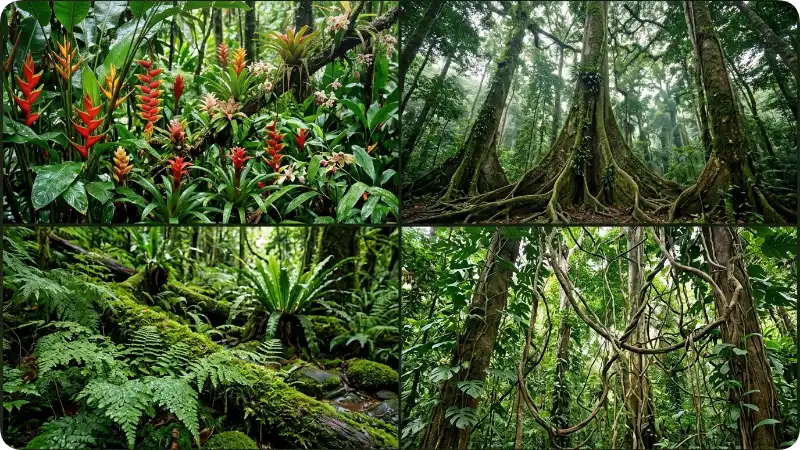
Different rainforest plants occupy different ecological niches. Some climb toward sunlight, some grow on branches, and others thrive in the wet soil or shaded understory.
Flowering rainforest plants
- Heliconia
- Orchids
- Bromeliads
- Passionflowers
Best for bright colors, intricate petals, and striking botanical pictures.
Rainforest trees
- Kapok tree
- Rubber tree
- Cocoa tree
- Cecropia tree
Best for exploring towering trunks, forest structure, and tropical ecosystems.
Ferns, mosses, and ground plants
- Bird’s nest fern
- Tree fern
- Staghorn fern
- Mosses and liverworts
Best for soft textures, shaded habitats, and an enchanted forest atmosphere.
Climbing rainforest plants
- Monstera
- Vanilla orchid
- Passionflower
- Climbing fig
- Rattan palms
Best for discovering vines, aerial roots, and plants that climb toward light.
Beautiful Rainforest Plant Names for Inspiration

Plant names can work beautifully as character names, pet names, usernames, garden labels, or nature inspired baby name ideas. The following selections are based on real plant names; the personality descriptions are creative interpretations, not scientific properties or traditional meanings.
| Name | Name origin or connection | Naming vibe |
| Flora | Latin word associated with flowers | Classic, feminine, elegant |
| Fern | Named after the plant | Gentle, vintage, understated |
| Willow | Named after the willow tree | Graceful, poetic, soft |
| Laurel | From the laurel plant | Timeless, refined, accomplished |
| Iris | From the Greek word for rainbow; also a flower name | Artistic, colorful, classic |
| Jasmine | From the Persian derived flower name | Fragrant, romantic, graceful |
| Sage | An aromatic plant name; also suggests wisdom in English | Calm, modern, unisex |
| Rowan | Associated with the rowan tree | Earthy, contemporary, approachable |
| Basil | From the herb name, with Greek linguistic roots | Quirky, vintage, charming |
| Ivy | From the climbing plant | Short, elegant, nature inspired |
| Indigo | A name associated with a deep blue purple colorant derived from plants | Artistic, mysterious, distinctive |
| Lotus | An aquatic flower name with long standing cultural and religious associations in several traditions | Serene, symbolic, graceful |
These are inspiration names rather than a list of rainforest species. Willow, for example, is a tree name but is not a typical tropical rainforest tree.
How to choose a name by aesthetic
- Soft and delicate: Fern, Flora, Iris, Jasmine.
- Dark and mysterious: Indigo, Rafflesia, Monstera.
- Elegant and timeless: Laurel, Iris, Orchid.
- Wild and adventurous: Heliconia, Rowan, Rattan.
- Short and modern: Ivy, Sage, Fern.
A useful naming trick is to choose a name for its sound and imagery as well as its meaning. Fern feels quiet and grounded; Heliconia sounds elaborate and tropical; Monstera feels bold and contemporary. Those impressions are subjective, so choose what fits your intended use.
How to Identify Rainforest Plants From Pictures
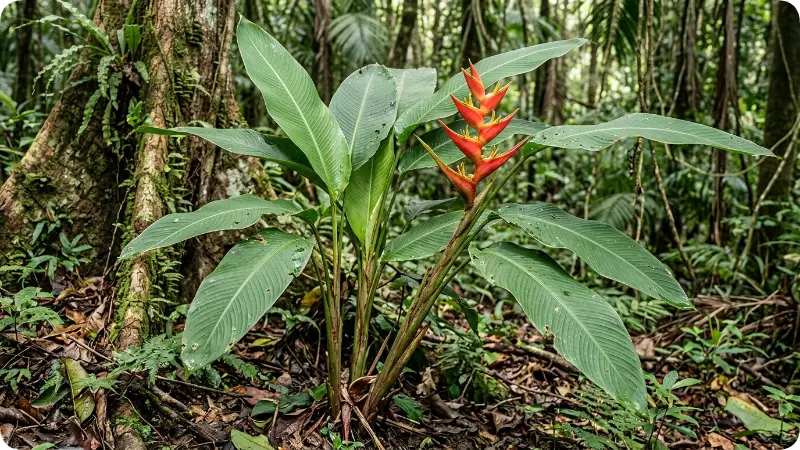
Pictures are helpful, but a single photograph may not show enough detail to identify a plant confidently. Look for several features together.
1. Examine the leaves
Check If leaves are broad, narrow, divided, patterned, or arranged in a rosette. Monstera leaves, for example, often develop characteristic holes and splits.
2. Look at the flowers
Color, shape, and arrangement can narrow the possibilities. Heliconia’s colorful bracts look very different from the delicate blooms of most orchids.
3. Notice where it grows
Does the plant grow in soil, on a tree trunk, along a vine, or in water? Growth habit is an important identification clue.
4. Compare more than one photograph
Use a botanical reference that shows mature leaves, flowers, and the whole plant. Kew’s plant database is a useful starting point for checking accepted scientific names and distributions.
Are Rainforest Plants Good for Gardens and Indoor Spaces?
Some rainforest plants adapt well to indoor cultivation, while others need specialized environments or are difficult to grow outside their natural habitats.
| Plant | General growing suitability | Important consideration |
| Monstera | Often suitable indoors | Needs space and bright, indirect light |
| Philodendron | Many varieties suit indoor growing | Requirements differ by species |
| Bromeliad | Many varieties grow well in containers | Light and watering needs vary |
| Orchids | Many cultivated varieties suit indoor growing | Match care to the particular orchid |
| Calathea | Suitable for some indoor environments | Often prefers warmth and consistent moisture |
| Rafflesia | Not suitable for ordinary home cultivation | Requires a specialized living host vine and rainforest conditions |
Safety note: Some popular tropical houseplants can irritate the mouth or skin if chewed or handled improperly. Check the exact species before placing a plant near pets or young children. Never eat an unidentified rainforest plant.
Frequently Asked Questions About Rainforest Plants
What are the most famous rainforest plants?
Some well known examples include Monstera, orchids, bromeliads, heliconias, kapok trees, cocoa trees, and giant water lilies. Rafflesia is also famous for its exceptionally large flower and unusual parasitic lifestyle.
What is the most unusual rainforest plant?
Rafflesia arnoldii is a strong contender. It produces an enormous reddish flower, has no ordinary leaves or roots, and depends on a host vine for nutrients. Its distinctive smell attracts carrion flies that help pollinate it.
Which rainforest plants have the largest leaves?
Several tropical plants produce enormous leaves, including giant water lilies, elephant ear plants, and some mature Monstera species. Their leaf size and shape vary by species and growing conditions.
What rainforest plants have colorful flowers?
Heliconias, orchids, bromeliads, and passionflowers are excellent examples. Their flowers or colorful flower structures range from vivid reds and oranges to purple, pink, and white.
Are all rainforest plants green?
No. Many have colorful flowers, red or purple leaf undersides, patterned foliage, and brightly colored fruits. Some rainforest plants are also parasitic or have reduced leaves, so they do not resemble the typical leafy green plant.
Can I use rainforest plant names for a baby, pet, or fictional character?
Yes. Names such as Fern, Ivy, Iris, Sage, and Flora work naturally as names, while Monstera, Heliconia, Rafflesia, and Calathea offer more distinctive inspiration for fantasy characters, usernames, or creative projects. Check cultural associations and pronunciation before choosing a name for a person.
Where can I find reliable rainforest plant pictures?
Start with botanical references. These resources can help you compare photographs with accepted scientific names and known habitats.
Conclusion
Rainforest plants are remarkable for their variety of shapes, colors, textures, and adaptations. From Monstera’s sculptural leaves and Heliconia’s brilliant flowers to the giant blooms of Rafflesia, each plant offers a different glimpse into the complexity of tropical forests.
If you’re identifying a plant from a picture, preparing a school project, planning a tropical garden, or searching for nature inspired names, begin with the plants that capture your imagination. Then compare their real characteristics, scientific names, and natural habitats to discover what makes each one unique.

Sophia explores the history, global origins, and deep etymology behind popular and rare names. She curates beautiful, meaningful baby name guides and historical name lists for families and researchers. She also enjoys learning new languages and traveling.