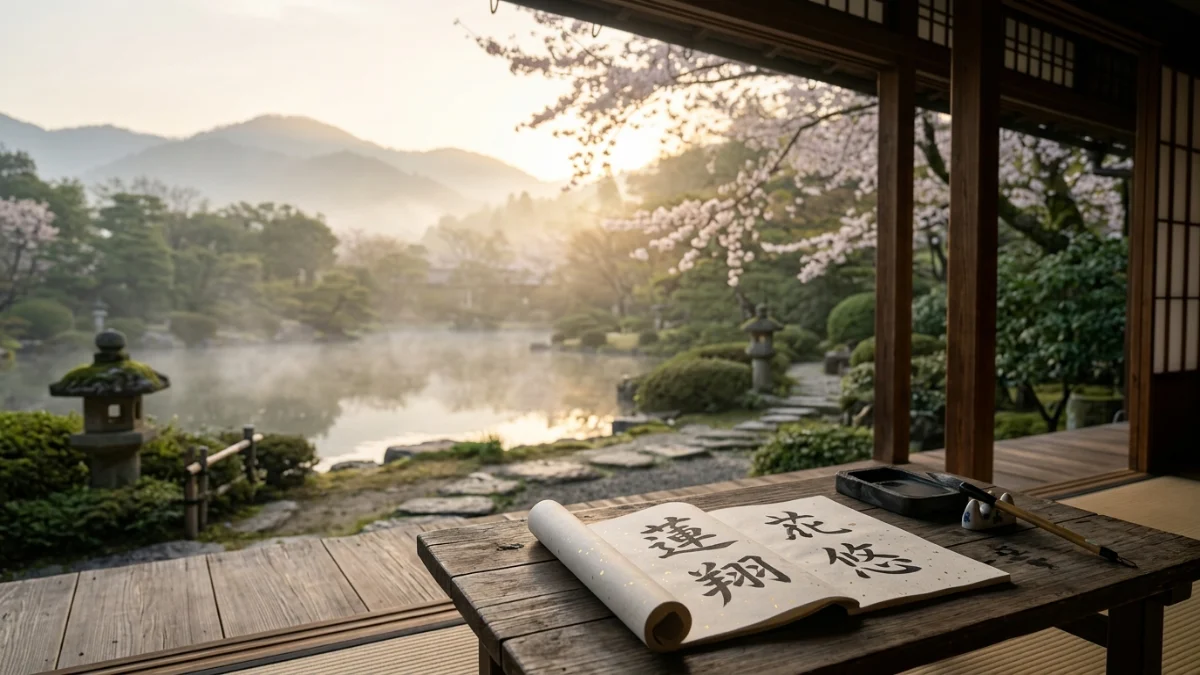
Japanese boy names can feel powerful without being loud, elegant without being formal, and modern while still carrying generations of tradition. Some evoke nature and the changing seasons; others suggest courage, wisdom, light, or the open sky.
One especially interesting feature of Japanese naming is that the same name can have different meanings depending on the kanji used to write it. The sound alone does not always tell you the full meaning, so choosing the written characters matters just as much as choosing a name you love.
If you’re searching for a traditional Japanese boy name, a cool anime inspired name, or a rare choice with a beautiful meaning, this guide will help you explore the possibilities.
Featured Snippet:
Popular and recognizable male Japanese names include Haruto, Ren, Yūto, Sōta, Haruki, Takumi, Kaito, Daiki, Itsuki, and Hiroto. Depending on their kanji, these names may express ideas associated with sunlight, lotus flowers, flight, strength, trees, or generosity. Japanese names can have multiple meanings because different kanji may share the same pronunciation.
Quick Guide to Japanese Boy Names
| Name | Meaning or meaning theme | Overall vibe |
| Haruto (はると) | Often associated with sunlight or flying, depending on kanji | Bright, optimistic |
| Ren (れん) | Lotus when written 蓮 | Minimalist, calm |
| Kaito (かいと) | Can evoke the sea and flight with 海 and 翔 | Adventurous, cinematic |
| Haruki (はるき) | Can combine spring and brightness, depending on kanji | Gentle, poetic |
| Takumi (たくみ) | Skill, craftsmanship (匠) | Artistic, capable |
| Akira (あきら) | Can mean bright or clear with 明 | Intelligent, confident |
| Daiki (だいき) | Can express greatness and radiance with 大輝 | Strong, energetic |
| Sora (そら) | Sky (空) | Free spirited, airy |
| Hiroto (ひろと) | Meaning varies with the kanji | Polished, contemporary |
| Itsuki (いつき) | Can be written 樹, meaning tree | Grounded, natural |
| Ryū (りゅう) | Dragon (竜 or 龍) | Bold, mythic |
| Yūki (ゆうき) | Can be written 勇気, meaning courage | Brave, warm |
Meaning note: These are representative written forms or possible interpretations, not definitive meanings for every person with that name. Japanese given names can use different kanji for the same pronunciation.
Traditional and Popular Male Japanese Names
Traditional Japanese boy names often balance dignity with warmth. Some feel timeless and literary, while others carry a familiar, approachable quality that works equally well for a baby, an adult, or a fictional character.
Pronunciations below use approximate English friendly guides. Japanese vowel sounds are generally more consistent than English vowels.
1. Haruto (はると)
Meaning: Depends on the kanji; possible interpretations include sunlight or flying.
Pronunciation: hah roo toh
Vibe: Sunny, youthful, hopeful.
Why it stands out: Haruto has an open, flowing sound that feels contemporary without seeming overly unusual. It suits a cheerful child and a thoughtful adult equally well.
- Style: Modern Japanese, nature inspired.
- Nicknames: Haru, Haru chan (an affectionate Japanese style nickname).
- Similar names: Haruki, Hiroto, Hinata.
- Best for: Parents who want a bright, versatile name.
- Meaning caution: Choose the kanji before assigning a specific meaning.
2. Ren (蓮)
Meaning: Lotus.
Pronunciation: ren
Vibe: Quiet confidence, serenity, understated elegance.
Why it stands out: Ren is short and memorable. The lotus character gives it a natural association with beauty and calm, while its compact sound suits minimalist naming tastes.
- Style: Minimalist, botanical, modern.
- Nicknames: Ren is already brief; Renny can work as an informal English nickname.
- Similar names: Rei, Rin, Riku.
- Best for: Someone who prefers a subtle name over a grand or elaborate one.
- Cultural note: The lotus meaning belongs specifically to the 蓮 spelling, not automatically to every name pronounced Ren.
3. Takumi (匠)
Meaning: Artisan, craftsperson, or skilled maker.
Pronunciation: tah koo mee
Vibe: Creative, dependable, quietly talented.
Takumi has an appealing balance of softness and competence. It suggests a person who takes pride in doing something well, making it an excellent choice for characters who are inventive, observant, or disciplined.
- Style: Traditional craftsmanship with a modern feel.
- Nicknames: Taku.
- Similar names: Taiki, Takeru, Takato.
- Best for: Parents and writers drawn to creativity, precision, and practical intelligence.
- Cultural association: The character 匠 directly relates to craftsmanship.
4. Akira (明)
Meaning: Bright or clear with this kanji.
Pronunciation: ah kee rah
Vibe: Intelligent, composed, charismatic.
Akira is one of those names that feels equally at home in everyday life and on a novel’s cover. It has a clean, balanced rhythm, and its association with brightness gives it a positive, thoughtful character.
- Style: Classic, versatile, literary.
- Nicknames: Aki.
- Similar names: Hikaru, Haruki, Rei.
- Best for: Those seeking a recognizable Japanese name with a confident, international sound.
- Pop culture: The name is associated with Akira, Katsuhiro Otomo’s influential manga and anime work. That association may give it a futuristic or cyberpunk edge for some audiences.
5. Sōta (そうた)
Meaning: Varies with the kanji chosen.
Pronunciation: soh tah, with a long first vowel.
Vibe: Friendly, energetic, approachable.
Sōta feels relaxed and lively rather than dramatic. It is a good example of how a Japanese name can sound modern without needing an unusual spelling or an elaborate meaning.
- Style: Contemporary, casual, youthful.
- Nicknames: Sō.
- Similar names: Yūta, Kōta, Sōma.
- Best for: A cheerful character or a baby name with an easy rhythm.
- Meaning note: Avoid assigning one fixed English meaning without specifying its kanji.
6. Ichirō (一郎)
Meaning: First son; 一 means one and 郎 is traditionally used in masculine names.
Pronunciation: ee chee roh
Vibe: Classic, dependable, dignified.
Ichirō has a distinctly traditional character. Its structure reflects an older naming pattern in which masculine names could communicate birth order. Today, its sound may feel more vintage than minimalist.
- Style: Traditional, vintage, established.
- Nicknames: Ichi.
- Similar names: Jirō, Tarō, Shirō.
- Best for: Historical fiction, family inspired naming, or someone who appreciates traditional Japanese naming patterns.
7. Daiki (大輝)
Meaning: Great radiance or great brilliance, combining 大 (great) and 輝 (radiance).
Pronunciation: dah ee kee
Vibe: Strong, optimistic, outgoing.
Daiki feels energetic without sounding harsh. Its written form can communicate ambition and brightness, giving it an upbeat impression.
- Style: Contemporary, bold, positive.
- Nicknames: Dai.
- Similar names: Taiki, Hiroki, Yūki.
- Best for: A name that suggests confidence, energy, and a bright future.
8. Hiroshi (ひろし)
Meaning: Depends on the kanji; possible meanings include generosity, breadth, or prosperity with particular character choices.
Pronunciation: hee roh shee
Vibe: Mature, warm, trustworthy.
Hiroshi has a more established, traditional feel than many short contemporary names. It works especially well for a thoughtful older character, a family elder, or a name chosen for its sense of familiarity.
- Style: Classic, gentle, understated.
- Nicknames: Hiro.
- Similar names: Hiroki, Hiroto, Haruki.
- Best for: Those who appreciate traditional names with a calm, approachable sound.
Cool Male Japanese Names for a Modern, Distinctive Feel
If you want a name that looks sharp in Roman letters, sounds memorable when spoken, and works well for a fictional hero or gaming character, these choices offer different kinds of appeal.
| Name | Representative meaning | Aesthetic |
| Kaito (海斗 or other forms) | With 海, the first character means sea; the full meaning depends on the combination | Oceanic, adventurous |
| Riku (陸) | Land | Grounded, sporty |
| Rei (怜 or other forms) | Can express intelligence or insight with 怜 | Sleek, restrained |
| Tōma (とうま) | Depends on the kanji | Refined, cinematic |
| Shō (翔 or other forms) | Flying or soaring with 翔 | Dynamic, ambitious |
| Ryū (龍) | Dragon | Mythic, powerful |
| Hayate (疾風) | Swift wind | Fast, dramatic |
| Subaru (昴) | The Pleiades star cluster | Celestial, distinctive |
| Minato (湊) | Harbor or gathering place | Calm, coastal |
| Issei (一成 or other forms) | Meaning varies with kanji | Direct, confident |
Which cool name matches your style?
- For a sleek, minimalist feel: Ren, Rei, Riku.
- For a hero or action protagonist: Hayate, Shō, Ryū.
- For an ocean inspired identity: Kaito, Minato.
- For a celestial aesthetic: Subaru.
- For a modern, balanced sound: Tōma, Issei.
These aesthetic labels describe the impression a name may create; they are not claims about a person’s personality or the traditional meaning of every spelling.
Soft and Gentle Japanese Boy Names
Soft Japanese male names are ideal if you prefer a calm, poetic sound rather than something aggressive or imposing. They can suit gentle fictional characters, contemporary baby names, and nature inspired identities.
Haru (春)
hah roo · Spring
Warm and light, Haru feels fresh and uncomplicated. It works well for a character with an optimistic outlook or for someone who loves seasonal imagery.
Similar names: Haruki, Haruto, Hinata.
Sora (空)
soh rah · Sky
Airy and open, Sora evokes freedom, possibility, and wide horizons. It feels especially fitting for an adventurous or introspective character.
Similar names: Aoi, Haru, Subaru.
Itsuki (樹)
ee tsoo kee · Tree
The character 樹 means tree. Itsuki has a grounded, natural quality and a pleasing balance between softness and strength.
Similar names: Haruki, Riku, Hayato.
Hikaru (光)
hee kah roo · Light
Hikaru feels luminous and expressive. It has an artistic quality that suits an imaginative character or a name with a hopeful association.
Similar names: Akira, Hikari, Haruki.
Naming insight: A gentle sound does not automatically mean a name is feminine in Japanese. Many Japanese given names can be used by more than one gender, and gender impressions can vary by generation, spelling, and context.
Strong Japanese Boy Names With Powerful Meanings

Some names feel commanding because of their sounds; others draw their strength from the kanji used to write them. These options are especially useful for parents who value courage, resilience, leadership, or heroic symbolism.
| Name | Kanji example | Meaning or association | Personality impression |
| Takeshi | 武 | Military or martial; associated with martial strength | Disciplined, formidable |
| Isamu | 勇 | Courage or bravery | Fearless, determined |
| Takeru | 武 or other forms | Can evoke martial strength with 武 | Heroic, adventurous |
| Masaru | 勝 | Victory | Competitive, resilient |
| Katsu | 勝 | Victory | Direct, forceful |
| Yūma | Various | Depends on kanji | Modern, composed |
| Ryūnosuke | 龍之介 or other forms | Contains 龍, dragon, in this spelling | Literary, dramatic |
| Hayato | Various | Depends on kanji | Fast moving, spirited |
| Kenji | Various | Depends on kanji | Classic, confident |
| Daichi | 大地 | Great earth or land | Grounded, dependable |
Best choices by kind of strength
- Courage: Isamu.
- Victory and ambition: Masaru or Katsu.
- Martial or heroic imagery: Takeshi or Takeru.
- Earthy, grounded strength: Daichi.
- Dramatic, literary power: Ryūnosuke.
The distinction matters: 武 has a direct martial association, while names such as Hayato or Kenji should not be assigned a single meaning without the intended kanji.
Rare and Unique Male Japanese Names
A rare name can feel special without being difficult to pronounce or artificially unusual. The best distinctive choices often combine an established Japanese reading with an appealing kanji spelling.
Rarity depends on age group, region, and the specific written form, so the names below are best described as distinctive options rather than a verified ranking of the rarest names in Japan.
| Name | Possible meaning or association | Overall vibe |
| Akito (あきと) | Varies with kanji; can be written with 明, bright | Refined, modern |
| Asahi (朝日) | Morning sun | Fresh, optimistic |
| Nagi (凪) | Calm or windless conditions at sea | Peaceful, minimalist |
| Nagisa (渚) | Shore or waterside | Poetic, coastal |
| Ibuki (息吹) | Breath or vitality | Organic, expressive |
| Kanata (彼方) | Beyond or far away | Dreamy, expansive |
| Mahiro (まひろ) | Depends on kanji | Soft, contemporary |
| Seiji (誠司 or other forms) | Varies with kanji; 誠 conveys sincerity | Mature, composed |
| Tomoya (ともや) | Depends on kanji | Friendly, familiar |
| Yori (より) | Depends on kanji | Short, understated |
Five especially distinctive picks
Nagi is ideal for a calm, understated aesthetic. Its association with still conditions at sea gives it a peaceful natural image.
Asahi feels optimistic and vivid, especially for someone drawn to sunrise imagery.
Ibuki has a sense of movement and life. It suits an energetic character or a name inspired by nature.
Kanata suggests distance and possibility through its written meaning, making it appealing for fantasy and literary settings.
Nagi and Ren work especially well for readers who like short, clean names with a strong visual identity.
Japanese Boy Names Inspired by Nature
Nature offers a rich source of imagery in Japanese names. Depending on the kanji, a name may evoke the sky, sea, trees, seasons, flowers, or the light of a new day.
| Name | Kanji | Meaning | Visual aesthetic |
| Sora | 空 | Sky | Open blue skies |
| Ren | 蓮 | Lotus | Still water, elegant simplicity |
| Minato | 湊 | Harbor or gathering place | Coastal, peaceful |
| Itsuki | 樹 | Tree | Forest green, grounded |
| Asahi | 朝日 | Morning sun | Golden light, new beginnings |
| Nagi | 凪 | Calm sea conditions | Mist, still water |
| Hayate | 疾風 | Swift wind | Movement, freedom |
| Subaru | 昴 | Pleiades star cluster | Night sky, celestial |
| Daichi | 大地 | Great earth or land | Mountains, earth tones |
| Nagisa | 渚 | Shore | Beaches, muted blue |
How to choose a nature inspired name
- Choose Sora if you love openness, freedom, and a light aesthetic.
- Choose Ren if you prefer a floral meaning with a restrained sound.
- Choose Minato if coastal imagery feels personal or meaningful.
- Choose Itsuki if you value grounded, earthy associations.
- Choose Subaru if you are drawn to astronomy and the night sky.
A useful detail: nature inspired meanings come from the actual characters, not merely from the way a name sounds. For instance, Ren written as 蓮 means lotus, while another spelling may carry a different meaning.
Japanese Anime Boy Names and Fictional Character Inspiration
Anime has introduced many audiences to Japanese names, but a character’s name and the character’s personality are two different things. A name may be culturally established long before it becomes associated with a famous hero, rival, or antihero.
Akira
A strong choice for a science fiction, cyberpunk, or coming of age character. The title of Akira gives it a recognizable association with futuristic anime.
Character energy: intelligent, independent, intense.
Ren
Compact and elegant, Ren fits a quiet protagonist, a reserved musician, or a character whose strength emerges gradually.
Character energy: calm, observant, understated.
Kaito
A natural fit for an explorer, pilot, ocean adventurer, or confident young hero. Its possible sea and flight imagery works particularly well in action stories.
Character energy: adventurous, bold, curious.
Ryū
A powerful option for fantasy, martial arts, or supernatural fiction. The dragon character 龍 gives it a direct mythic association.
Character energy: formidable, mysterious, dramatic.
More Japanese names for anime characters
| Name | Best character archetype | Overall mood |
| Haruto | Optimistic protagonist | Hopeful |
| Takeru | Brave fighter | Heroic |
| Sora | Dreamer or adventurer | Free spirited |
| Hikaru | Gifted artist or strategist | Luminous |
| Hayate | Fast, agile rival | Dynamic |
| Subaru | Idealistic lead | Celestial |
| Itsuki | Thoughtful companion | Grounded |
| Rei | Quiet, mysterious character | Minimalist |
| Takeshi | Strong, disciplined warrior | Forceful |
| Kanata | Wanderer or dreamer | Ethereal |
For a realistic Japanese character, research the specific kanji, age group, and family background before finalizing the name. A combination that looks appealing in English is not automatically natural or conventional in Japanese.
Japanese Boy Names With Elegant, Vintage, and Royal Vibes
Not every appealing name needs to sound futuristic or anime inspired. Some readers prefer names with an established, literary, or dignified quality.
| Name | Style | Why it works |
| Ichirō | Vintage | Traditional structure and a sense of heritage |
| Hiroshi | Classic | Mature, warm, and familiar |
| Akira | Timeless | Clean sound with a bright possible meaning |
| Takumi | Refined | Direct association with craftsmanship when written 匠 |
| Masahiro | Traditional | Formal, balanced sound; meaning varies by kanji |
| Noboru | Classic | Can be written 昇, meaning rise or ascend |
| Makoto | Timeless | Can be written 誠, meaning sincerity |
| Seiji | Polished | A composed, established sound |
| Ryūnosuke | Literary | Elaborate, dramatic rhythm |
| Kazuki | Modern classic | Familiar contemporary feel; meaning varies by kanji |
Names with a quiet luxury aesthetic
If you want a name that feels polished rather than flashy, start with Akira, Ren, Takumi, Makoto, or Hiroshi.
For a more vintage or literary feeling, consider Ichirō, Noboru, or Ryūnosuke.
These are aesthetic impressions, not formal Japanese naming categories. A name’s perceived age or style can also depend on the generation of the person who carries it.
Japanese Boy Names by Meaning
Sometimes the meaning matters more than the sound. If you’re choosing a baby name or developing a character, start with the value or image you want the name to express.
| Desired meaning | Name | Kanji example |
| Light or brightness | Akira | 明 |
| Lotus | Ren | 蓮 |
| Courage | Isamu | 勇 |
| Victory | Masaru | 勝 |
| Dragon | Ryū | 龍 |
| Sky | Sora | 空 |
| Tree | Itsuki | 樹 |
| Morning sun | Asahi | 朝日 |
| Great earth | Daichi | 大地 |
| Craftsmanship | Takumi | 匠 |
| Sincerity | Makoto | 誠 |
| Calm sea conditions | Nagi | 凪 |
| Swift wind | Hayate | 疾風 |
| Harbor | Minato | 湊 |
| Pleiades star cluster | Subaru | 昴 |
These entries connect a specific spelling to a meaning. They should not be read as universal definitions for every person with the same romanized name.
Lucky Numbers, Colors, Gemstones, and Zodiac Associations
Many name websites attach lucky numbers, colors, gemstones, weekdays, and zodiac signs to individual names. These can be fun additions when choosing a name, but they need to be handled carefully.
There is no universal Japanese naming system that assigns one verified lucky number, gemstone, color, or weekday to every given name. Numerology and name fortune traditions vary, and the result depends on the system used.
| Attribute | A useful way to choose |
| Lucky number | Use a clearly identified numerology method if desired |
| Lucky color | Choose a color based on personal symbolism or a character’s palette |
| Lucky gemstone | Select a stone for its established cultural associations or personal meaning |
| Lucky day | Treat this as a personal or spiritual preference, not a linguistic fact |
| Zodiac association | Use a birth date and an explicitly stated astrological tradition |
| Numerology | Identify the calculation method; different systems can give different results |
For example, Ren written as 蓮 can inspire a lotus themed palette of green, white, and soft pink. Those colors are an editorial interpretation of the lotus image, not a traditional lucky color assignment.
Likewise, Ryū written 龍 may inspire a dragon themed palette of deep red, black, and gold. That is a creative design choice, not a verified astrological property of the name.
If you are naming a real child, the kanji meaning, pronunciation, family preferences, and cultural fit are more useful starting points than an arbitrary lucky number chart.
How to Choose the Right Japanese Male Name
A name can look beautiful on a page and still feel wrong when spoken aloud. Before deciding, compare the sound, written meaning, everyday usability, and the impression you want the name to create.
1. Decide what matters most
Start with one primary goal:
- Meaning: Choose a kanji spelling that conveys a value you care about.
- Sound: Read the name aloud with the intended surname.
- Aesthetic: Decide If you prefer minimalist, natural, traditional, or dramatic names.
- Uniqueness: Look for distinctive options without assuming that unusual automatically means better.
- Cultural authenticity: Verify the spelling and reading with a reliable Japanese language source or knowledgeable speaker.
2. Think about pronunciation and nicknames
Names such as Ren, Rei, and Sora are short, while Ryūnosuke and Ichirō have a more elaborate rhythm.
Consider how the name sounds in Japanese and in the language spoken by your family or audience. Japanese vowel length matters: for example, Sōta and Sota can represent different romanization details, so consistent spelling is important.
Nicknames can also change the feel of a name. Haruto may become Haru, Takumi may become Taku, and Akira may become Aki. These are possible informal choices rather than compulsory Japanese nicknames.
3. Check sibling compatibility
If you are naming brothers, consider If you want a shared theme or individual styles.
| Naming approach | Example combination |
| Nature inspired | Sora and Itsuki |
| Short and minimalist | Ren and Rei |
| Bright and optimistic | Akira and Asahi |
| Traditional | Ichirō and Hiroshi |
| Contemporary | Haruto and Kaito |
These are sound and style pairings, not claims about traditional sibling naming customs.
4. Verify the kanji before committing
Japanese given names are not simply English names translated into Japanese. The characters, their accepted readings, and the way the name is presented all matter. The Japan Foundation explains that families consider both the sound and meaning of kanji, and Japanese government guidance identifies which characters may be used in registered names.
Japan Foundation, Sydney
+1
For a real baby name, confirm the intended reading and writing rather than relying solely on a romanized list. For a fictional character, make sure the spelling fits the character’s background and the story’s setting.
Frequently Asked Questions About Male Japanese Names
What is the most popular Japanese boy name?
Haruto is a widely recognized modern Japanese boy name. However, the most popular name changes by year and by If a ranking counts pronunciation or specific kanji spellings. Consult current Japanese birth name rankings before treating any name as the definitive number one.
What are some beautiful male Japanese names?
Ren, Haruki, Akira, Sora, Kaito, and Hikaru are appealing choices. Ren feels minimalist, Haruki feels gentle, Akira feels confident, and Sora evokes the openness of the sky.
What Japanese boy names mean strong or brave?
Isamu, written 勇, means courage or bravery. Takeshi can be written 武, associated with martial strength, while Masaru written 勝 means victory. These meanings apply to the specified kanji forms.
What Japanese male names mean light?
Akira can be written 明, meaning bright or clear. Hikaru can be written 光, meaning light. Haruto can also be written using characters associated with sunlight, although the meaning depends on the chosen spelling.
What are rare Japanese boy names?
Nagi, Ibuki, Kanata, Asahi, and Akito are distinctive options for readers seeking something less familiar in their own community. Their actual rarity in Japan depends on the spelling, age group, and time period.
What are good Japanese names for anime characters?
Akira, Ren, Kaito, Ryū, Hayate, and Subaru suit different character styles. Choose based on the character’s background and intended personality rather than selecting a name solely because it sounds dramatic.
Can a Japanese boy’s name have more than one meaning?
Yes. The same pronunciation may be written using different kanji, producing different meanings. Conversely, kanji can have multiple readings, particularly in personal names. The specific written form is essential to understanding a name’s intended meaning.
Do Japanese male names have lucky numbers or gemstones?
There is no single authoritative system that assigns lucky numbers or gemstones to every Japanese name. Such associations are generally based on particular numerology, astrology, or personal belief systems rather than the name’s linguistic meaning.
Do Japanese people use middle names?
Traditional Japanese naming generally uses a family name followed by a given name, without a separate middle name. Some people with international or mixed family backgrounds may have additional names.
How do I know If a Japanese name is culturally appropriate?
Verify the intended kanji, pronunciation, and usage with reliable Japanese language references or a knowledgeable speaker. If you are choosing a name for a real child, also consider family heritage and If the written form communicates what you intend.
Conclusion:
The best male Japanese name is not necessarily the rarest, strongest, or most fashionable. It is the one whose sound, meaning, and cultural context fit what you want to express.
Choose Ren for understated elegance, Akira for brightness and confidence, Sora for an open, adventurous feeling, Takumi for craftsmanship, or Isamu for courage. If you prefer something more traditional, explore Ichirō and Hiroshi; if you want a more distinctive nature inspired choice, consider Nagi or Ibuki.
Most importantly, remember that the kanji complete the story. Take time to confirm the written characters and intended pronunciation so your chosen name carries the meaning you actually want.

Emma helps authors, screenwriters, and gamers find the perfect names for their fictional characters. She analyzes historical trends and linguistic styles to craft names that carry deep meaning. When she isn’t writing, she loves plotting her next fantasy novel at a local café.