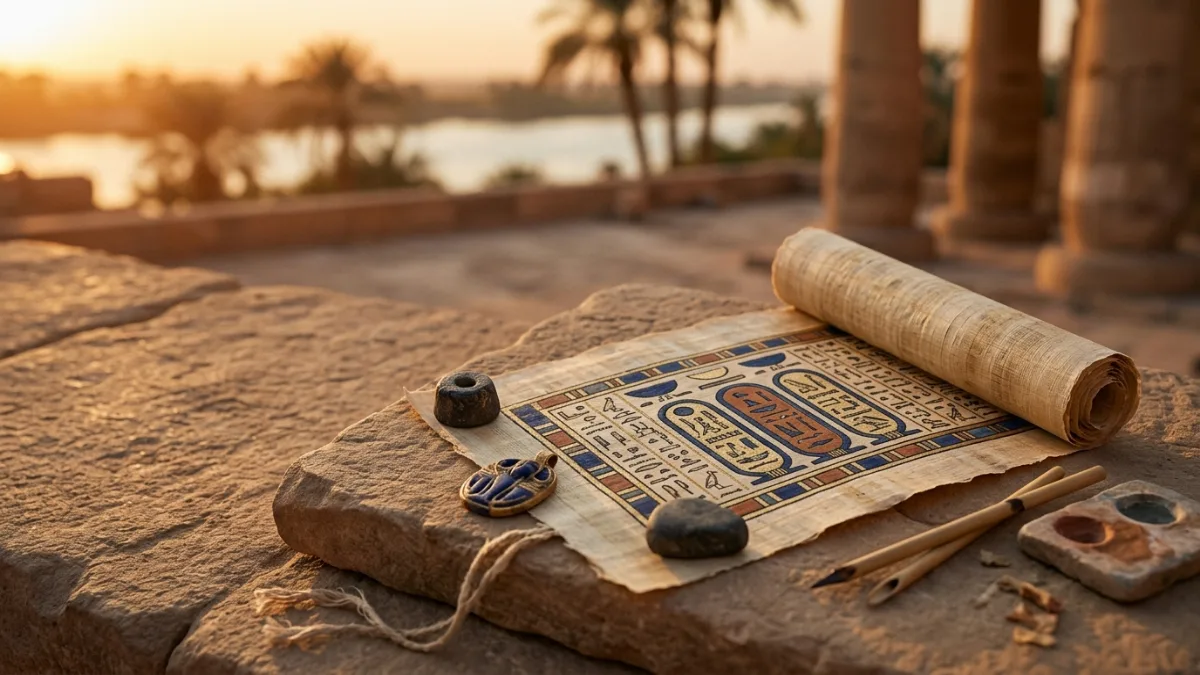
Egyptian names carry the magic of a civilization that has fascinated the world for thousands of years. Some evoke the golden light of the Nile, others recall powerful pharaohs and ancient gods, and many modern Egyptian names reflect the warmth, faith, and traditions of everyday life.
If you are searching for a beautiful Egyptian girl name, a strong Egyptian boy name, or a mysterious name inspired by ancient mythology, there is plenty to explore. Names such as Nefertiti, Amun, Isis, Ramses, and Layla offer very different impressions, from royal elegance to celestial mystery and romantic softness.
One important distinction makes this journey more meaningful: ancient Egyptian names, modern Egyptian Arabic names, and names popular among Egyptian Christians do not all come from the same linguistic or religious traditions. Understanding those differences helps you choose a name for more than its sound alone.
What Are Egyptian Names?
Egyptian names come from several overlapping traditions, including modern Egyptian Arabic, Coptic Christian heritage, and the language and mythology of ancient Egypt. Some names are shared across the wider Arabic speaking world, while others have distinctive historical or religious connections.
For a quick starting point, use this guide to compare the major styles.
| Naming style | Examples | Overall vibe |
| Ancient royal | Nefertiti, Ramses, Hatshepsut | Regal, dramatic, historic |
| Egyptian mythology | Isis, Osiris, Horus | Mystical, symbolic, powerful |
| Modern Egyptian Arabic | Menna, Gamal, Yousra | Familiar, warm, contemporary |
| Coptic heritage | Shenouda, Abanoub | Deeply rooted, distinctive |
| Elegant and timeless | Layla, Amira, Karim | Soft, graceful, enduring |
| Inspired by Egypt | Cairo, Nile, Luxor | Artistic, adventurous, modern |
These categories are not mutually exclusive. A name can have a historical origin, a religious association, and a modern aesthetic at the same time.
Beautiful Egyptian Girl Names

Egyptian girl names range from delicate, lyrical choices to names associated with queens, goddesses, and extraordinary women. The best choice depends on If you want a name that feels naturally wearable today or one that makes a bold historical statement.
| Name | Meaning or association | Style |
| Nefertiti | Commonly interpreted as “the beautiful one has come” | Regal, striking |
| Cleopatra | Greek name associated with “glory of the father” | Dramatic, royal |
| Isis | Name of an ancient Egyptian goddess | Mystical, powerful |
| Hatshepsut | Name of a female pharaoh | Historic, commanding |
| Menna | Grace, favor, or a gift | Gentle, modern |
| Yousra | Ease, comfort, or prosperity | Soft, elegant |
| Gamila | Egyptian Arabic form of Jamila, meaning beautiful | Feminine, classic |
| Khadiga | Egyptian transcription of Khadija | Traditional, familiar |
| Layla | Arabic name associated with night | Romantic, poetic |
| Amira | Princess or female leader | Elegant, confident |
| Aya | A sign or verse, including a Qur’anic verse in Islamic usage | Minimalist, meaningful |
| Mona | Wishes or desires in common Arabic interpretations | Warm, understated |
Modern Egyptian Arabic forms and meanings are documented in specialist name references, while ancient names such as Nefertiti and Hatshepsut belong to different historical traditions.
The names that feel especially beautiful
- Nefertiti: A wonderful choice for someone who loves elaborate, queenly names with a strong visual identity. Its length gives it grandeur, while Nef can work as an informal nickname.
- Menna: Short and approachable, with a gentle sound. It feels more natural for a contemporary character or baby than a name chosen solely for ancient Egyptian drama.
- Yousra: Flowing and refined. It suits parents who want an Arabic name with a graceful sound and a meaning connected to ease or prosperity.
- Amira: Confident without feeling severe. It works well with short middle names and has an internationally recognizable pronunciation.
- Layla: Romantic and familiar across cultures. It is not exclusive to Egypt, but it fits comfortably within Egyptian Arabic naming traditions.
Best picks by personality: Menna for softness, Amira for confidence, Yousra for elegance, Nefertiti for grandeur, and Layla for timeless romance.
Strong Egyptian Boy Names
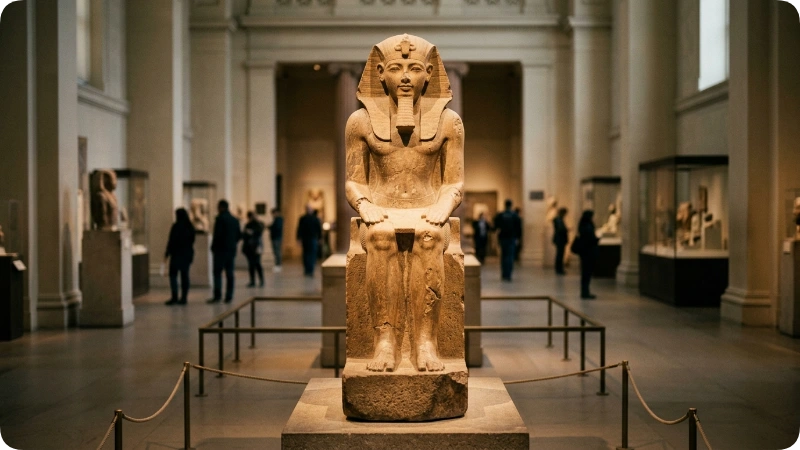
Some Egyptian boy names are associated with pharaohs and ancient gods; others are everyday names shaped by Arabic language and religious tradition. If you want a name that feels strong without sounding overly theatrical, modern Arabic choices can be just as compelling as historical ones.
| Name | Meaning or association | Style |
| Ramses | Traditionally interpreted as “Ra has fashioned him” or “born of Ra” | Royal, commanding |
| Tutankhamun | Commonly interpreted as “living image of Amun” | Ancient, distinctive |
| Akhenaten | Associated with devotion to the god Aten | Unconventional, historic |
| Horus | Ancient Egyptian sky deity | Bold, mythological |
| Osiris | Ancient Egyptian god associated with the afterlife and regeneration | Mysterious, solemn |
| Amun | Name of a major ancient Egyptian deity | Minimalist, powerful |
| Omar | Arabic name associated with life and longevity | Timeless, approachable |
| Karim | Generous, noble hearted | Warm, dignified |
| Gamal | Egyptian form of Jamal, meaning beauty | Classic, culturally rooted |
| Ahmed | Praiseworthy, highly praised | Traditional, familiar |
| Youssef | Egyptian Arabic form of Yusuf | Gentle, enduring |
| Abanoub | Coptic Egyptian heritage name associated with Saint Abanoub | Distinctive, historic |
The ancient names draw on historical and religious associations; the Arabic names have their own linguistic meanings and contemporary use. Ramses is also commonly written Ramesses in Egyptology.
Which Egyptian boy names stand out?
- Omar: A strong everyday choice that is easy to say in many languages. It feels mature without being formal and works well with both Arabic and international middle names.
- Karim: Friendly, polished, and meaningful. Its association with generosity gives it a warm character rather than a purely powerful one.
- Ramses: Best for parents or writers drawn to royal history. It is memorable, although its pharaonic associations make it more dramatic than a conventional modern name.
- Amun: Brief and bold, with a distinctly ancient Egyptian identity. It also suits fantasy characters and historical fiction.
- Abanoub: A particularly interesting choice for exploring Coptic Egyptian heritage. It is less familiar internationally, which makes it distinctive, but pronunciation may need explaining.
For a modern baby name, Omar, Karim, and Youssef are practical choices. For a novel, game, or mythology inspired character, Ramses, Amun, and Horus create a stronger historical atmosphere.
Ancient Egyptian Names Inspired by Pharaohs and Queens

Ancient Egyptian royal names have an unmistakable presence. They evoke monumental architecture, ceremonial jewelry, carved stone, and a world where rulers linked their authority to divine order.
| Name | Historical connection | Naming impression |
| Nefertiti | Queen associated with Akhenaten’s reign | Beautiful, sophisticated |
| Hatshepsut | One of ancient Egypt’s most prominent female pharaohs | Authoritative, trailblazing |
| Cleopatra | Name of the Ptolemaic queens, especially Cleopatra VII | Charismatic, dramatic |
| Nefertari | Royal name associated with Ramesses II’s Great Royal Wife | Romantic, elegant |
| Ramesses | Name borne by multiple pharaohs | Powerful, enduring |
| Tutankhamun | Pharaoh of the late Eighteenth Dynasty | Mysterious, recognizable |
| Thutmose | Name borne by several pharaohs | Scholarly, distinctive |
| Akhenaten | Pharaoh associated with the worship of Aten | Unconventional, intellectual |
| Seti | Royal name associated with Seti I and Seti II | Short, forceful |
| Merneptah | Pharaoh of the Nineteenth Dynasty | Rare, commanding |
These names are excellent for historical fiction, themed naming projects, and parents who appreciate ancient history. Their familiar English spellings do not necessarily reproduce the exact ancient pronunciation: Egyptian hieroglyphic writing generally omitted vowels, so modern vocalizations are often scholarly conventions.
How to choose a royal name
If you prefer beauty and refinement, Nefertari has a flowing sound. Hatshepsut communicates authority and historical individuality. Seti is compact and modern looking, while Ramesses is immediately recognizable as a royal name.
Cleopatra is perhaps the most familiar name on this list because of its long cultural life in art, literature, cinema, and popular culture. That familiarity is an advantage if you want instant recognition, but it may feel too strongly associated with one famous historical figure for some uses.
Egyptian Mythology Names and Their Meanings

Egyptian mythology offers names linked to creation, protection, kingship, fertility, death, and renewal. These associations make the names especially useful for fantasy novels, role playing games, and character naming.
| Name | Mythological connection | Character vibe |
| Isis | Goddess associated with magic, motherhood, and protection | Protective, mysterious |
| Osiris | God associated with the afterlife and regeneration | Solemn, wise |
| Horus | Falcon associated god linked with kingship and the sky | Brave, vigilant |
| Anubis | Jackal associated god connected with embalming and funerary rites | Dark, enigmatic |
| Bastet | Goddess associated with protection and, in later traditions, cats | Graceful, independent |
| Sekhmet | Lioness goddess associated with power and destructive force | Fierce, commanding |
| Thoth | God associated with writing, knowledge, and wisdom | Intellectual, observant |
| Hathor | Goddess associated with love, music, joy, and motherhood | Warm, artistic |
| Sobek | Crocodile associated god connected with the Nile and royal power | Rugged, formidable |
| Khnum | Creator deity associated with pottery and the shaping of human beings | Patient, inventive |
| Amun | Major deity associated with hiddenness and divine authority | Reserved, powerful |
| Neith | Ancient goddess associated with weaving and warfare | Strategic, independent |
These are mythological associations, not literal personality predictions. The personality descriptions are creative interpretations to help with naming decisions.
Best Egyptian god names for different aesthetics
- Dark and mysterious: Anubis, Osiris, and Sekhmet.
- Wise and scholarly: Thoth and Khnum.
- Fierce and protective: Horus, Bastet, and Sekhmet.
- Soft and artistic: Hathor and Isis.
- Short and powerful: Amun, Neith, and Seti.
For gaming and fantasy settings, Anubis and Sekhmet offer a particularly strong visual identity. Thoth is ideal for a scholar, strategist, or magical archivist, while Bastet suits a clever and independent character.
One cultural consideration: these deities were part of a living religious world in ancient Egypt, not simply a collection of fantasy characters. Using their names thoughtfully can make a fictional setting feel more authentic.
Modern Egyptian Arabic Names
If you want an Egyptian name that feels connected to life in Egypt today, modern Egyptian Arabic names are an excellent place to begin. Many are shared with other Arabic speaking countries, but local pronunciation and spelling give them recognizable Egyptian forms.
Modern Egyptian names for girls
| Name | Meaning | Why it stands out |
| Menna | Favor or grace | Short, gentle, distinctly Egyptian in usage |
| Gamila | Beautiful | Feminine and traditional |
| Yousra | Ease or prosperity | Elegant, flowing |
| Khadiga | Egyptian form of Khadija | Deeply traditional |
| Mayar | An Arabic name associated with bringing provisions or supplies | Contemporary and lyrical |
| Nermin | Associated with Persian narm, meaning soft or gentle | Refined and distinctive |
| Mona | Wishes or desires | Familiar and understated |
| Aya | Sign or verse | Minimalist and meaningful |
| Eman | Faith | Simple, sincere |
| Heba | Gift | Warm and affectionate |
| Nada | Dew in Arabic | Fresh and nature inspired |
| Marwa | A traditional Arabic feminine name, also associated with a sacred hill in Mecca | Spiritual and timeless |
Meanings can vary slightly across transliteration and interpretation, so verify a preferred spelling and meaning with a fluent Arabic speaker before making a permanent naming decision.
Modern Egyptian names for boys
| Name | Meaning | Why it stands out |
| Mohamed | Praiseworthy | Deeply rooted and familiar |
| Ahmed | Highly praised | Traditional and versatile |
| Mahmoud | Praised | Strong, established |
| Mostafa | Chosen or selected | Traditional and distinctive |
| Amr | An established Arabic masculine name | Short and confident |
| Khaled | Everlasting or eternal | Strong, enduring |
| Magdy | Glorious or related to glory | Recognizably Egyptian in spelling |
| Galal | Egyptian form of Jalal, meaning majesty | Dignified and formal |
| Gamil | Egyptian form of Jamil, meaning beautiful or handsome | Gentle and classic |
| Youssef | Egyptian form of Yusuf | Familiar and timeless |
| Ali | High or exalted | Short, strong, international |
| Karim | Generous or noble | Warm and elegant |
The spellings Gamal, Gamil, Galal, and Magdy reflect Egyptian forms or transliterations of names also written differently elsewhere in the Arabic speaking world.
How modern Egyptian names feel different
A name such as Ahmed or Youssef may feel familiar to a broad international audience, while Menna or Magdy can give a stronger impression of Egyptian usage. Neither is inherently more authentic: the best choice depends on family background, pronunciation, and personal preference.
For parents outside Egypt, a useful test is to say the full name aloud with the intended surname. Consider If it is easy to pronounce, If its meaning matters to you, and If you like its sound in both formal and everyday situations.
Coptic Egyptian Names and Christian Heritage
Egyptian naming traditions also include Coptic Christian names, some of which preserve elements of the country’s older linguistic heritage. Coptic is the final historical stage of the ancient Egyptian language, written using a script based primarily on Greek letters with additional signs.
| Name | Cultural connection | Naming style |
| Shenouda | Traditional Coptic name, commonly interpreted as “child of God” | Distinctive, heritage rich |
| Abanoub | Coptic Egyptian name associated with Saint Abanoub | Traditional, historic |
| Bakhoum | Egyptian name with Coptic heritage | Uncommon, culturally rooted |
| Bishoy | Coptic Christian name associated with Saint Bishoy | Gentle, traditional |
| Mina | Widely used in Egyptian Coptic communities | Short, approachable |
| Kyrillos | Coptic Christian form related to the name Cyril | Formal, religious |
| Tawadros | Coptic form of Theodoros, associated with “gift of God” | Historic, distinctive |
| Youssef | Also used among Egyptian Christians | Familiar, cross cultural |
Coptic names can be particularly meaningful for families exploring Egyptian Christian heritage. Not every name in this category has an exclusively Coptic origin, however, and some have Greek or other historical linguistic roots.
A thoughtful naming tip: If religious or family heritage is central to your choice, check the name’s connection with a Coptic community or trusted cultural source rather than relying solely on a generic baby name list.
Rare and Unique Egyptian Names
Some names stand out because they are unusual in everyday English speaking settings. Others are rare simply because they belong to a particular historical period or cultural community. Rare does not automatically mean more authentic, so consider both the origin and the practical experience of using the name.
| Name | Origin or association | Best for |
| Nefertari | Ancient Egyptian royal name | Elegant baby name inspiration or historical fiction |
| Merneptah | Ancient Egyptian royal name | Historical characters |
| Akhenaten | Ancient Egyptian pharaoh | Bold, unconventional characters |
| Neith | Ancient Egyptian goddess | Short, strong feminine name |
| Khnum | Ancient Egyptian deity | Mythology and fantasy |
| Abanoub | Coptic Egyptian heritage | Distinctive heritage inspired naming |
| Shenouda | Coptic Egyptian tradition | Religious or cultural connection |
| Menna | Egyptian Arabic usage | A contemporary, understated choice |
| Yousra | Arabic name used in Egypt | Soft, elegant naming |
| Seti | Ancient Egyptian royal association | Minimalist, powerful character name |
These are curated for distinctiveness rather than verified rarity rankings. Actual popularity depends on location, generation, and the spelling used.
Choosing a rare Egyptian name
Before settling on an unusual name, consider three questions:
- Can people pronounce it? A distinctive name can be memorable, but an unfamiliar spelling may require frequent explanation.
- Does its meaning suit the person or character? A mythological name carries different associations from a name meaning grace, faith, or generosity.
- Does the cultural connection feel appropriate? A historical name is a stronger choice when you understand the figure, language, or tradition behind it.
For a modern baby, Menna or Yousra offers a balance of individuality and everyday usability. For a historical novel, Nefertari or Merneptah creates a much more period specific impression.
Egyptian Names Inspired by Nature, the Nile, and the Desert
Egypt’s landscape offers a different kind of naming inspiration: the Nile River, desert horizons, fertile riverbanks, and the bright light of the sun. Some choices below are genuine names or established place names; others are English words inspired by Egyptian geography and aesthetics.
| Name | Connection | Aesthetic |
| Nile | The river central to Egypt’s geography and history | Minimalist, serene |
| Cairo | Egypt’s capital city | Urban, bold |
| Luxor | City associated with major ancient Egyptian monuments | Historic, mysterious |
| Aswan | City in southern Egypt | Warm, geographic |
| Ra | Ancient Egyptian sun god | Short, luminous |
| Amun | Ancient Egyptian deity | Restrained, powerful |
| Lotus | Flower with strong visual associations in Egyptian art | Soft, botanical |
| Dune | Desert landscape inspiration | Modern, minimalist |
| Saffron | Golden color and spice inspiration | Warm, luxurious |
| Sahara | Name associated with the vast desert region | Expansive, adventurous |
These are not all traditional Egyptian personal names. Nile, Dune, and Saffron are better understood as modern, English language choices inspired by landscape, while Ra and Amun have specific ancient religious associations.
The aesthetic appeal of Egypt inspired names
For a Pinterest style mood board, Egypt inspired names often pair naturally with gold, lapis blue, sandstone, papyrus textures, and desert sunsets. Those are modern visual interpretations rather than fixed meanings attached to each name.
If you are naming a fictional city, game character, or creative project, Cairo, Luxor, and Aswan provide real geographic references. For a baby, consider If a place name feels personal and wearable rather than selecting it only because it looks beautiful on a mood board.
Egyptian Names With Meanings of Power, Beauty, and Wisdom
Meaning can help narrow your list when you know the quality you want a name to express. The following groups combine established name meanings and historical associations, with the stylistic descriptions clearly treated as subjective impressions.
| Desired quality | Names to explore | Meaning or association |
| Beauty | Gamila, Gamil | Beautiful; handsome |
| Generosity | Karim | Generous, noble |
| Faith | Eman | Faith |
| Grace | Menna | Favor or grace |
| Royal power | Nefertiti, Hatshepsut, Ramses | Historical royal associations |
| Wisdom | Thoth | God associated with writing and knowledge |
| Protection | Isis, Bastet | Mythological protective associations |
| Eternal life | Khaled | Everlasting or eternal |
| Prosperity | Yousra | Ease, comfort, or prosperity |
| Majesty | Galal | Majesty or grandeur |
A meaning can be a useful starting point, but it does not determine personality, luck, or destiny. If you want a name associated with wisdom, for instance, Thoth offers a direct mythological connection; if you want a name that communicates generosity through its linguistic meaning, Karim is a more everyday option.
Egyptian Name Pronunciation, Spelling, and Cultural Fit
A name can look different in English while representing the same Arabic name. Mohamed and Muhammad, Youssef and Yusuf, or Gamal and Jamal illustrate how transliteration conventions and local pronunciation affect spelling.
Ancient Egyptian names present another challenge. Hieroglyphic writing did not record vowels in the same way modern English does, and scholars may use different conventions when rendering ancient names into the Latin alphabet. The familiar spelling of a pharaoh’s name should therefore not be treated as a guaranteed reconstruction of the exact ancient pronunciation.
For practical naming, consider:
- Pronunciation: Ask a native speaker or knowledgeable language teacher how the name is said.
- Spelling: Decide If you prefer a locally recognizable Egyptian form or a more internationally familiar spelling.
- Religious tradition: Determine If the name is associated with Islamic, Coptic Christian, ancient Egyptian, or another tradition.
- Nicknames: Think about the everyday shortened version, not just the full formal name.
- Surname compatibility: Read the entire name aloud and check its rhythm.
- Long term use: Consider how it will work on official documents, in school, and in professional settings.
What about lucky numbers, colors, gemstones, and zodiac signs?
You may see Egyptian names online paired with lucky numbers, stones, colors, weekdays, or zodiac signs. These associations are not standardized facts about Egyptian naming traditions, and they should not be presented as verified consequences of a name’s origin.
If you enjoy numerology or astrology, you can use them as personal or spiritual frameworks, but distinguish them from documented linguistic meanings and historical associations. A name’s cultural history is something researchers can investigate; its supposed lucky color is generally a matter of tradition, interpretation, or personal belief.
Frequently Asked Questions About Egyptian Names
What are the most popular Egyptian names?
Names such as Mohamed, Ahmed, Mahmoud, Omar, Menna, Mona, Aya, and Heba are associated with modern Egyptian naming traditions. Popularity varies by generation, region, and spelling, so a current local ranking is preferable when exact statistics matter.
What are some beautiful ancient Egyptian names?
Nefertiti, Nefertari, Hatshepsut, Ramses, and Thutmose are notable choices connected with ancient Egyptian royalty. Isis, Horus, and Anubis are associated with Egyptian mythology rather than being exclusively royal names.
What Egyptian names mean beauty?
Gamila is an Egyptian Arabic form of Jamila, meaning beautiful. Gamil is the corresponding masculine form used in Egyptian Arabic. Both are connected with the Arabic root associated with beauty.
Are Egyptian names Arabic or ancient Egyptian?
Both traditions are represented, but they are not interchangeable. Many contemporary Egyptian names come from Arabic, while ancient Egyptian names have older linguistic roots. Coptic names also preserve elements of Egypt’s historical linguistic and Christian heritage.
What are some rare Egyptian girl names?
Nefertari, Neith, and Hatshepsut are distinctive ancient inspired choices. Menna and Yousra are alternatives from modern Egyptian Arabic usage. If a name is rare depends on the country and community in which it is used.
What are some strong Egyptian boy names?
Ramses and Horus have powerful historical or mythological associations. For everyday use, Omar, Karim, and Khaled offer strength through their sound, established usage, or meanings.
Do Egyptian names have lucky numbers or gemstones?
Some baby name websites assign numbers, gemstones, colors, or zodiac signs to names. These are not universal Egyptian naming conventions, and there is no reliable basis for treating them as guaranteed properties of a name.
How can I write my name in Egyptian hieroglyphs?
You can begin with the Royal Ontario Museum’s educational activity on writing names in hieroglyphs. It explains how to represent the sounds of a modern name rather than simply substituting a hieroglyph for each English letter.
Conclusion
Egyptian names offer an extraordinary range of possibilities, from the everyday warmth of Menna and Karim to the royal presence of Nefertiti and Ramses. Some carry meanings rooted in Arabic language, others connect to Coptic Christian heritage, and still others preserve the names of ancient rulers and deities.
The best choice is not necessarily the rarest or most dramatic. It is the one whose meaning, sound, cultural background, and personal significance fit your purpose.
For a contemporary baby name, start with modern Egyptian Arabic choices. For a heritage inspired name, explore Coptic traditions. And for a fictional character or mythology themed project, ancient royal and divine names offer a wealth of inspiration.
Above all, look beyond the aesthetic. Understanding where a name comes from makes it more meaningful, and helps you choose one that you can appreciate long after its initial appeal.

Liam tracks digital culture, internet aesthetics, and social media branding. He creates unique, memorable usernames and handles for creators who want to stand out on TikTok, Instagram, and YouTube. In his free time, he edits aesthetic short-form videos.