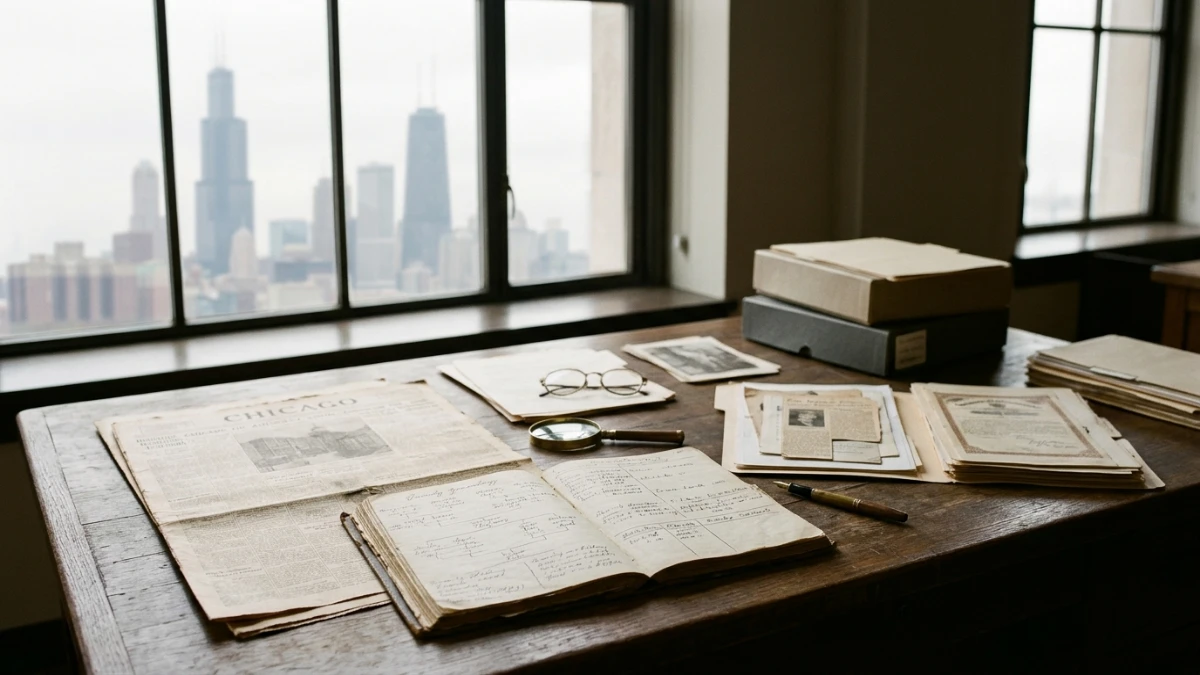
Featured Snippet: How Do You Find Chicago Obituaries by Last Name?
To find Chicago obituaries by last name, search the person’s surname along with Chicago, Illinois, and any additional details you know, such as their first name, approximate year of death, or neighborhood. You can also check funeral home websites, Chicago newspaper archives, the Chicago Public Library, and the Newberry Library for recent and historical obituary records. If the surname is common, compare family relationships, dates, and locations to make sure you have found the correct person.
Searching for an obituary is often about more than finding a name in an old newspaper. It can be a way to remember someone you loved, reconnect with distant relatives, or discover details about a family member whose story has not been fully documented.
If you are searching for Chicago obituaries by last name, beginning with a surname can make the process easier. Chicago has a rich history of newspapers, funeral homes, cemetery records, and family notices. These resources can help you locate both recent memorial announcements and historical records.
However, finding the right obituary is not always straightforward. Several people may share the same last name, older records may use different spellings, and some family notices may never have been published online.
The good news is that you do not need to know every detail to begin. With the right search techniques and reliable research resources, you can gradually narrow your results and identify the person you are looking for.
This guide explains how to search Chicago obituaries by surname, where to find recent and historical records, and how to verify that an obituary belongs to the correct person.
How to Find Chicago Obituaries by Last Name

The easiest way to begin an obituary search is to enter the person’s last name along with Chicago or Cook County, Illinois. If you know additional information, such as a first name, approximate death date, or neighborhood, include it to make the search more specific.
For example, someone researching a family member named Anderson might begin with:
- Anderson obituary Chicago
- Anderson death notice Chicago Illinois
- Anderson obituary Cook County
- Anderson funeral home Chicago
These are suggested search phrases, not verified individual obituary records.
Start With the Person’s Last Name
If you have limited information, begin with the surname alone. Enter it into a search engine alongside the word obituary and the location Chicago.
A common surname may produce hundreds of results. In that case, add more identifying information rather than relying on the surname by itself.
Useful details include:
- First or middle name
- Approximate age
- Year of death
- Chicago neighborhood
- Names of relatives
- Known funeral home
Even one additional detail can make a broad search considerably more manageable.
Search Using the Complete Name
If you know the person’s full name, use it in quotation marks when searching online.
For example:
“Robert Anderson” obituary Chicago 2019
Searching the complete name can help separate one individual from others with similar names.
Remember that older obituaries may use a middle name, nickname, maiden name, or an alternative spelling. If your first search does not produce results, try different versions of the person’s name.
Best Websites for Chicago Obituaries by Last Name

Several established libraries, newspaper archives, and funeral home websites can help you find Chicago obituaries. The best resource depends on if you are looking for a recent death notice or researching someone who lived many decades ago.
1. Chicago Public Library
The Chicago Public Library is a valuable starting point for historical obituary and genealogy research.
Its research resources include access to historical newspaper collections, including the Chicago Tribune and Chicago Defender archives. These collections can help researchers discover older death notices, family announcements, and other newspaper references.
Some digital resources may require a library card or access through a library location. Check the library’s current database availability before beginning your research.
2. Chicago Tribune Archives
The Chicago Tribune is an important resource for researching historical Chicago obituaries and newspaper notices.
Its archives can help you locate published material from different periods, depending on the available collection and access arrangements.
Try searching with the person’s full name, surname, and approximate year of death. If an exact search produces no results, experiment with different spellings and broader date ranges.
3. Chicago Sun Times
The Chicago Sun Times is another useful place to investigate published death notices and memorial announcements.
Check its website for available obituary listings and explore library accessible newspaper databases when researching older records.
Keep in mind that newspaper coverage varies by publication date, and not every death results in a published obituary.
4. Newberry Library
The Newberry Library in Chicago is particularly valuable for family history and historical genealogy research.
Its genealogy resources include guidance on researching Chicago families through historical newspapers, specialized indexes, and community records.
This can be especially helpful when researching immigrant families whose names appeared in Polish language, Czech language, or other community newspapers.
5. Funeral Home Websites
Funeral home websites are often among the most useful sources for recent Chicago obituaries.
Many funeral homes publish online memorial pages containing:
- The deceased person’s full name
- Birth and death dates
- A short life story
- Names of surviving relatives
- Funeral and memorial service details
- Photographs and family tributes
If you know which funeral home handled the arrangements, search its website directly.
You can also combine the person’s surname with a Chicago neighborhood or a known funeral home’s name.
Not every family chooses to publish an online obituary, so the absence of a listing does not mean that no obituary exists.
Chicago Obituaries by Last Name: Recent and Historical Records

The age of an obituary can influence where you should search.
Recent memorial announcements are often available through funeral home websites and newspaper obituary sections. Older records may require historical newspaper archives, genealogy databases, or library collections.
The following table can help you choose a starting point.
| Record Type | Best Place to Start | Useful Search Details |
| Recent obituary | Funeral home or newspaper website | Full name and death date |
| Obituary from previous decades | Historical newspaper archives | Surname and approximate year |
| Historical family obituary | Chicago Public Library or Newberry Library | Name variations and neighborhood |
| Immigrant family obituary | Specialized community newspaper indexes | Original language surname |
| Official death record | Illinois or Cook County vital records resources | Full name and date of death |
Chicago’s diverse history makes community specific newspapers particularly valuable. Some family announcements may appear in publications that served particular immigrant or cultural communities rather than in major English language newspapers.
Finding Obituaries From the 1800s and Early 1900s
Historical obituary research can be more challenging because many older newspapers have not been digitized or indexed.
If you are researching someone who died in the nineteenth or early twentieth century, consider exploring:
- Digitized historical newspaper collections
- Newspaper microfilm
- Library genealogy databases
- Historical surname indexes
- Community and ethnic newspaper archives
- Cemetery and burial records
The Great Chicago Fire of 1871 destroyed many records and buildings, complicating historical research. However, surviving newspapers, family documents, cemetery records, and other historical collections may still provide valuable information.
Also consider spelling variations. Immigrant families sometimes used different versions of their surnames after arriving in the United States. An obituary may therefore contain a spelling that differs from the one used by later generations.
Finding Obituaries From Recent Years
For a recent obituary, start with the person’s complete name and an approximate year of death.
Next, check local newspaper obituary sections and funeral home memorial pages.
If you cannot find the record within Chicago, expand your search to nearby suburbs and surrounding communities.
Someone may have lived outside the city, passed away in a nearby hospital, or had a funeral service in Chicago. Searching both the person’s residential community and Chicago can help uncover additional results.
How to Search Chicago Obituaries Alphabetically by Last Name

An alphabetical surname search can be useful when you know a family name but do not remember the person’s complete name.
However, there is no single public directory that contains every Chicago obituary in one comprehensive alphabetical list. Newspaper archives, funeral home websites, and genealogy databases maintain separate collections.
You can organize your research by surname using the following examples.
| Alphabetical Group | Example Surnames |
| A–F | Anderson, Brown, Carter, Davis, Evans, Foster |
| G–L | Garcia, Harris, Jackson, Johnson, Kelly, Lewis |
| M–R | Martinez, Miller, Nelson, O’Connor, Patel, Robinson |
| S–Z | Smith, Taylor, Thomas, Walker, Young, Zamora |
These surnames are illustrative search examples, not a verified list of Chicago obituary records or a ranking of common family names.
To search for a particular family, replace the example surname with the one you are researching.
For example:
Anderson obituary Chicago Illinois
You can then add a first name, neighborhood, or approximate year to narrow the results.
How to Find a Chicago Obituary When You Know Only the Last Name
Sometimes you remember a family surname but very little else. You might be searching for a former neighbor, a distant relative, or someone connected to your family’s history.
Although this can make the search more difficult, several techniques can help you discover the correct record.
1. Add a Chicago Neighborhood or Nearby Suburb
Location is one of the most useful details when searching for someone with a common surname.
If you remember where the person lived, include that neighborhood or suburb in your search.
For example:
- Murphy obituary Beverly Chicago
- Johnson obituary Hyde Park Chicago
- Garcia obituary Cicero Illinois
- Peterson obituary Evanston Illinois
These are example queries rather than confirmed obituary listings.
Remember that Chicago neighborhoods and surrounding suburbs are different locations. Search the community most closely associated with the person rather than assuming that every nearby location will contain the same records.
2. Search for Relatives’ Names
An obituary often includes information about spouses, parents, children, siblings, and other surviving relatives.
These details can help distinguish someone from other individuals who share the same surname.
If you remember the name of a spouse or child, include it alongside the family surname.
For example, searching for a surname together with a known relative’s name may produce a more specific result than searching for the surname alone.
Always compare the family relationships in the obituary with the information you already know before accepting it as the correct record.
3. Try Alternative Surname Spellings
Family names can change over time. Immigration, transcription mistakes, accents, and newspaper typesetting may all influence how a surname appears in historical records.
Consider searching for:
- Maiden and married surnames
- Hyphenated and unhyphenated versions
- Names with and without apostrophes
- Names with and without accent marks
- Anglicized versions of immigrant surnames
- Common spelling variations
This approach is particularly useful when researching older Chicago families with roots in different countries and language communities.
4. Search Newspapers That Served the Person’s Community
Not every family relied on a major English language newspaper for death announcements.
Chicago has a long history of community newspapers serving different cultural and immigrant populations.
The Newberry Library’s genealogy resources can help researchers identify specialized historical newspaper indexes, including resources for Polish and Czech communities. Chicago Public Library’s historical newspaper collections also provide useful research opportunities.
Searching a community newspaper may reveal a death notice or family announcement that does not appear in a general online search.
What Information Can a Chicago Obituary Provide?
An obituary can reveal much more than a person’s date of death. Depending on the publication and the family’s preferences, it may provide useful information about the individual’s background, family relationships, and life experiences.
| Information | How It Helps |
| Full name and alternate names | Helps confirm identity and spelling |
| Birth and death dates | Narrows the search to the correct person |
| Family relationships | Connects relatives across generations |
| Former residence | Helps distinguish people with similar names |
| Occupation and accomplishments | Provides context about the person’s life |
| Funeral or memorial details | Helps locate service information |
| Photographs and personal tributes | Offers a meaningful connection to the individual |
Not every obituary contains all these details.
Some death notices are only a few lines long, while longer memorial tributes may describe a person’s career, education, interests, community involvement, and family life.
It is also important to understand the difference between an obituary and an official death certificate.
An obituary is a published announcement or tribute, generally prepared or submitted by a family or publisher. A death certificate is an official vital record containing information recorded through the applicable government process. Access to official records is subject to relevant eligibility and privacy rules.
How to Verify That You Have Found the Right Person
Finding an obituary with the correct surname does not automatically mean you have identified the right individual.
This is particularly important when researching common family names such as Smith, Johnson, Brown, and Williams.
Before saving a record or adding information to a family tree, compare several identifying details.
- Full name: Does the first name, middle initial, or alternate name match?
- Dates: Is the reported age or date of death consistent with what you know?
- Family members: Do the listed relatives match the family you are researching?
- Location: Does the person’s home or neighborhood make sense?
- Additional records: Can a funeral notice, cemetery listing, or another reliable source support the information?
For genealogy research, record the original source and publication date alongside your findings.
If two sources contain conflicting information, preserve both details and investigate the difference rather than automatically accepting one version.
This careful approach helps prevent mistakes when building a family history or documenting relationships across generations.
Common Challenges When Searching Chicago Obituaries
Even a well organized search may not produce the result you expect. Several common problems can make obituary research difficult.
Too Many People Share the Same Surname
A common surname may return many unrelated individuals.
Add a first name, middle initial, approximate age, death year, or family member’s name to narrow the results.
No Obituary Appears in Search Results
Some funeral notices and historical newspaper records are not indexed by search engines.
Try searching funeral home websites, historical newspaper archives, library genealogy databases, and cemetery records.
The Death Happened Many Years Ago
Older obituaries may not be available online.
Explore newspaper microfilm, historical indexes, and library collections. Search a broader date range if you do not know the exact year.
The Family Used a Different Spelling
An obituary may use an older or alternative version of a family surname.
Try different spellings, maiden names, and anglicized versions. Community specific newspaper archives may also help.
The Person Lived Outside Chicago
A person associated with Chicago may have lived in a nearby suburb or another Illinois community.
Search both the city and the actual residential location to increase the chances of finding the correct notice.
FAQs About Chicago Obituaries by Last Name
How Can I Find Chicago Obituaries by Last Name for Free?
Start with search engines, funeral home memorial pages, and the genealogy resources available through the Chicago Public Library. Historical newspaper archives may also be accessible through participating libraries. Some databases require a library card or an in person visit.
Can I Find a Chicago Obituary Without Knowing the First Name?
Yes. Search the person’s surname alongside Chicago, Illinois, and any other details you remember, such as a neighborhood, approximate year of death, or relative’s name. You may need to review several results to identify the correct person.
Where Can I Find Old Chicago Obituaries by Surname?
The Chicago Public Library and Newberry Library are useful starting points for historical genealogy research. Newspaper archives, microfilm collections, and specialized community newspaper indexes may also contain older obituary notices.
Are Chicago Death Notices and Obituaries the Same Thing?
No. A death notice is generally a brief announcement that provides basic information about a person’s death and sometimes funeral arrangements. An obituary usually contains a more detailed account of the person’s life, family, and accomplishments. However, publishers may use these terms differently.
Can I Find a Chicago Obituary From the 1800s?
Possibly. Historical newspaper archives, genealogy collections, and surviving newspaper indexes may contain notices from the nineteenth century. However, historical records are incomplete, and the Great Chicago Fire of 1871 destroyed many local records. Therefore, not every person’s death will have a surviving obituary.
How Do I Find an Obituary if the Person Lived Outside Chicago?
Search the person’s actual city or suburb as well as Chicago. Someone may have lived in a nearby community, appeared in a regional newspaper, or had a funeral service in Chicago. Searching both locations may reveal records that a city only search misses.
Does Every Person Who Dies in Chicago Have an Online Obituary?
No. Families do not always publish obituaries, and older notices may never have been digitized. If you cannot find one online, try funeral homes, newspaper archives, cemetery records, and official vital record resources where access is permitted.
Can I Use an Obituary to Research My Family Tree?
Yes. Obituaries can provide names, dates, family relationships, residences, and clues to other historical records. They are valuable genealogy resources, but important details should be compared with additional documents whenever possible.
Conclusion
Finding Chicago obituaries by last name can take patience, especially when you have limited information or are researching someone who died many years ago. However, a surname provides a useful starting point for discovering a person’s story and preserving family history.
Begin with a simple surname search, then narrow your results using first names, dates, neighborhoods, and family relationships. Explore newspaper archives, library genealogy collections, and funeral home memorial pages when necessary.
If your first search does not produce a result, try another spelling, expand the date range, or investigate nearby communities.
An obituary can provide a meaningful connection to a life remembered. With careful research and reliable sources, you can improve your chances of finding the right record and preserving the history behind the name.

Emma helps authors, screenwriters, and gamers find the perfect names for their fictional characters. She analyzes historical trends and linguistic styles to craft names that carry deep meaning. When she isn’t writing, she loves plotting her next fantasy novel at a local café.