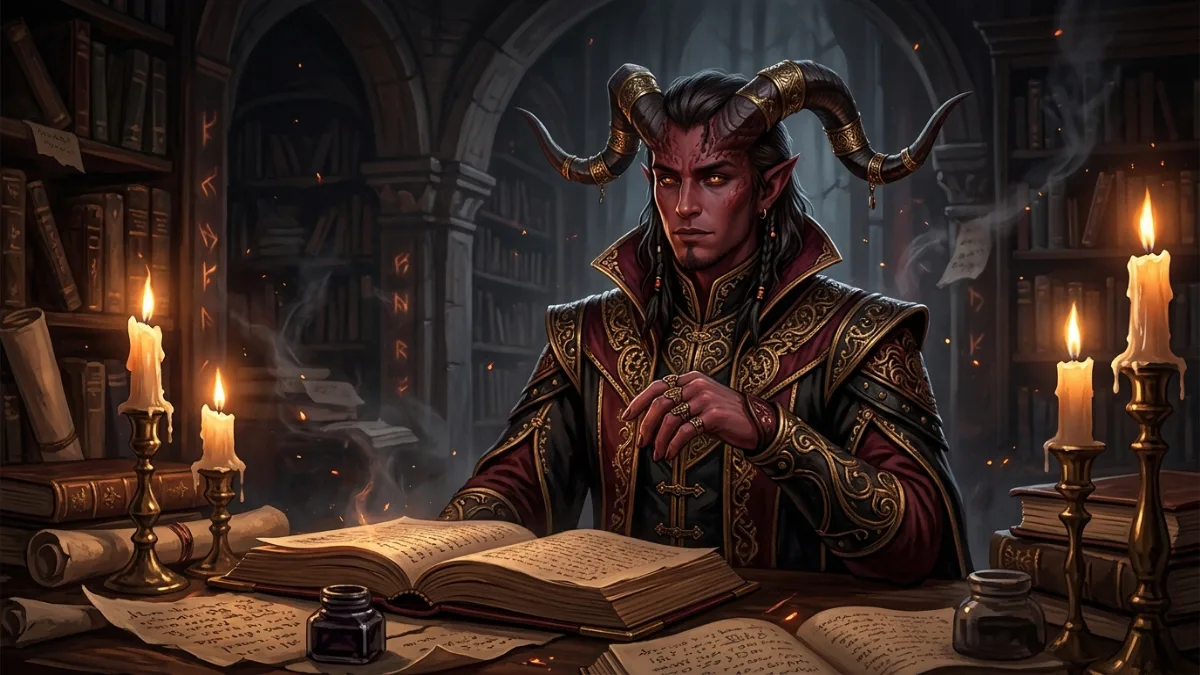
Tiefling names have a special kind of magic. They can sound like whispers from an ancient infernal court, the name of a wandering sorcerer, or a promise made by someone who refuses to let their ancestry define them.
If you’re creating a charming warlock, a fierce paladin, a mysterious rogue, or a gentle tiefling who simply wants to belong, the right name can bring that character to life before their first adventure even begins.
The best tiefling names balance sound, personality, and story. Some feel sharp and intimidating, others graceful and celestial, while virtue names such as Hope or Mercy reveal a character’s ideals rather than their heritage.
This guide explores memorable tiefling names by gender, aesthetic, personality, and naming style, with meanings and creative inspiration to help you find a name that truly fits your character.
Featured Snippet:
Good tiefling names combine infernal elegance, dark fantasy, and personal meaning. Popular choices from Dungeons & Dragons include Akmenos, Morthos, Kairon, Kallista, Orianna, and Nemeia. Virtue names such as Hope, Glory, Despair, and Sorrow offer a more personal alternative. The best choice depends on If your tiefling embraces their infernal heritage, hides it, or chooses a name that reflects the person they want to become.
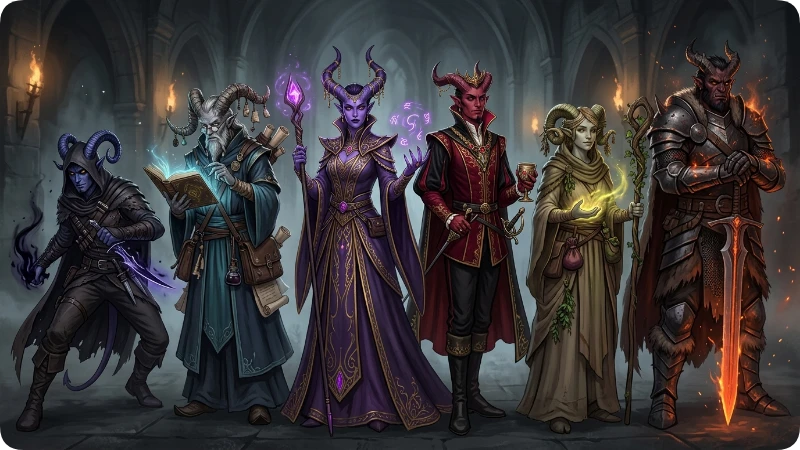
Best Tiefling Names at a Glance
| Name | Style | Best character fit |
| Akmenos | Infernal, commanding | Ambitious warlock |
| Kallista | Elegant, mysterious | Charismatic sorcerer |
| Morthos | Dark, imposing | Haunted warrior |
| Orianna | Graceful, regal | Noble spellcaster |
| Kairon | Sharp, confident | Strategic rogue |
| Nemeia | Soft, enigmatic | Secretive mage |
| Hope | Redemptive, gentle | Compassionate cleric |
| Despair | Gothic, tragic | Brooding antihero |
| Ember | Warm, fiery | Bold adventurer |
| Mercy | Calm, powerful | Redemption seeking paladin |
| Sorrow | Melancholic, poetic | Tragic storyteller |
| Creed | Disciplined, resolute | Devoted fighter |
Note: The infernal names above draw on established D&D examples where indicated; Ember, Mercy, and several other suggestions are creative choices rather than official tiefling name entries. Style descriptions are interpretations, not canonical meanings.
Male Tiefling Names

For warlocks, fighters, rogues, bards, and male or masculine presenting characters who need a memorable fantasy identity.
| Name | Meaning or inspiration | Personality and aesthetic |
| Akmenos | Established D&D infernal name; no official translation supplied | Proud, ambitious, commanding |
| Amnon | Established infernal name | Restrained, enigmatic |
| Barakas | Established infernal name | Powerful, aristocratic |
| Damakos | Established infernal name | Assertive, formidable |
| Ekemon | Established infernal name | Unusual, scholarly |
| Iados | Established infernal name | Quiet, mysterious |
| Kairon | Established infernal name | Strategic, polished |
| Leucis | Established infernal name | Cool, refined |
| Melech | Established infernal name | Regal, authoritative |
| Mordai | Dark fantasy inspired variation | Brooding, memorable |
| Morthos | Established infernal name | Ominous, battle ready |
| Pelaios | Established infernal name | Classical, sophisticated |
| Skamos | Established infernal name | Sharp, rebellious |
| Therai | Established infernal name | Smooth, understated |
| Zarek | Fantasy inspired name | Edgy, modern |
| Vexar | Original fantasy suggestion | Calculating, intimidating |
The first group follows names listed in the D&D Basic Rules; Zarek and Vexar are included as creative alternatives rather than presented as official entries.
Best male names by personality
- Dark and dangerous: Morthos, Mordai, Vexar
- Royal and sophisticated: Melech, Barakas, Pelaios
- Quiet and mysterious: Iados, Leucis, Therai
- Bold and charismatic: Akmenos, Damakos, Kairon
- Short and distinctive: Iados, Skamos, Zarek
My pick: Kairon is an excellent all round choice. It feels confident without being overly theatrical, making it suitable for a clever rogue, charismatic bard, or morally complicated warlock.
Female Tiefling Names
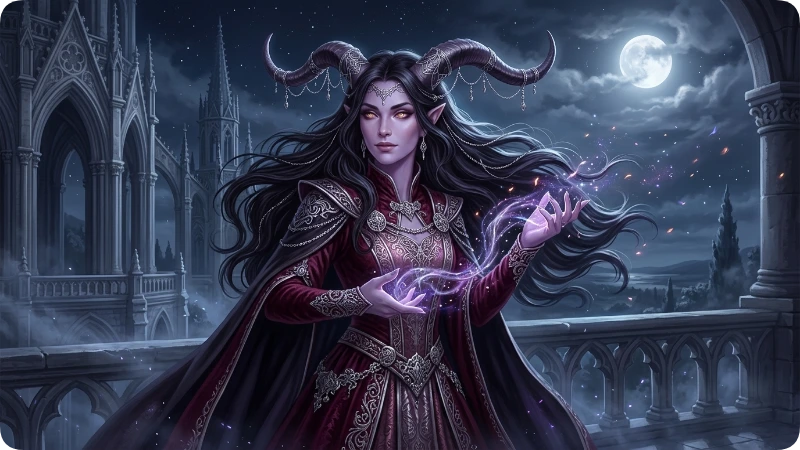
Elegant, fiery, gothic, and graceful names for female tieflings and characters of any feminine fantasy archetype.
| Name | Meaning or inspiration | Personality and aesthetic |
| Akta | Established D&D infernal name | Short, sharp, confident |
| Anakis | Established infernal name | Mysterious, unconventional |
| Bryseis | Established infernal name | Classical, dramatic |
| Criella | Established infernal name | Gothic, lyrical |
| Damaia | Established infernal name | Graceful, powerful |
| Ea | Established infernal name | Minimalist, otherworldly |
| Kallista | Established infernal name | Elegant, charismatic |
| Lerissa | Established infernal name | Soft, refined |
| Makaria | Established infernal name | Ceremonial, regal |
| Nemeia | Established infernal name | Dreamy, enigmatic |
| Orianna | Established infernal name | Romantic, aristocratic |
| Phelaia | Established infernal name | Ethereal, unusual |
| Rieta | Established infernal name | Concise, self assured |
| Thalira | Original fantasy suggestion | Celestial, graceful |
| Vespera | Original fantasy suggestion | Nocturnal, sophisticated |
| Zaretha | Original fantasy suggestion | Fierce, commanding |
The established entries come from D&D’s published tiefling name examples. Descriptions of mood and style are editorial interpretations, not official name meanings.
Best female names by aesthetic
- Dark and gothic: Criella, Anakis, Vespera
- Elegant and royal: Kallista, Makaria, Orianna
- Soft and mysterious: Nemeia, Lerissa, Thalira
- Powerful and commanding: Damaia, Akta, Zaretha
- Minimalist and memorable: Ea, Rieta
My pick: Kallista works beautifully for a tiefling who commands attention without needing to raise her voice. For a gentler, more mysterious character, Nemeia has a softer and more dreamlike feel.
Gender Neutral Tiefling Names
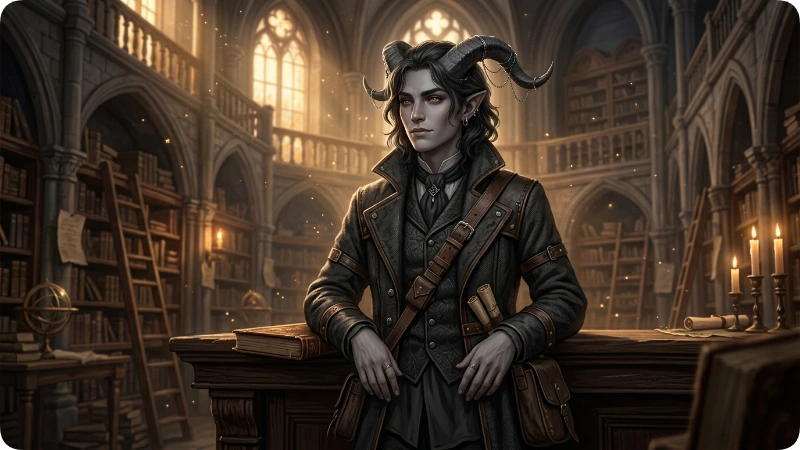
Gender neutral names work especially well for nonbinary characters, androgynous designs, mysterious NPCs, and tieflings whose identities don’t fit traditional fantasy archetypes.
| Name | Core association | Character vibe |
| Hope | Optimism | Compassionate rebel |
| Glory | Recognition | Proud champion |
| Creed | Conviction | Disciplined idealist |
| Quest | Discovery | Restless adventurer |
| Reverence | Respect | Devout spellcaster |
| Sorrow | Grief | Haunted poet |
| Ember | Residual fire | Resilient survivor |
| Ash | What remains after fire | Reserved wanderer |
| Onyx | Black gemstone | Elegant, formidable |
| Solace | Comfort | Gentle healer |
| Tempest | Violent storm | Unpredictable sorcerer |
| Haven | Refuge | Protective guardian |
Hope, Glory, Creed, Quest, Reverence, and Sorrow fit the established virtue name tradition. The remaining options are modern or fantasy inspired suggestions. Their associations are descriptive rather than verified etymologies.
A gender neutral tiefling name can feel especially compelling when it contrasts with the character’s appearance. A towering tiefling named Solace suggests unexpected gentleness, while a delicate looking sorcerer named Tempest hints at the power beneath the surface.
Tiefling Virtue Names
Virtue names are among the most distinctive elements of D&D tiefling naming. Instead of simply inheriting a family name, a character may adopt a word representing an ideal, a personal struggle, or a future they hope to create. Official examples include Hope, Glory, Despair, Music, Poetry, Quest, and Sorrow.
The most interesting virtue names don’t always describe a character’s current personality. Sometimes they reveal what the character has lost, what they desire, or how they want others to see them.
Hopeful and redemptive names
- Hope — A quiet declaration that darkness will not win.
- Mercy — Ideal for a former criminal seeking forgiveness.
- Grace — Soft, elegant, and spiritually evocative.
- Solace — A comforting name for a healer or protector.
- Redemption — A dramatic self chosen name for someone trying to escape their past.
- Patience — Suits a calculating mage or a gentle mentor.
Dark and tragic virtue names
- Despair — A character who has faced hopelessness and survived.
- Sorrow — A poetic choice for a haunted bard.
- Torment — Intense and confrontational, suited to a troubled antihero.
- Carrion — Macabre, unsettling, and unapologetically gothic.
- Fear — A name that turns intimidation into identity.
- Ruin — Powerful for a character who destroys corrupt systems—or fears destroying everything they love.
Ambitious and rebellious names
- Glory — A champion hungry for recognition.
- Ambition — A natural fit for a political schemer or aspiring archmage.
- Defiance — A declaration of independence.
- Victory — Ideal for a determined warrior.
- Justice — Suits a vigilante whose methods may be questionable.
- Temerity — A daring choice for a fearless rogue or reckless adventurer.
Beautifully ironic virtue names
Some of the best names create tension between the word and the character.
| Name | Character concept |
| Mercy | A ruthless bounty hunter with one unbreakable rule |
| Hope | A cynical warlock who secretly saves strangers |
| Silence | A loud, flamboyant bard |
| Innocence | A clever criminal with a spotless public image |
| Serenity | A volatile sorcerer learning self control |
| Joy | A grieving traveler determined to help others |
| Justice | A vigilante who bends every rule |
| Fortune | A gambler who has never enjoyed good luck |
These are original character concepts, not official D&D examples. Their strength comes from the stories they invite players to tell.
Dark and Gothic Tiefling Names
Best for shadowy warlocks, necromancers, cursed nobles, haunted rogues, and dark academia inspired characters.
Vespera
Original fantasy suggestion
A graceful, nocturnal sounding name with a mysterious, high born quality. It fits a tiefling who studies forbidden magic or navigates aristocratic intrigue.
Morthos
Established D&D infernal name
Heavy consonants give this name a formidable sound. It suits a battle worn fighter, a stern warlock, or a villain whose reputation precedes him.
Criella
Established D&D infernal name
Its flowing sound creates an intriguing contrast with a gothic aesthetic. Imagine a soft spoken tiefling who specializes in dangerous enchantments.
More dark tiefling names to consider:
- Male: Mordai, Skamos, Vexar, Akmenos, Morthos
- Female: Anakis, Criella, Vespera, Zaretha, Nemeia
- Gender neutral: Ruin, Sorrow, Onyx, Tempest, Ash
For a gothic character, a restrained name can be more memorable than an aggressively sinister one. Pairing a soft first name with a darker surname often creates a richer identity.
Elegant and Royal Tiefling Names
Royal tiefling names are ideal for infernal aristocrats, diplomats, ancient bloodlines, court sorcerers, and characters raised among wealth and political danger.
| Name | Style | Suggested character |
| Melech | Regal, commanding | Heir to an infernal house |
| Barakas | Formal, imposing | Noble born warlock |
| Kallista | Elegant, polished | Court enchantress |
| Makaria | Ceremonial, classical | Aristocratic priestess |
| Orianna | Romantic, refined | Diplomat or noble mage |
| Pelaios | Classical, distinguished | Scholar from an old family |
| Damaia | Graceful, confident | Political strategist |
| Vaelora | Original, luxurious | Duchess of a fictional infernal court |
| Azravel | Original, dramatic | Ancient bloodline heir |
| Seravelle | Original, lyrical | Court musician or illusionist |
These descriptions suggest character aesthetics rather than historical meanings or established ranks. A noble sounding name doesn’t need to belong to an evil character; a tiefling aristocrat could be a generous ruler, a political survivor, or someone trying to dismantle their family’s cruel traditions.
Naming tip: Combine a flowing first name with a surname that sounds older and more severe. Orianna Duskveil and Kallista Ashthorne are original examples that create a clear aristocratic fantasy atmosphere.
Cute and Soft Tiefling Names
Not every tiefling needs a terrifying name. Soft names can suit friendly bards, curious wizards, gentle clerics, cheerful shopkeepers, and characters whose warmth surprises strangers.
- Lumi — Light and airy in sound; a cozy fantasy choice.
- Mira — Simple, versatile, and easy to pronounce.
- Neri — Short, modern, and quietly mysterious.
- Ember — Warm and fiery without sounding threatening.
- Pip — Playful and memorable for a small, mischievous adventurer.
- Rumi — Gentle and lyrical in sound.
- Nemeia — A softer established infernal name option.
- Lerissa — Graceful and approachable.
- Solace — A tender virtue name inspired choice.
- Clover — Whimsical and nature inspired.
- Mallow — Cute, unusual, and cozy.
- Fable — Storybook like, ideal for a bard or traveling storyteller.
Some names above have real world linguistic histories, while others are English words or invented fantasy choices. Their soft, cute, or cozy qualities describe their modern aesthetic rather than a verified tiefling tradition.
For a cute tiefling, contrast is often the secret ingredient. A character with dramatic horns, a spaded tail, and a formidable fire spell named Pip or Clover can be far more memorable than another character with an overtly sinister name.
Unique and Uncommon Tiefling Names
If you want a name that feels personal rather than familiar, look for unusual syllable patterns, unexpected contrasts, or a name that carries a story without explaining everything.
| Name | Style | Character impression |
| Zaerith | Invented fantasy | Ancient, secretive |
| Velkira | Invented fantasy | Bold, elegant |
| Nyxara | Invented fantasy | Nocturnal, mysterious |
| Theryx | Invented fantasy | Sharp, formidable |
| Vaelith | Invented fantasy | Ethereal, refined |
| Zoraveth | Invented fantasy | Powerful, ceremonial |
| Eryndra | Invented fantasy | Graceful, arcane |
| Malveris | Invented fantasy | Scholarly, intimidating |
| Xavira | Invented fantasy | Confident, modern |
| Kaelith | Invented fantasy | Soft, otherworldly |
| Vireth | Invented fantasy | Minimalist, enigmatic |
| Azrien | Invented fantasy | Celestial, dramatic |
| Orynth | Invented fantasy | Ancient, mysterious |
| Velmora | Invented fantasy | Gothic, aristocratic |
| Sable | English word name | Minimalist, dark |
| Fable | English word name | Whimsical, literary |
These are creative suggestions, not established Infernal vocabulary. Their fictional impressions come from sound, rhythm, and familiar fantasy naming conventions rather than verified translations.
How to make an original tiefling name
Try combining a few sound elements to create a name that is easy to pronounce at the gaming table.
- Sharp and aggressive: Z, V, K, and X sounds can create a forceful impression.
- Elegant and lyrical: Open vowels and flowing endings can make a name feel graceful.
- Ancient and ceremonial: Three syllables and a formal rhythm can suggest an old lineage.
- Short and intimidating: One or two syllables can make a name memorable in dialogue.
For example, Vaelith feels more ethereal, while Theryx feels more severe. Neither has a fixed canonical meaning; the character’s backstory gives it significance.
Tiefling Last Names and Surnames
Tieflings do not all need infernal surnames. A character may carry a family name from the community that raised them, inherit a noble house name, adopt a new surname, or travel under an alias. The choice depends on the campaign’s setting and the character’s history.
These original surname ideas work well for fantasy role playing:
| Surname | Aesthetic | Best fit |
| Ashthorne | Gothic, aristocratic | Disgraced noble |
| Duskveil | Mysterious, refined | Illusionist |
| Emberfall | Fiery, dramatic | Sorcerer |
| Nightbloom | Dark, botanical | Druid or witch |
| Blackthorn | Severe, traditional | Veteran fighter |
| Vexmoor | Moody, old world | Wandering scholar |
| Cinderveil | Infernal, elegant | Secretive warlock |
| Ravencrest | Noble, ominous | Political schemer |
| Hollowmere | Haunted, melancholic | Cursed wanderer |
| Thornwake | Defiant, rugged | Rebel leader |
| Silverash | Refined, understated | Diplomat |
| Duskwalker | Shadowy, adventurous | Rogue |
These surnames are invented or adapted from English word elements; they are not official D&D family names.
Full tiefling name combinations
- Kallista Duskveil — an elegant enchantress with a dangerous secret.
- Morthos Ashthorne — a stern warrior from a disgraced house.
- Nemeia Nightbloom — a mysterious healer with forbidden knowledge.
- Kairon Vexmoor — a calculating rogue who always has a second plan.
- Orianna Ravencrest — a polished noble navigating infernal politics.
- Hope Emberfall — a compassionate cleric determined to change her family’s legacy.
- Sorrow Hollowmere — a wandering bard whose songs preserve lost memories.
- Vaelith Silverash — an original, ethereal sounding name for a diplomatic mage.
A strong full name usually balances its parts. If the first name is ornate, try a shorter surname. If the first name is a simple virtue word, a more elaborate surname can give the character additional texture.
Infernal Tiefling Names and Their Naming Style
Infernal names are associated with tieflings whose naming traditions reflect their fiendish ancestry. In D&D, names such as Akmenos, Damakos, Kairon, Kallista, and Orianna are published examples. They are not automatically evil names; a tiefling’s morality is not determined by their ancestry or name.
A useful distinction: an established D&D name is not necessarily accompanied by an official translation. Avoid assigning literal meanings to these names unless a reliable source provides one.
What makes a name sound infernal?
Many fantasy writers favor:
- Firm consonants that make a name sound decisive.
- Flowing vowels that create a ceremonial or aristocratic feel.
- Two or three syllables that are easy to remember.
- A distinctive ending that separates the name from ordinary modern names.
For instance, Akmenos sounds formal and forceful, while Orianna feels more flowing and graceful. Those are impressions based on sound, not translations from Infernal.
Can tieflings have ordinary names?
Yes. D&D’s published naming guidance explicitly allows tieflings to use names drawn from the culture in which they grew up, alongside inherited infernal names and self chosen virtue names.
A tiefling named Thomas, Rowan, Elise, or Morgan can be just as believable as one named Morthos or Kallista. An ordinary name may reflect a loving adoptive family, an attempt to blend in, or a desire to live beyond other people’s expectations.
Tiefling Names Inspired by Personality and Class
Instead of starting with gender or appearance, choose a name based on how your character behaves. This is particularly helpful when the same character concept could fit several different naming traditions.
| Character concept | Names to consider | Why they fit |
| Charismatic warlock | Akmenos, Kairon, Vexar | Assertive, memorable sounds |
| Gentle cleric | Hope, Solace, Grace | Compassionate associations |
| Ruthless rogue | Skamos, Mordai, Vexar | Sharp, shadowy impressions |
| Fire sorcerer | Ember, Zaretha, Damakos | Warmth or forceful sound |
| Noble bard | Orianna, Kallista, Pelaios | Graceful, formal rhythm |
| Haunted paladin | Mercy, Sorrow, Morthos | Tension between ideals and pain |
| Rebellious fighter | Defiance, Zarek, Thornwake | Strong, independent character cues |
| Arcane scholar | Ekemon, Leucis, Malveris | Restrained, intellectual aesthetic |
| Trickster | Pip, Quest, Xavira | Playful or adventurous energy |
| Mysterious healer | Nemeia, Lerissa, Solace | Soft, enigmatic associations |
These are suggestions, not class specific naming rules. Any tiefling name can work for any class if it fits the character’s story.
How to Choose the Right Tiefling Name
When several names sound good, use these practical checks to narrow the list.
1. Decide what the name says about the character
Does your tiefling embrace their heritage, reject it, or feel conflicted about it? Infernal names and virtue names can communicate different relationships with identity.
2. Say it aloud
Your group may repeat the name dozens of times during a campaign. Choose something you and your fellow players can pronounce comfortably.
3. Test the full name
Say the first name, surname, and nickname together. Kallista Duskveil has a formal, dramatic rhythm; Pip Ashthorne feels more playful.
4. Match the character’s aesthetic
A gothic warlock might suit Morthos or Vespera, while a friendly bard might suit Fable or Ember.
5. Give the name a personal history
Was it chosen at adulthood? Inherited from a parent? Given by an adoptive family? Earned after a defining adventure? Even an ordinary name becomes memorable when its origin matters.
What about lucky numbers, colors, gemstones, and zodiac signs?
For tiefling characters, these attributes are best treated as optional worldbuilding rather than established facts about the name.
You could assign crimson, obsidian, and iron to a character whose story revolves around fire, secrecy, and resilience, or silver, moonstone, and pale blue to one associated with dreams and redemption. These are creative design choices, not canonical tiefling correspondences.
Likewise, numerology, lucky days, gemstones, and zodiac associations should not be presented as verified name meanings. If you use them in a character profile, label them as personal symbolism or campaign specific lore.
FAQs About Tiefling Names
What are good tiefling names for D&D?
Akmenos, Kairon, Damakos, Morthos, Kallista, Nemeia, and Orianna are good starting points from published D&D naming examples. Hope, Glory, Sorrow, and Quest are strong virtue name options. Choose according to the character’s background and personality.
What is a tiefling virtue name?
A virtue name is a chosen name based on an ideal or concept. Examples in D&D include Hope, Glory, Despair, Music, Poetry, and Sorrow. Such a name may express an aspiration, a personal struggle, or a deliberate statement about identity.
Are tiefling names gender specific?
Published D&D examples include separate male and female infernal name lists, but those examples do not prevent players from choosing names across gender lines. Virtue names are especially flexible because words such as Hope, Creed, and Sorrow do not inherently specify gender.
Do tiefling names have literal meanings?
Not necessarily. Some names have recognizable real world associations, but published infernal names should not be assigned invented translations. A name’s sound, role play symbolism, and personal backstory can be meaningful even without a verified literal meaning.
Can a tiefling have a human name?
Yes. D&D naming guidance recognizes that tieflings may use names from the culture in which they were raised. A familiar name can reflect family ties, cultural belonging, or a desire not to be defined by infernal ancestry.
What are the best dark tiefling names?
Morthos, Mordai, Criella, Anakis, and Skamos are strong options for a dark fantasy aesthetic. Virtue names such as Despair, Torment, and Ruin can create a more personal, gothic identity.
Can I invent my own tiefling name?
Absolutely. Start with a sound and style you like, then consider your character’s background, family, and personality. Invented names such as Vaelith, Zoraveth, or Nyxara can work well, but treat them as original fantasy constructions rather than established Infernal words.
Should a tiefling’s name sound evil?
No. Tieflings are not inherently evil because of their infernal heritage. A gentle name can create an appealing contrast with a fearsome appearance, while a severe name can suit a character who is compassionate beneath a guarded exterior.
Conclusion:
The best tiefling name is more than a collection of dark sounding syllables. It hints at a history, a personal struggle, a family legacy, or a future the character hopes to claim.
Choose Akmenos or Morthos for a commanding infernal identity, Kallista or Orianna for elegance, or Hope and Sorrow for a name that carries its own emotional story. If none feels quite right, invent something that reflects your character’s unique personality.
Most importantly, don’t let the name decide who your tiefling must be. A character called Mercy can be ruthless, a character called Despair can become a hero, and a tiefling with an ordinary name can have the most extraordinary story in the campaign.

Emma helps authors, screenwriters, and gamers find the perfect names for their fictional characters. She analyzes historical trends and linguistic styles to craft names that carry deep meaning. When she isn’t writing, she loves plotting her next fantasy novel at a local café.