
Featured Snippet:
The scientific name for a pine tree belongs to the genus Pinus, a group of evergreen coniferous trees in the family Pinaceae. Different pine species have individual scientific names, such as Pinus sylvestris (Scots pine) and Pinus ponderosa (ponderosa pine).
Pine trees are among the most recognizable evergreen trees in the world. They are known for their needle like leaves, woody cones, and ability to grow in a wide range of environments. From mountain forests to temperate woodlands, different pine species play important roles in natural ecosystems.
If you are researching the scientific name for pine tree, the first thing to understand is that pine does not have just one scientific name. Pine trees belong to the botanical genus Pinus, which contains many different species. Each species has its own scientific name based on the binomial naming system used in biology.
Understanding this classification makes it easier to identify different pine trees and learn about their characteristics, natural habitats, and relationships with other plants. This guide explains the botanical name of pine trees, their scientific classification, common species, and interesting facts about these familiar evergreens.
Scientific Name for Pine Tree at a Glance

| Classification | Scientific Name |
|---|---|
| Common name | Pine tree |
| Scientific genus | Pinus |
| Kingdom | Plantae |
| Division | Pinophyta |
| Class | Pinopsida |
| Order | Pinales |
| Family | Pinaceae |
| Genus | Pinus |
| Leaf type | Needle like leaves |
| Plant type | Evergreen conifer |
| Reproduction | Seeds produced in cones |
| Main habitat | Forests, mountains, and temperate regions |
Note: The genus Pinus is the scientific name shared by pine trees as a group. Individual species have more specific two part scientific names.
What Is the Scientific Name for Pine Tree?
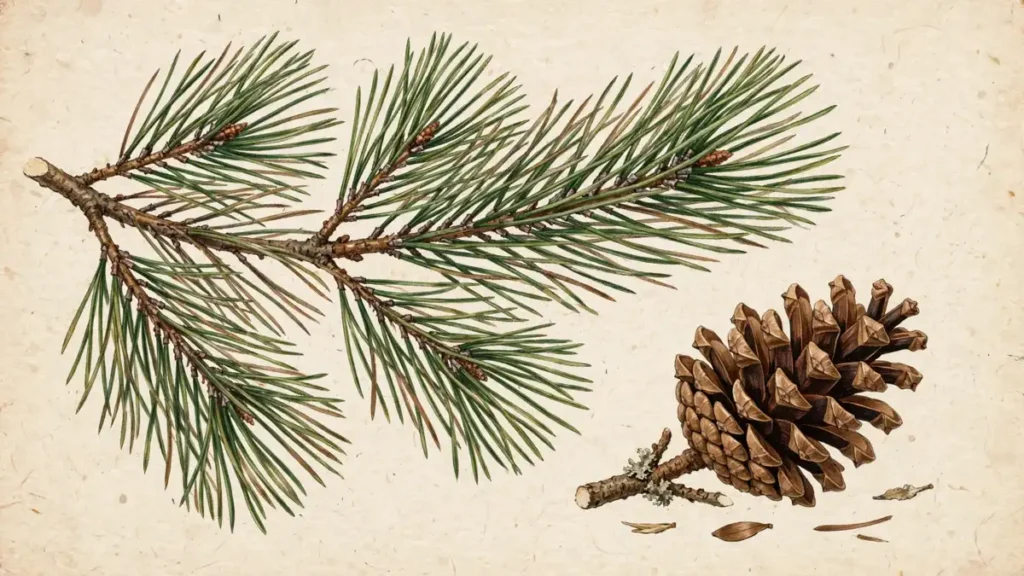
The scientific name for pine tree is Pinus at the genus level. It is not the complete scientific name of every pine species because the genus includes many different types of pine trees.
The word Pinus is the Latin botanical name used to identify this group of conifers. It provides a consistent scientific reference, regardless of the common names used in different countries and languages.
For example:
- Scots pine: Pinus sylvestris
- Eastern white pine: Pinus strobus
- Ponderosa pine: Pinus ponderosa
- Stone pine: Pinus pinea
- Lodgepole pine: Pinus contorta
Each name identifies a particular species within the genus Pinus.
Botanical Classification of Pine Tree
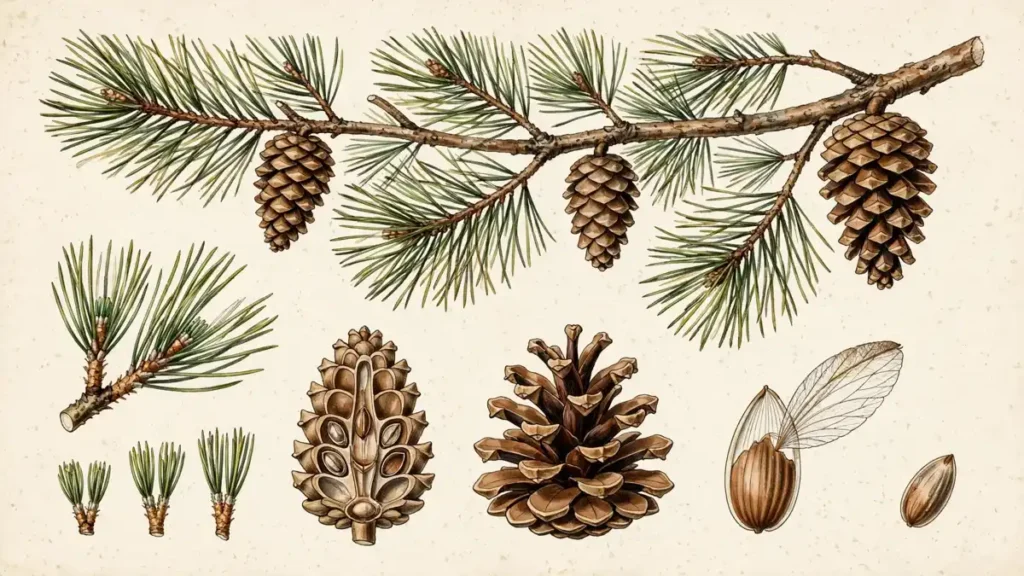
Pine trees belong to the plant kingdom and are classified as conifers. Their botanical classification shows how they are grouped according to shared characteristics and evolutionary relationships.
Taxonomic Classification
| Taxonomic Rank | Classification |
|---|---|
| Kingdom | Plantae |
| Division | Pinophyta |
| Class | Pinopsida |
| Order | Pinales |
| Family | Pinaceae |
| Genus | Pinus |
Kingdom: Plantae
Pine trees belong to the kingdom Plantae, which includes plants that generally produce their own food through photosynthesis.
Division: Pinophyta
Pinophyta includes conifers, a group of seed producing plants that typically produce seeds in cones. Pine trees are members of this division.
Class: Pinopsida
Pinopsida is the class containing conifers, including pines, firs, spruces, and other related trees.
Order: Pinales
Pinales includes several important conifer families. Pine trees belong to this order because of their reproductive and structural characteristics.
Family: Pinaceae
Pinaceae is the pine family. It includes several familiar conifer genera, such as Pinus, Abies (firs), Picea (spruces), and Larix (larches).
Genus: Pinus
Pinus is the genus that contains all true pine trees. Its members share features such as needle like leaves, woody seed cones, and characteristic branching patterns.
Different Pine Tree Species and Their Scientific Names

There are many pine species around the world. Each has distinct features, growth habits, and natural habitats.
The following table lists some well known examples.
| Common Name | Scientific Name | General Characteristics |
|---|---|---|
| Scots pine | Pinus sylvestris | Recognized by its orange brown upper bark |
| Eastern white pine | Pinus strobus | Has soft needles arranged in groups of five |
| Ponderosa pine | Pinus ponderosa | A large pine with long needles and thick bark |
| Stone pine | Pinus pinea | Known for its broad, umbrella shaped crown |
| Lodgepole pine | Pinus contorta | Common in western North American forests |
| Austrian pine | Pinus nigra | A hardy evergreen with dark, stiff needles |
| Monterey pine | Pinus radiata | Widely planted for forestry and landscaping |
| Japanese black pine | Pinus thunbergii | Has dark, rugged bark and stiff needles |
| Longleaf pine | Pinus palustris | Known for exceptionally long needles |
| Slash pine | Pinus elliottii | Native to the southeastern United States |
Scots Pine (Pinus sylvestris)
Scots pine is a widely distributed pine species native to parts of Europe and Asia. It is recognizable by its distinctive orange colored upper bark and blue green needles.
Eastern White Pine (Pinus strobus)
Eastern white pine is native to eastern North America. Its soft, slender needles grow in bundles of five, making it relatively easy to identify.
Ponderosa Pine (Pinus ponderosa)
Ponderosa pine is a large tree native to western North America. It commonly grows in mountainous regions and is recognized by its long needles and thick, distinctive bark.
Stone Pine (Pinus pinea)
Stone pine is native to the Mediterranean region. Its broad crown resembles an umbrella, and its edible seeds are commonly known as pine nuts.
Lodgepole Pine (Pinus contorta)
Lodgepole pine grows across western North America. It is adaptable to different environments and is an important tree in many mountain forests.
Why Do Pine Trees Have Scientific Names?
Scientific names help botanists, researchers, gardeners, and nature enthusiasts identify plants accurately.
Common names can vary between countries and regions. A single common name may also refer to different plants. Scientific names provide a standardized system that reduces this confusion.
The scientific naming system offers several benefits:
- Accurate identification: Each recognized species has a specific scientific name.
- International consistency: Scientists can communicate about the same species across language barriers.
- Biological classification: Scientific names show relationships between different plants.
- Research and education: Botanical names make scientific information easier to organize and study.
- Conservation: Accurate identification helps researchers monitor and protect plant species.
Characteristics of Pine Trees
Pine trees have several recognizable features that distinguish them from many other types of trees.
Needle Like Leaves
Pine trees have narrow, needle shaped leaves instead of broad, flat leaves. Their needles usually grow in bundles called fascicles.
The number of needles in each bundle varies by species. Many pines have two, three, or five needles per bundle.
Woody Cones
Pine trees produce male and female reproductive cones. Male cones release pollen, while female cones contain ovules that develop into seeds after fertilization.
Evergreen Growth
Most pine species remain green throughout the year. Their needles generally stay on the tree for multiple growing seasons, although individual needles eventually fall and are replaced.
Resin Production
Pine trees produce sticky resin that can help protect damaged areas from insects and certain pathogens.
Strong Root Systems
Pine trees develop root systems that help anchor them in the soil. Root depth and structure vary depending on the species and growing conditions.
Where Do Pine Trees Grow?
Pine trees grow naturally across large parts of the Northern Hemisphere. Some species also occur in tropical and subtropical mountain regions.
Their habitats include:
- Temperate forests
- Mountain slopes
- Rocky landscapes
- Sandy soils
- Subtropical highlands
- Coastal environments
Different pine species have different environmental requirements. Some tolerate cold winters, while others grow well in warmer climates.
Pine trees are also cultivated in many regions for timber, landscaping, reforestation, and ornamental purposes.
Difference Between Pine Trees and Other Conifers
Pine trees are conifers, but not all conifers are pines. The term conifer describes a larger group of cone producing plants.
| Feature | Pine (Pinus) | Spruce (Picea) | Fir (Abies) |
|---|---|---|---|
| Family | Pinaceae | Pinaceae | Pinaceae |
| Leaf shape | Needle like | Needle like | Needle like |
| Needle arrangement | Bundles (fascicles) | Usually attached individually | Usually attached individually |
| Cones | Generally woody | Woody | Usually upright on branches |
| Evergreen | Yes | Yes | Yes |
The arrangement of the needles and the structure of the cones are useful features for distinguishing these trees.
Fun Facts About Pine Trees
Pine trees have several interesting characteristics that make them important in forests and human life.
- Pine trees are conifers that produce seeds in cones rather than fruits.
- Pine needles grow in bundles, and the number of needles can help identify a species.
- Some pine species produce edible seeds known as pine nuts.
- Pine trees produce resin, which can help seal wounds and protect damaged tissues.
- Many pine species are adapted to survive in challenging environments, including cold mountains and dry landscapes.
- Pine wood is widely used in construction, furniture, paper production, and other industries.
- Some pine species depend on fire or fire related conditions for successful regeneration.
Key Takeaways
- The scientific genus name for pine trees is Pinus.
- Pine trees belong to the family Pinaceae and order Pinales.
- Individual pine species have unique scientific names.
- Examples include Pinus sylvestris, Pinus strobus, and Pinus ponderosa.
- Pine trees are evergreen conifers with needle like leaves and seed producing cones.
- Pine species grow in a variety of environments across the world.
Frequently Asked Questions
1. What is the scientific name for pine tree?
The scientific genus name for pine trees is Pinus. Each individual species has a more specific scientific name, such as Pinus sylvestris.
2. What is the family name of a pine tree?
Pine trees belong to the family Pinaceae. This family also includes firs, spruces, and several other conifer genera.
3. Is Pinus the scientific name of all pine trees?
Pinus is the genus name shared by true pine trees. Individual species have additional names that distinguish them from one another.
4. What is the scientific name for a Scots pine?
The scientific name for Scots pine is Pinus sylvestris. It is native to parts of Europe and Asia.
5. Are pine trees conifers or flowering plants?
Pine trees are conifers, not flowering plants. They reproduce through seeds produced in cones rather than flowers and fruits.
6. How can a pine tree be identified?
A pine tree can often be identified by its needle like leaves growing in bundles and its woody cones. The number of needles per bundle, cone shape, and bark characteristics can help distinguish individual species.
Conclusion
The scientific name for pine tree is Pinus, the genus that includes many familiar evergreen conifers. These trees belong to the family Pinaceae and are recognized by their needle like leaves, woody cones, and resin producing tissues.
Although Pinus identifies the pine genus, each species has its own scientific name, such as Pinus sylvestris or Pinus ponderosa. Understanding these names makes plant identification easier and provides a clearer picture of the diversity of pine trees around the world.
If you are studying botany, identifying a tree, or learning about conifer classification, knowing the scientific name for pine tree is a useful starting point.

Emma helps authors, screenwriters, and gamers find the perfect names for their fictional characters. She analyzes historical trends and linguistic styles to craft names that carry deep meaning. When she isn’t writing, she loves plotting her next fantasy novel at a local café.