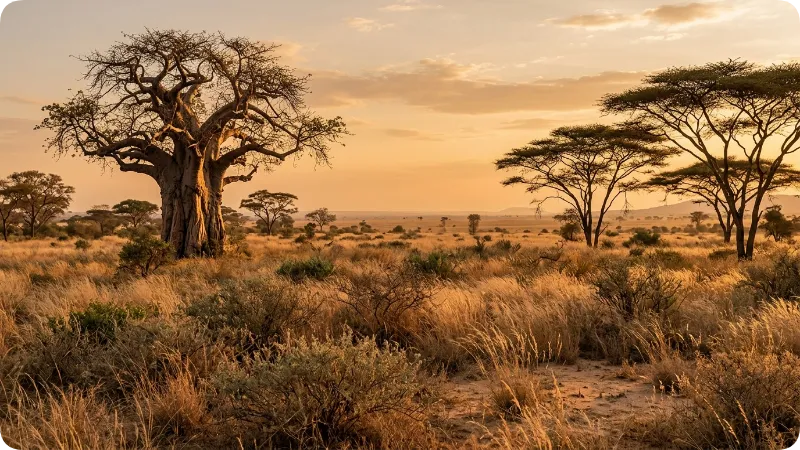
The savanna is a landscape of golden grasses, scattered trees, vivid wildflowers, and plants built to survive heat, seasonal drought, and sudden bursts of rain. From the iconic acacia trees of Africa to the towering grasses that sway across open plains, savanna plants have distinctive names, appearances, and ecological roles.
For readers searching for savanna plants names, the most useful starting point is to explore plants by type, appearance, region, and personality. Some names feel strong and majestic, like Baobab and Umbrella Thorn. Others sound delicate and graceful, like Purple Lovegrass and Blazing Star.
If you are studying grassland ecology, identifying plants for a school project, creating a nature inspired garden, or looking for botanical inspiration for a story, this guide brings together recognizable savanna plants and what makes each one special.
Search intent: Plant identification and educational research, with secondary interest in botanical inspiration and nature based naming. The focus is on real plants, their habitats, distinguishing features, and practical ways to remember their names.
Quick List of Savanna Plants Names
| Plant name | Plant type | Distinctive feature |
| Umbrella Thorn | Tree | Broad, umbrella shaped crown |
| Baobab | Tree | Massive trunk and sculptural silhouette |
| Mopane | Tree | Distinctive butterfly shaped leaves |
| Jackalberry | Tree | Evergreen foliage in suitable habitats |
| Bushwillow | Tree or shrub | Textured leaves and woody branches |
| Elephant Grass | Grass | Tall, vigorous growth |
| Red Oats Grass | Grass | Reddish brown mature flower heads |
| Rhodes Grass | Grass | Spreading growth and flowering stems |
| Lemon Grass | Grass | Aromatic, narrow leaves |
| Aloe | Succulent | Fleshy leaves and often striking flowers |
These are representative examples rather than a complete inventory. Savanna vegetation differs by rainfall, soil, fire patterns, and continent.
1. Famous Savanna Trees Names
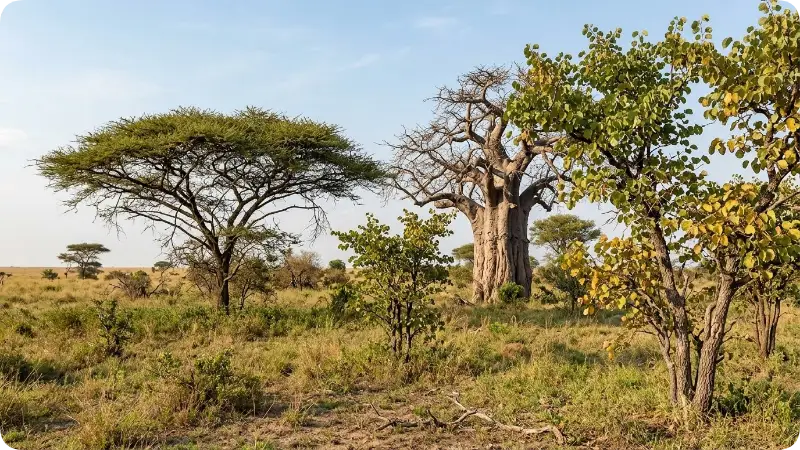
Savanna trees are often easy to recognize because of their unusual silhouettes, spreading crowns, thick trunks, or ability to tolerate seasonal dryness.
1. Umbrella Thorn
Botanical name: Vachellia tortilis
This iconic African tree has a flattened, spreading crown that resembles an open umbrella. Its silhouette feels bold, balanced, and instantly recognizable in savanna landscapes.
Vibe: Protective, majestic, resilient.
2. Baobab
Botanical name: Adansonia digitata
Known for its enormous trunk and unusual branching shape, the baobab looks almost mythical. It is a memorable choice for anyone drawn to ancient landscapes, African flora, and dramatic botanical forms.
Vibe: Wisdom, longevity, wonder.
3. Mopane
Botanical name: Colophospermum mopane
Mopane is a characteristic tree of many southern African savannas. Its paired leaves often resemble butterflies, making its name particularly appealing to nature enthusiasts.
Vibe: Distinctive, earthy, quietly elegant.
4. Jackalberry
Botanical name: Diospyros mespiliformis
This African tree is associated with savanna woodland and riverine environments. Its name has a distinctive wildlife connection, making it memorable in a botanical list.
Vibe: Wild, grounded, adventurous.
5. Bushwillow
Botanical group: Combretum
Bushwillows include several trees and shrubs found in African savanna habitats. The name feels rustic and natural, while the plants themselves contribute to the structure of wooded grasslands.
Vibe: Understated, woodland inspired, classic.
Other noteworthy savanna trees include Whistling Thorn, African Corkwood, Marula, Knobthorn, Jackalberry, Leadwood, and Sausage Tree. Their distributions vary, so not every species occurs in every savanna region.
2. Common Savanna Grass Names
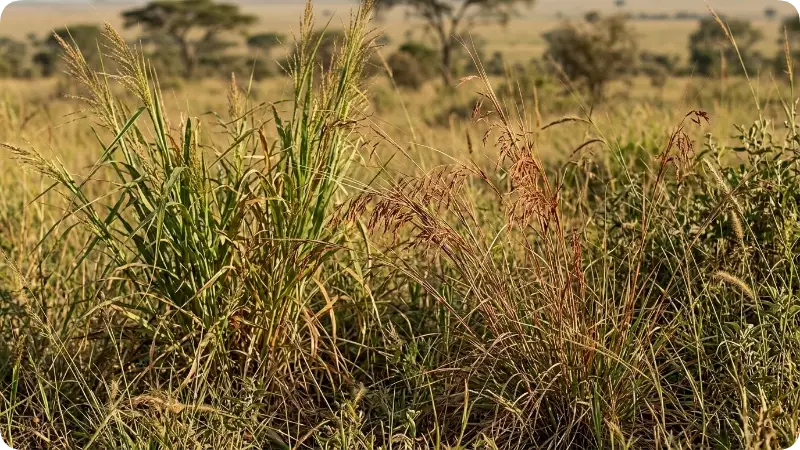
Grasses are the foundation of many savanna ecosystems. They provide food for grazing animals, grow quickly during favorable rainy periods, and often survive dry seasons through their growth structures and underground parts.
Elephant Grass , Cenchrus purpureus
Tall, vigorous grass with a commanding presence. Its name reflects its impressive size and makes it one of the easiest savanna plant names to remember.
Red Oats Grass , Themeda triandra
A widespread African grass recognized by its reddish or copper toned mature flowering structures. It adds warm color to grasslands.
Rhodes Grass , Chloris gayana
A spreading grass associated with tropical and subtropical regions. It is also cultivated as forage in suitable climates.
Lemon Grass , Cymbopogon species
An aromatic grass group that includes plants with a fresh citrus scent. Exact species matter, as not every lemongrass is a characteristic wild savanna grass.
Bluestem Grass , Andropogon species
A name used for grasses in a widespread genus. Different species occur in different grassland and savanna regions, so identification requires more than the common name.
Thatching Grass , Hyparrhenia species
Several species are important components of African grasslands. The name also reflects a traditional practical use of certain grasses.
More savanna grass names include Star Grass, Bermuda Grass, Kangaroo Grass, Spear Grass, and Guinea Grass. Their suitability as savanna examples depends on the species and geographical region.
3. Savanna Shrubs and Succulent Plant Names
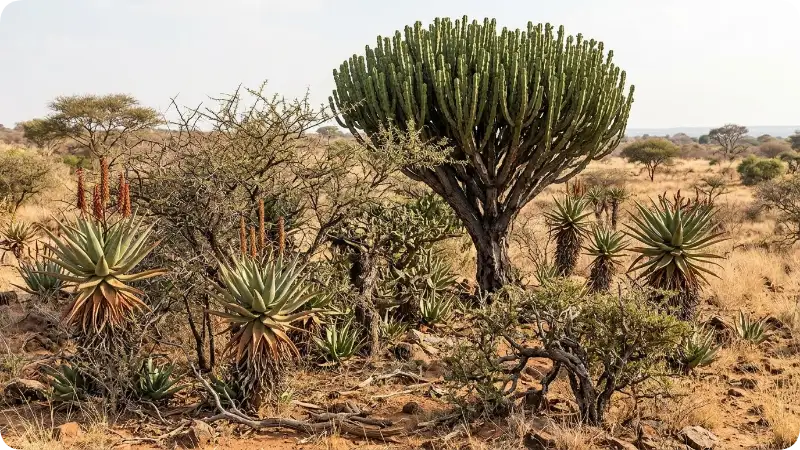
Not every savanna plant is a tree or a grass. Shrubs and succulents add diversity to dry landscapes, from thorny bushes to plants with thick, water storing stems.
| Plant name | Botanical name or group | Identifying feature |
| Whistling Thorn | Vachellia drepanolobium | Swollen thorn structures associated with ant colonies |
| Buffalo Thorn | Ziziphus mucronata | Woody shrub or tree with distinctive paired stipular thorns |
| Candelabra Tree | Euphorbia ingens | Upright, branching succulent form |
| Quiver Tree | Aloidendron dichotomum | Sculptural branching silhouette |
| Aloe | Aloe species | Fleshy leaves and often colorful flower spikes |
| Mother in law’s Tongue | Dracaena species, formerly Sansevieria | Stiff, upright leaves in many species |
| African Myrrh | Commiphora africana | Woody plant associated with dry African regions |
| Balanites | Balanites aegyptiaca | Thorny tree of dry tropical Africa and nearby regions |
These plants are not equally widespread, and some are associated more strongly with dry savannas or transitional scrublands.
Which shrubs and succulents are easiest to recognize?
- Candelabra Tree: Its branching shape resembles a multi armed candle holder.
- Quiver Tree: Its sculptural form makes it distinctive in southern African dry landscapes.
- Whistling Thorn: Its thorn structures and relationships with ants make it especially interesting to study.
- Aloe: Its thick leaves distinguish it from many ordinary grasses and shrubs.
One important distinction: the Candelabra Tree and some aloe relatives can be hazardous if handled or consumed incorrectly. Never use an unfamiliar plant as food or medicine based only on its common name.
4. Flowering Savanna Plants Names
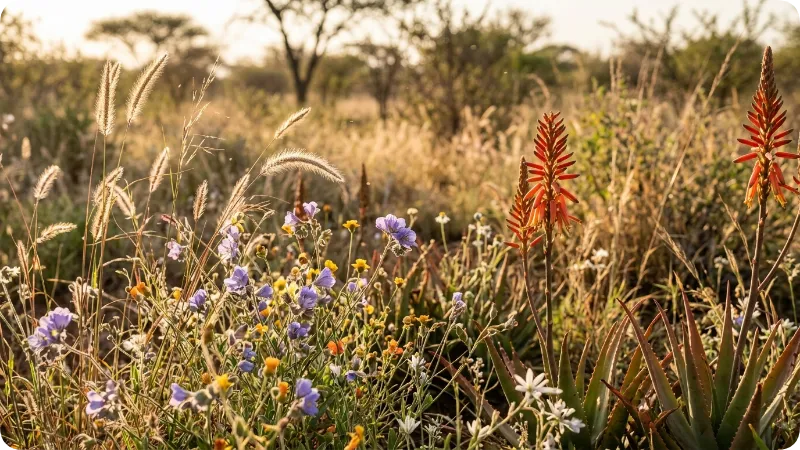
Savannas are not simply fields of brown grass. During the rainy season, many regions support colorful wildflowers and flowering herbs, although the species and flowering times vary considerably.
Wild Hibiscus
Hibiscus species are known for their showy flowers. Their large petals bring a softer, more tropical impression to a plant list.
Flowering Aloe
Some aloe species produce dramatic red, orange, or yellow flower spikes that stand above their fleshy leaves.
Purple Prairie Clover
A flowering plant associated with North American prairies and related open habitats. It is a useful example when discussing temperate grassland and savanna like vegetation.
Blazing Star
A common name for Liatris species, which are known for upright flower spikes. These plants are especially associated with North American open habitats rather than African tropical savannas.
Certain African wild ginger species occur in savanna and woodland settings. Their botanical identity should be confirmed by species rather than assumed from the common name.
For a school assignment specifically about the African savanna, prioritize documented local species rather than combining African plants with North American prairie wildflowers.
5. Savanna Plants by Name Aesthetic
If you are collecting plant names for a nature journal, creative project, fictional setting, or botanical mood board, grouping names by their sound and visual associations can make your list more memorable.
These categories describe the impression of the names, not scientifically established meanings or traditional cultural symbolism.
| Aesthetic | Plant names | Why they fit |
| Majestic and powerful | Baobab, Elephant Grass, Leadwood | Strong sounds and imposing forms |
| Earthy and rustic | Mopane, Bushwillow, Marula | Natural, grounded character |
| Wild and adventurous | Jackalberry, Whistling Thorn, Buffalo Thorn | Evoke wildlife and rugged habitats |
| Soft and botanical | Aloe, Wild Hibiscus, Rhodes Grass | Gentle, familiar plant name sounds |
| Unusual and memorable | Candelabra Tree, Quiver Tree, Sausage Tree | Distinctive shapes or striking common names |
| Warm and golden | Red Oats Grass, Umbrella Thorn, Guinea Grass | Suggest open landscapes and sunlit vegetation |
Best savanna plant names for a creative project
- Baobab: Best for an ancient, mysterious, or wise character.
- Mopane: Best for a distinctive, earthy, minimalist name.
- Marula: Best for a soft, flowing, nature inspired name.
- Aloe: Best for a short, simple, botanical name.
- Whistling Thorn: Best for a dramatic fantasy setting or an unusual plant character.
These are creative interpretations rather than claims about the plants’ etymology or cultural significance.
6. Savanna Plants by Region
The word savanna describes a vegetation type found in several parts of the world. A plant list becomes more accurate when it identifies the region where each species naturally occurs.
| Region | Representative plant names |
| East African savannas | Umbrella Thorn, Whistling Thorn, Red Oats Grass |
| Southern African savannas | Mopane, Baobab, Bushwillow, Elephant Grass |
| West African savannas | Shea Tree, African Myrrh, Guinea Grass |
| Australian savannas | Spinifex grasses, native eucalypts, kangaroo grasses |
| South American savannas | Pequi, Buriti Palm, Cerrado shrubs and grasses |
| Indian savannas | Acacias, Indian grasses, regionally native shrubs |
The examples are representative, not exhaustive. South American cerrado vegetation and Australian tropical savannas have distinctive floras that should not be treated as identical to African grasslands.
7. How to Choose the Right Savanna Plant Name
For educational research, scientific identification matters more than how attractive a name sounds. For a creative project, however, the name’s rhythm, imagery, and associations may be just as important.
- For a school project: Choose plants with identifiable botanical names, such as Adansonia digitata (Baobab) or Colophospermum mopane (Mopane).
- For a nature journal: Record the common name, scientific name, location, and date observed.
- For a story or fantasy world: Consider memorable names such as Baobab, Mopane, or Whistling Thorn, while distinguishing fictional traits from real plant biology.
- For a garden: Research local climate, soil, water needs, mature size, and invasive potential before selecting a species.
- For an educational poster: Combine a plant’s common name with a clear photograph and its scientific name.
A useful identification tip is to record the plant’s leaves, bark, flowers, fruit, and growth form. Common names can refer to multiple species, so photographs and location details help prevent confusion.
Frequently Asked Questions
What are the most common plants in the savanna?
Savannas commonly contain grasses, scattered trees, and shrubs. In African savannas, representative plants include umbrella thorn, baobab, mopane, bushwillow, elephant grass, and red oats grass. The exact species depend on the region and environmental conditions.
What is the most famous savanna tree?
The baobab and umbrella thorn are among the most recognizable trees associated with African savanna landscapes. The baobab is known for its massive trunk, while the umbrella thorn is famous for its broad, flattened crown.
What grasses grow in the African savanna?
Examples include elephant grass, red oats grass, Rhodes grass, Guinea grass, and species of Andropogon and Hyparrhenia. Their distribution varies with rainfall and local habitat.
Are all savanna plants drought resistant?
Many savanna plants have adaptations that help them survive seasonal dryness, but their strategies differ. Some grasses regrow from protected underground structures, some trees shed their leaves during dry periods, and some succulents store water. Not every savanna species tolerates severe drought equally well.
Do savannas have flowers?
Yes. Savannas can support flowering herbs, shrubs, and trees. Some plants bloom during the rainy season, when water is more readily available. The flowers and flowering periods vary by species and region.
What is the difference between savanna trees and savanna grasses?
Trees and shrubs provide woody structure and shade, while grasses form much of the ground layer in many savannas. Grasses also provide important forage for herbivores and influence fire patterns.
Can I grow savanna plants at home?
Some species can be cultivated outside their native habitat, but success depends on temperature, light, drainage, water availability, and local regulations. Choose species suited to your climate and avoid collecting protected wild plants.
Conclusion
Savanna plants names reveal the diversity of one of the world’s most recognizable landscapes. From the monumental Baobab and sculptural Mopane to Elephant Grass and Red Oats Grass, each name represents a different part of the ecosystem.
For the most useful reference list, remember both the common and scientific names, and always consider the plant’s native region. If you are researching biodiversity, preparing a school assignment, planning a garden, or gathering nature inspired names for a creative project, these plants offer a rich starting point.

Sophia explores the history, global origins, and deep etymology behind popular and rare names. She curates beautiful, meaningful baby name guides and historical name lists for families and researchers. She also enjoys learning new languages and traveling.