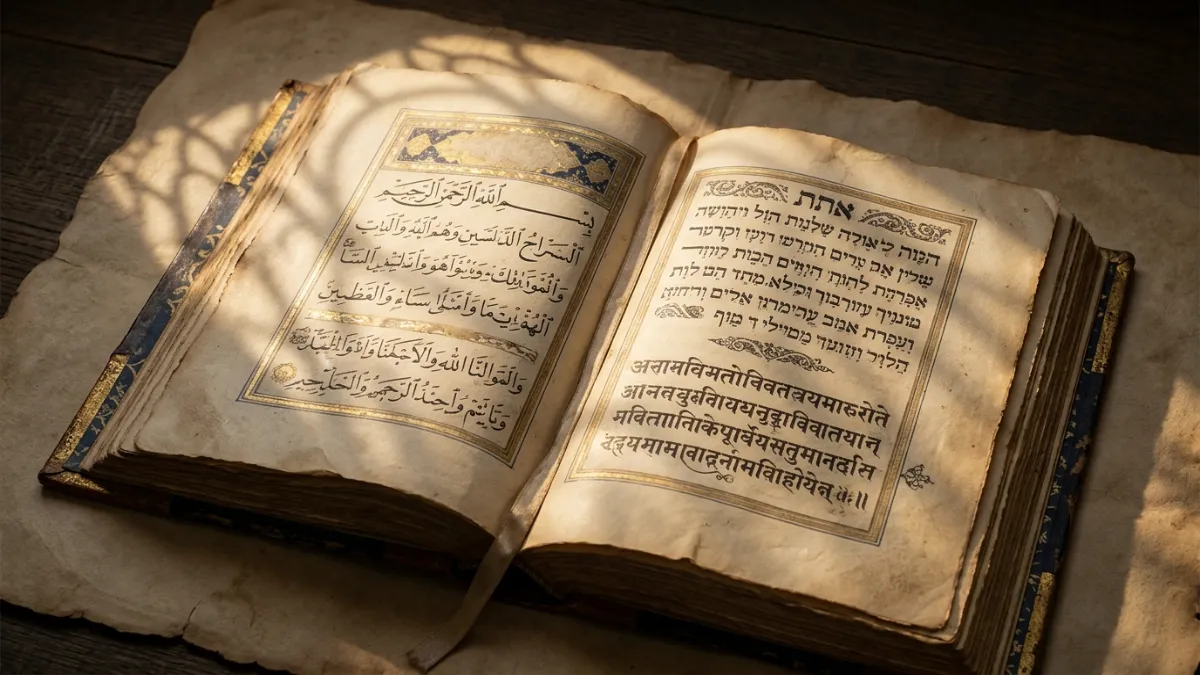
Some names feel like prayers. Others speak of mercy, the mystery of creation, unshakable strength, or a love that seems greater than words. Across centuries and cultures, people have used names for God to express what they believe about the Divine and how they experience faith.
The names of God are more than a collection of religious words. They carry histories, teachings, poetry, and deeply personal meaning. In Islam, the beautiful names of Allah describe divine attributes such as mercy, wisdom, and majesty. In Judaism, sacred names reflect the relationship between God and the covenant community. And in Christianity, biblical names and titles express God’s nature, presence, and relationship with humanity. Other religious traditions have their own rich vocabularies for the ultimate reality, supreme deity, or divine presence.
If you are studying scripture, exploring world religions, looking for a meaningful spiritual word, or simply curious about sacred language, understanding these names offers a thoughtful way to explore humanity’s enduring search for the Divine.
Featured Snippet:
The names of God are sacred names, titles, and descriptions used in religious traditions to express the nature, attributes, and relationship of the Divine with the world. Examples include Allah in Islam, YHWH in the Hebrew Bible, Elohim in Hebrew scripture, and God the Father in Christianity. The 99 Names of Allah in Islam describe divine attributes such as mercy, wisdom, sovereignty, and peace. Their meanings and use depend on each religion’s teachings and traditions.
Overview of the Names of God Across Religions

Different faiths use different languages, theological frameworks, and devotional practices to speak about God. Some names identify the Divine, while others describe attributes, relationships, or ways believers understand divine presence.
| Name or title | Tradition | Meaning or significance | Overall impression |
| Allah | Islam | The Arabic name for God | Sacred, timeless, central |
| Ar Rahman | Islam | The Most Compassionate | Gentle, merciful |
| Ar Rahim | Islam | The Especially Merciful | Loving, comforting |
| Al Malik | Islam | The King, the Sovereign | Majestic, regal |
| Al Quddus | Islam | The Most Holy | Pure, transcendent |
| YHWH | Judaism | The four letter Hebrew divine name | Ancient, deeply sacred |
| Adonai | Judaism | My Lord; a reverential title | Reverent, dignified |
| Elohim | Hebrew Bible | A Hebrew term for God | Powerful, scriptural |
| El Shaddai | Hebrew Bible | Traditionally rendered God Almighty | Strong, protective |
| El Elyon | Hebrew Bible | God Most High | Supreme, majestic |
| God the Father | Christianity | A central Christian title for God | Loving, relational |
| Emmanuel | Christian scripture | God with us | Hopeful, intimate |
| Abba | Jewish and Christian contexts | Father; an intimate form of address | Warm, personal |
| Brahman | Hindu philosophical traditions | Ultimate reality in many Vedantic schools | Vast, transcendent |
| Ishvara | Hindu traditions | Lord or supreme ruler; meaning varies by context | Powerful, contemplative |
| Bhagavan | Hindu traditions | The Lord or the Blessed One | Reverent, devotional |
These terms are not all equivalent. For example, Brahman in Hindu philosophy is not simply another translation of the personal God described in Abrahamic traditions. Similarly, the Hebrew divine name YHWH has particular religious significance and is treated with special reverence in Judaism.
The 99 Names of Allah and Their Beautiful Meanings
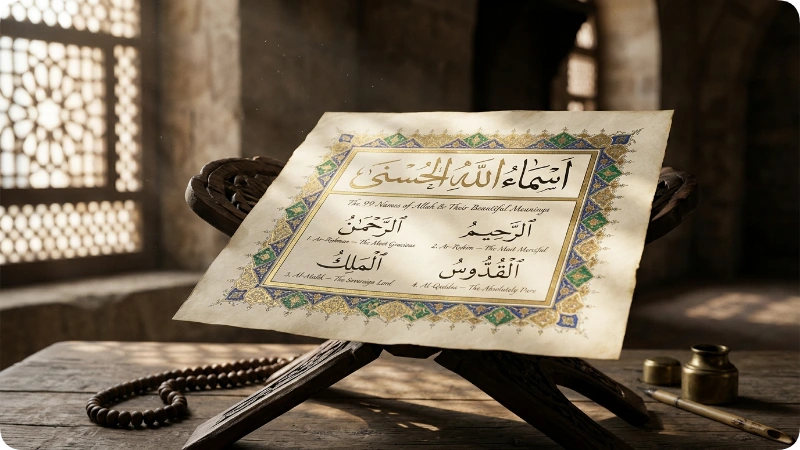
In Islam, the 99 Names of Allah are known as Asma ul Husna, commonly translated as “the Most Beautiful Names.” They express divine attributes found in Islamic scripture and tradition, including mercy, knowledge, sovereignty, forgiveness, and justice. Muslims reflect on these names in prayer, remembrance, study, and everyday life.
Islamic Relief Worldwide
+1
The names are especially meaningful because they offer different ways to understand the relationship between the Creator and creation. Some inspire hope during hardship; others emphasize divine greatness, accountability, or trust.
The following curated selection focuses on names that are especially helpful for understanding their meanings and emotional associations. English translations are concise approximations, not complete definitions of the Arabic terms.
Names of Allah associated with mercy and love
1. Ar Rahman (ٱلرَّحْمَٰنُ)
Meaning: The Most Compassionate
This name conveys vast, encompassing mercy. Its emotional association is one of generosity and compassion that extends beyond what people can easily comprehend.
Tradition: Islam · Language: Arabic · Gender: Divine name, not a human gender classification
2. Ar Rahim (ٱلرَّحِيمُ)
Meaning: The Especially Merciful
Ar Rahim emphasizes mercy and compassion. Where Ar Rahman evokes the vastness of divine mercy, Ar Rahim is often explained in terms of mercy continually bestowed.
Tradition: Islam · Language: Arabic · Aesthetic: Gentle, reassuring, devotional
3. Al Ghaffar (ٱلْغَفَّارُ)
Meaning: The Oft Forgiving
This name evokes forgiveness and the possibility of returning to what is right after making mistakes. Its emotional tone is hopeful rather than condemning.
4. At Tawwab (ٱلتَّوَّابُ)
Meaning: The Accepter of Repentance
At Tawwab is associated with repentance, return, and the opportunity to seek forgiveness. It speaks to the deeply human desire for a new beginning.
5. Al Wadud (ٱلْوَدُودُ)
Meaning: The Most Loving
Al Wadud expresses divine love. Among the names commonly explored by readers seeking a compassionate, relational understanding of God, it carries a particularly tender emotional association.
Names of Allah associated with strength and majesty
6. Al Aziz (ٱلْعَزِيزُ)
Meaning: The Almighty, the Mighty
Al Aziz conveys might, honor, and invincibility. Its impression is commanding and dignified, with a sense of strength that does not depend on human approval.
7. Al Jabbar (ٱلْجَبَّارُ)
Meaning: Often translated as the Compeller or the Restorer
This name carries associations with irresistible power and, in some explanations, the mending of what is broken. Its full theological meaning is richer than a simple personality label.
8. Al Malik (ٱلْمَلِكُ)
Meaning: The King, the Sovereign
Al Malik suggests supreme authority and ownership. The imagery of kingship is useful for understanding its majesty, although the divine sovereignty it describes is not equivalent to an earthly monarchy.
9. Al Azim (ٱلْعَظِيمُ)
Meaning: The Magnificent, the Supreme
This name expresses greatness beyond ordinary human scale. Its aesthetic is expansive, timeless, and awe inspiring.
Names of Allah associated with wisdom, knowledge, and peace
| Name | Meaning | Emotional association |
| Al Alim | The All Knowing | Understanding and awareness |
| Al Hakim | The All Wise | Wisdom and purposeful judgment |
| As Sami | The All Hearing | Being heard and understood |
| Al Basir | The All Seeing | Complete awareness |
| As Salam | The Source of Peace | Serenity and safety |
| Al Latif | The Most Subtle, the Most Gentle | Subtle kindness |
| Al Hafiz | The Preserver | Protection and care |
| Al Karim | The Most Generous | Generosity and honor |
| Al Hadi | The Guide | Direction and spiritual guidance |
| Ash Shakur | The Most Appreciative | Gratitude and recognition |
An important distinction: these names describe divine attributes in Islamic theology. Their emotional associations are intended to help readers understand and remember them, not to reduce sacred names to personality types or aesthetic trends.
What about all 99 names of Allah?
The commonly memorized list contains 99 names, but scholars have explained that the authentic hadith about the 99 names does not necessarily mean Allah has only 99 names. The precise enumeration and inclusion of particular names have also been discussed by scholars.
For devotional learning, use a trusted Islamic source that provides Arabic spelling, transliteration, meanings, and scriptural references. A translation alone may not convey the full depth of an Arabic divine name.
Names and Titles of God in Judaism

Jewish tradition treats divine names with particular reverence. Hebrew scripture uses several names and titles, each with its own linguistic history and context. Some are read aloud differently from how they are written, reflecting traditions of reverence around the divine name.
Here are some important examples.
YHWH (יהוה)
The Tetragrammaton
This four letter Hebrew name has a central place in the Hebrew Bible. Its pronunciation is a subject of historical and religious discussion, and many Jewish traditions avoid pronouncing it aloud. Adonai or another reverential substitute may be used in reading or prayer.
Adonai (אֲדֹנָי)
Meaning: My Lord
Adonai is a reverential title used in Jewish prayer and scriptural reading. Its sound and usage carry a formal, devotional quality rather than a modern personal name feel.
Elohim (אֱלֹהִים)
Meaning: God
Elohim is a major Hebrew biblical term for God. Although its grammatical form is plural, it frequently refers to the singular God of Israel in biblical contexts.
El Shaddai (אֵל שַׁדַּי)
Traditional translation: God Almighty
El Shaddai appears in the Hebrew Bible, including passages concerning the patriarchs. The exact etymology of Shaddai is debated, so the familiar translation should not be mistaken for a settled linguistic explanation.
El Elyon (אֵל עֶלְיוֹן)
Meaning: God Most High
El Elyon emphasizes supremacy and exalted status. Its imagery evokes elevation and majesty, making it an important title in biblical discussions of divine sovereignty.
Wikipedia
+1
Other Hebrew biblical titles worth knowing
- El — a Semitic term for God, also found in related ancient languages.
- Eloah — a singular Hebrew term for God, especially visible in poetic and biblical contexts.
- Adon — lord or master; related forms appear in divine titles.
- Yah — a shortened divine form found in Hebrew scripture and religious expressions.
- YHWH Tzevaot — traditionally rendered “LORD of Hosts,” a title expressing divine sovereignty.
These words differ in grammatical function, scriptural context, and devotional use. They should not be assumed to be freely interchangeable, especially when used in Jewish worship or religious writing.
Names and Titles of God in Christianity

Christianity shares much of its scriptural vocabulary with Judaism through the Old Testament, while the New Testament adds titles and expressions shaped by Christian beliefs about God, Jesus Christ, and the Holy Spirit.
Some titles describe divine power; others focus on relationship, salvation, presence, or care. Their significance can differ among Catholic, Orthodox, Protestant, and other Christian traditions.
| Name or title | Meaning or significance | Emotional tone |
| God the Father | A central title expressing God’s relationship with creation and believers | Loving, relational |
| Lord | A title of authority and reverence | Dignified, faithful |
| Almighty God | Emphasizes divine power | Strong, reassuring |
| Creator | God as the source of creation | Wonder, gratitude |
| Emmanuel | “God with us” in biblical Christian interpretation | Comfort, hope |
| Abba | Father; an intimate form of address | Personal, trusting |
| Ancient of Days | A poetic title in Daniel 7 | Timeless, majestic |
| Good Shepherd | A biblical image of guidance and care | Gentle, protective |
| King of Kings | A title expressing supreme sovereignty | Royal, powerful |
| Prince of Peace | A title from Isaiah 9:6 in Christian interpretation | Peaceful, hopeful |
Three especially meaningful Christian titles
Emmanuel
Emmanuel, also spelled Immanuel, is associated with the phrase “God with us.” In Christian interpretation, it expresses divine presence and the hope that people are not abandoned in difficult times.
As a human given name, Emmanuel has a long established naming history. It feels warm, traditional, and substantial, with familiar shorter forms such as Manny or Eman depending on language and family preference.
Abba
Abba is an Aramaic word meaning “father” and appears in the New Testament. Its significance is relational and intimate. It is not merely a formal title of power; it conveys a personal mode of address in prayer.
Ancient of Days
This poetic title appears in Daniel’s vision and depicts divine authority, age beyond ordinary time, and judgment. Its literary impression is solemn, mysterious, and majestic. It is better understood as a scriptural title than as a conventional personal name.
These examples show how biblical language can express both transcendence and closeness: God is described as sovereign over all creation, yet also as a source of comfort and guidance.
Names of God in Hindu Traditions
Hindu traditions contain a wide range of names, titles, and philosophical descriptions of the Divine. Some refer to particular deities, some express devotion to a personal form of God, and others describe ultimate reality. Their meanings depend on the scripture, school of philosophy, and devotional tradition in which they appear.
This diversity is important: Hinduism does not have a single universally accepted list of names of God.
| Name or term | Meaning or significance | Cultural context |
| Brahman | Ultimate reality in many Vedantic philosophical traditions | Philosophy and theology |
| Ishvara | Lord or supreme ruler; interpretation varies | Philosophical and devotional traditions |
| Bhagavan | The Lord, the Blessed One | Devotional Hindu traditions |
| Hari | A name associated especially with Vishnu and Krishna | Vaishnava traditions |
| Shiva | A major Hindu deity associated with transformation, among other attributes | Shaiva traditions |
| Vishnu | A major Hindu deity associated with preservation and cosmic order | Vaishnava traditions |
| Krishna | A major deity and central figure in the Bhagavad Gita | Devotional traditions |
| Rama | A major deity and hero of the Ramayana | Devotional traditions |
| Devi | Goddess; a broad term for the Divine Feminine | Shakta and wider Hindu traditions |
| Paramatman | The supreme Self or indwelling Self, depending on philosophical context | Hindu philosophy |
Wikipedia
Understanding Brahman and Bhagavan
Brahman is especially important in Vedanta, where it refers to ultimate reality. Different Vedantic schools understand the relationship between Brahman, the individual self, and the world in different ways. It is therefore misleading to reduce Brahman to a simple synonym for a personal deity.
Bhagavan, by contrast, is commonly used as a devotional title meaning the Lord or the Blessed One. It appears in traditions that emphasize a personal relationship with the Divine.
For readers exploring religious names, this distinction is more useful than simply grouping both terms under a generic category of “powerful god names.”
Names of God With Powerful, Gentle, and Mystical Meanings
Sacred names are often memorable because their meanings carry different emotional qualities. Thinking about these qualities can help readers understand religious poetry, scripture, and devotional language more deeply.
The categories below describe how a name may feel to a contemporary reader. They are interpretive aids, not additional religious definitions.
Names associated with mercy and compassion
- Ar Rahman — divine compassion on an expansive scale.
- Ar Rahim — enduring mercy and care.
- Al Wadud — divine love.
- Al Ghaffar — forgiveness.
- Good Shepherd — guidance, care, and protection in Christian scripture.
These names and titles are especially relevant to themes of hope, reconciliation, and spiritual comfort.
Names associated with power and sovereignty
- Al Malik — sovereignty and kingship.
- Al Aziz — might and honor.
- El Shaddai — traditionally translated as God Almighty.
- El Elyon — God Most High.
- King of Kings — supreme sovereignty in Christian scripture.
Their shared literary impression is majesty, but their theological meanings remain specific to their respective traditions.
Names associated with wisdom and knowledge
- Al Alim — the All Knowing in Islam.
- Al Hakim — the All Wise in Islam.
- Elohim — a major Hebrew biblical term for God.
- Ancient of Days — a poetic biblical title emphasizing divine authority and timelessness.
The first two are divine names in Islamic tradition; the latter two belong to different Hebrew biblical contexts. They should not be treated as direct translations of one another.
Names associated with peace and guidance
- As Salam — the Source of Peace in Islamic tradition.
- Al Hadi — the Guide in Islamic tradition.
- Emmanuel — “God with us” in Christian interpretation.
- Good Shepherd — an image of divine care and guidance in Christian scripture.
These expressions often appear in devotional reflection because they connect religious belief with recognizable human needs: direction, reassurance, and belonging.
Can the Names of God Be Used as Baby Names?
This is an important question for anyone researching sacred names for a child. The answer depends on the name, the religion, and the family’s cultural and theological traditions.
Some words used for God also have established histories as human names. Others are treated as especially sacred and are not ordinarily used as standalone personal names in particular traditions.
Naming considerations in Islam
In Muslim naming practice, many divine names are commonly used in human names with the prefix Abd, meaning “servant of.”
Examples include:
| Human name | Meaning |
| Abdullah | Servant of Allah |
| Abdur Rahman | Servant of the Most Compassionate |
| Abdul Aziz | Servant of the Almighty |
| Abdul Karim | Servant of the Most Generous |
These names connect a person’s identity with devotion to Allah rather than treating the divine attribute as an ordinary human identity. Naming conventions and scholarly guidance can differ on particular names, so families should consult a trusted religious authority when uncertain.
Islamic Naming
+1
Naming considerations in Jewish and Christian traditions
In Jewish tradition, sacred divine names are treated with reverence, and the Tetragrammaton is not ordinarily used as a personal name. Names such as Emmanuel, Gabriel, Michael, and Daniel, however, have established histories in Jewish and Christian communities.
Christian families may choose names such as Emmanuel or Gabriel for their scriptural significance. The suitability of a name depends on its actual meaning, its established cultural usage, and the family’s beliefs.
A practical rule for choosing a religious name
Before choosing a sacred name for a child, ask three questions:
- Is this word a divine name, a title, an attribute, or an established human name?
- How is it traditionally used in the family’s religion and culture?
- Does its meaning remain appropriate when used as a personal name?
A beautiful meaning is a useful starting point, but cultural and religious appropriateness should come first.
Pronunciation, Language, and Cultural Respect
The names of God often cross linguistic boundaries through scripture translations, prayer, scholarship, and everyday conversation. Their written forms may look different in Arabic, Hebrew, Greek, Sanskrit, and English, even when readers are discussing related religious ideas.
A few considerations can prevent common misunderstandings.
- Transliteration is not translation. Allah and Elohim are written in different languages and have distinct histories; they are not simply alternative spellings of one word.
- Translations can be approximate. A phrase such as “The Most Merciful” conveys an important aspect of Ar Rahman but does not reproduce every nuance of its Arabic meaning.
- Pronunciation can reflect religious practice. In Judaism, the written divine name YHWH is treated with special reverence, and spoken substitutes are commonly used.
- Context matters. A title in a sacred text may have a particular theological function that a general dictionary definition cannot fully explain.
For educational, editorial, or naming purposes, it is best to give the original script when practical, provide a readable transliteration, and identify the religious tradition clearly.
Why Sacred Names Matter in Literature and Modern Culture
Names of God also appear in poetry, music, novels, films, and contemporary online discussions. Their influence is not limited to formal religious settings.
In literature and poetry
Writers have long used divine names and titles to explore questions of justice, suffering, forgiveness, destiny, and hope. Titles such as Ancient of Days or King of Kings can create a sense of scale and authority, while images such as the Good Shepherd evoke tenderness and protection.
These expressions work because they carry centuries of textual and cultural associations.
In fantasy, gaming, and worldbuilding
Writers and game designers sometimes draw on sacred language to create fictional gods, ancient powers, celestial beings, or mysterious religious orders. Such influences can produce memorable fictional naming systems, but directly borrowing a sacred name can also carry cultural or religious implications that deserve consideration.
For original fictional worlds, it is often more effective to invent names with a consistent linguistic structure than to use sacred names from a living faith merely because they sound powerful.
On Pinterest and social media
Minimalist calligraphy, illuminated manuscripts, sacred architecture, and celestial imagery are common visual approaches to religious content. A name such as Al Wadud might be presented alongside imagery of warmth and compassion, while a biblical title such as Ancient of Days might inspire a more solemn visual treatment.
These are modern editorial choices, not traditional attributes of the names themselves. There is no reliable basis for claiming that every sacred name has a particular TikTok trend, lucky color, or universal aesthetic.
How to Study and Remember the Names of God
If your goal is religious learning rather than simply browsing a list, a little structure makes the process more meaningful.
- Start with one tradition. Choose the religious tradition or scripture you want to understand before comparing terms from different faiths.
- Learn the original language where possible. Read the name in its original script, its transliteration, and a concise translation.
- Connect each name with its context. A scriptural passage or reliable theological explanation helps distinguish a name from a descriptive title.
- Group related meanings. Mercy, wisdom, sovereignty, peace, and guidance are useful study themes, provided the categories do not replace the names’ original meanings.
- Reflect instead of memorizing mechanically. Consider why a tradition uses a particular name and what the surrounding passage teaches.
For the 99 Names of Allah, resources that include Arabic script and Quranic references are especially useful. For Hebrew biblical names, consult reliable biblical dictionaries and Jewish sources that explain the conventions surrounding sacred names.
The purpose is not simply to collect religious vocabulary. It is to understand what these words mean to the people and traditions that preserve them.
Frequently Asked Questions About the Names of God
What are the most important names of God?
The answer depends on the religious tradition. In Islam, Allah and the Beautiful Names, including Ar Rahman and Ar Rahim, are central to understanding divine attributes. In Judaism, YHWH, Elohim, and Adonai have important scriptural and devotional roles. Christianity uses titles such as God the Father, Lord, and Emmanuel. Hindu traditions include terms such as Brahman, Ishvara, and Bhagavan, with meanings that vary by philosophical and devotional context.
What are the 99 names of God in Islam?
The 99 Names of Allah, known as Asma ul Husna, are a widely recognized collection of divine names and attributes in Islamic tradition. Examples include Ar Rahman (the Most Compassionate), Al Malik (the Sovereign), Al Alim (the All Knowing), and Al Wadud (the Most Loving). The commonly memorized enumeration is not the only scholarly discussion of Allah’s names; scholars have noted that the divine names are not necessarily limited to 99.
Is Allah the same as God?
Allah is the Arabic word used for God and is the central divine name in Islam. Arabic speaking Christians also use Allah when referring to God. The word itself is not exclusive to Muslims, although its theological meaning is understood within each religious tradition.
What is the Hebrew name of God?
YHWH, also called the Tetragrammaton, is the four letter divine name found in the Hebrew Bible. Jewish tradition treats it with special reverence, and Adonai is commonly used as a spoken substitute in prayer and scriptural reading. Elohim is another major Hebrew biblical term for God.
What does El Shaddai mean?
El Shaddai is traditionally translated as “God Almighty” and appears in the Hebrew Bible. Although this translation is well established in many religious settings, the exact linguistic origin of Shaddai remains debated.
Are all names of God interchangeable?
No. Some are names, others are titles or attributes, and others describe particular theological relationships. Their meanings depend on scripture, language, and religious interpretation. Treating them as interchangeable can obscure important differences between traditions.
Can I use the names of God for a baby?
Some sacred terms have established histories as personal names, while others are reserved for divine use or require special care. In Islam, names such as Abdullah and Abdur Rahman are widely used because they express servitude to Allah. In Jewish and Christian communities, names such as Emmanuel, Gabriel, and Michael have established personal name traditions. Always check the meaning and customary use within your own faith.
Do the names of God have lucky numbers, colors, or gemstones?
There is no universal, established system assigning lucky numbers, gemstones, colors, weekdays, or zodiac signs to the names of God across religions. Some modern numerological or popular spiritual systems make such associations, but these should not be presented as verified scriptural facts. Religious significance and symbolic interpretation are different things.
What is the most beautiful name of God?
Beauty is understood differently across faiths and individuals. Muslims often refer to the Asma ul Husna as the Most Beautiful Names. Someone seeking comfort might be especially drawn to names associated with mercy and peace, while another person may focus on wisdom, justice, or majesty. The most meaningful name to study is one whose religious context and significance you understand deeply.
Conclusion: Finding Meaning in the Names of God
The names of God reveal the many ways religious traditions express the Divine: through mercy, wisdom, majesty, love, justice, peace, and the mystery of existence itself.
From the 99 Names of Allah in Islam to the sacred Hebrew names of God, Christian biblical titles, and Hindu concepts of ultimate reality, each tradition preserves a distinctive vocabulary shaped by centuries of belief, prayer, scholarship, and lived experience.
The most useful way to explore these names is to look beyond a short translation. Learn their language, understand their cultural setting, and consider what they mean within the tradition that uses them.
A sacred name is not merely an attractive word or an aesthetic label. It can hold an entire history of devotion, a theological idea, and a deeply personal expression of faith. Approached with curiosity and respect, these names offer a meaningful window into how people across the world have sought to understand the Divine.

Sophia explores the history, global origins, and deep etymology behind popular and rare names. She curates beautiful, meaningful baby name guides and historical name lists for families and researchers. She also enjoys learning new languages and traveling.