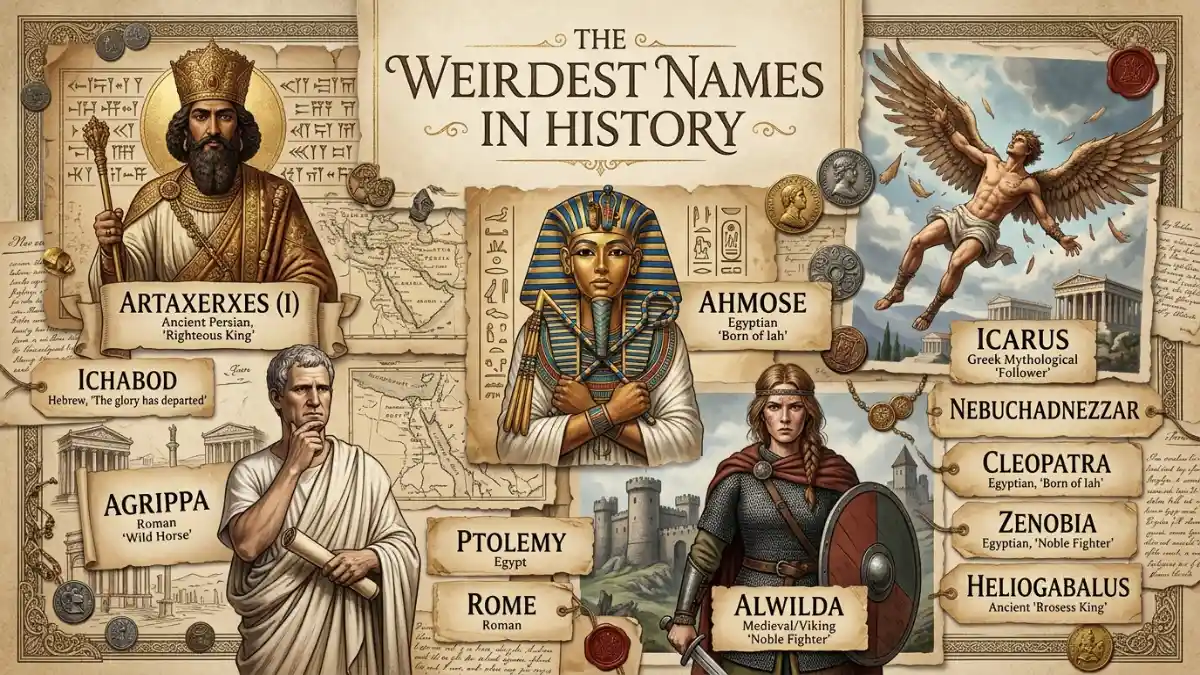
Names have always been stranger, more imaginative, and more culturally revealing than modern naming lists sometimes suggest. Long before today’s trend toward short, sleek names, people were given names shaped by religion, mythology, family history, occupations, languages, titles, and sometimes circumstances surrounding their birth.
Some historical names sound wonderfully mysterious today. Others are surprisingly dramatic, difficult to pronounce, or simply so unusual that they feel invented for a fantasy novel.
This guide explores some of the weirdest names in history while separating documented historical names from later literary or fictional associations. Some meanings are firmly established; others remain uncertain, so they are labeled accordingly. Historical name references such as Behind the Name document examples including Artaxerxes, Agrippa, Alwilda, Ichabod, Ahmose, Attila, and others.
What Makes a Historical Name “Weird”?
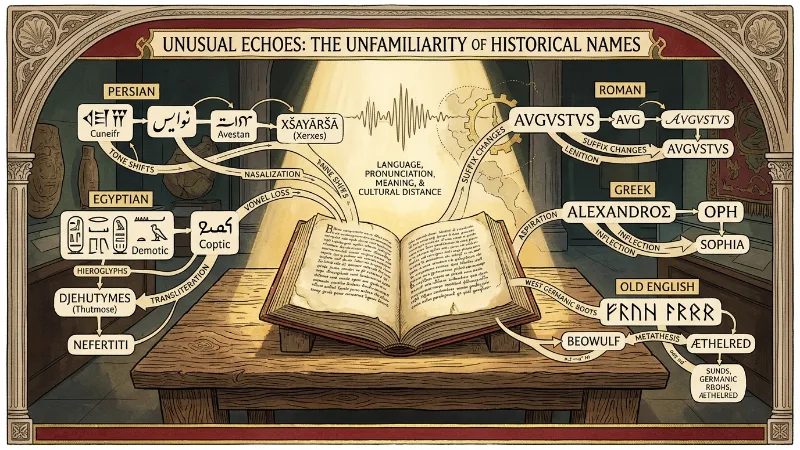
A name can feel strange for many different reasons. It might have an unusual sound, an unexpected meaning, a complicated spelling, or an association that has completely changed over time.
For this article, “weird” means unusually distinctive or surprising to modern readers, not inherently bad or culturally inferior.
| Why it feels unusual | Example | What makes it memorable |
| Unusual sound | Artaxerxes | Long, dramatic structure |
| Unexpected meaning | Ichabod | Means “no glory” |
| Ancient construction | Ahmose | Rooted in ancient Egyptian naming |
| Mythological association | Icarus | Strong literary and mythic identity |
| Rare historical usage | Alwilda | Connected with a legendary Scandinavian pirate |
| Powerful historical association | Attila | Strong connection to the Huns |
| Strange modern impression | Agrippa | Ancient Roman sound |
| Elaborate form | Athenodora | Complex Greek structure |
| Archaic appearance | Eadburg | Old English appearance |
| Name title combination | Charlemagne | Literally associated with “Charles the Great” |
The important point is that a name that sounds strange today may have been perfectly meaningful in its original culture.
The Weirdest Names in History
1. Artaxerxes
Origin: Old Persian, through Greek
Gender: Masculine
Meaning: Commonly explained as “reign through truth”
Historical association: Achaemenid Persian rulers
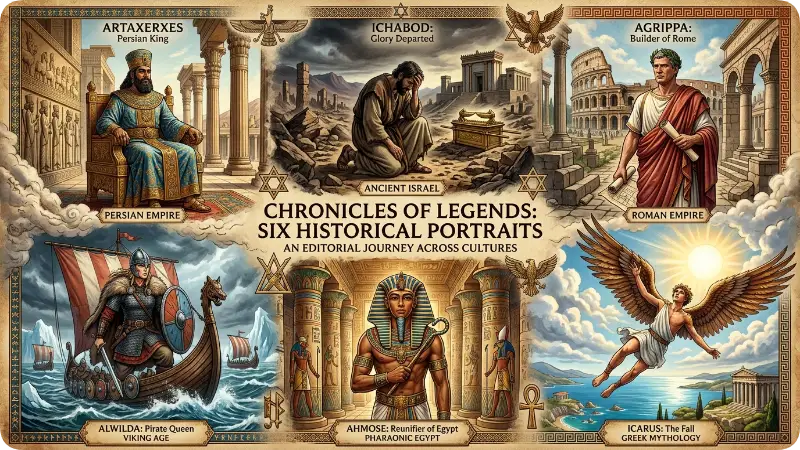
Artaxerxes sounds almost like something created for an epic fantasy kingdom, yet it was a genuine historical royal name. It was used by several Achaemenid Persian rulers. The name ultimately derives from Old Persian elements associated with truth and reign/kingdom.
Vibe: Imperial, intellectual, ancient, commanding
Aesthetic: Persian royal / fantasy / grand historical
Modern impression: Extremely rare and dramatic
Nickname potential: Art, Xerxes
2. Ichabod
Origin: Hebrew
Gender: Masculine
Meaning: “No glory”
Pronunciation: Often rendered IK uh bod
Cultural relevance: Biblical
Ichabod may be one of history’s most surprising names because its literal meaning is so striking. In the Old Testament, the name was connected with the loss of glory from Israel.
The name later gained a strong literary atmosphere through Washington Irving’s Ichabod Crane in The Legend of Sleepy Hollow.
Vibe: Gothic, mysterious, scholarly, eerie
Aesthetic: Dark academia / gothic / vintage
Modern impression: Unusual but recognizable
Nicknames: Icky, Ich
3. Agrippa
Origin: Ancient Roman
Gender: Masculine and feminine historically
Meaning: Uncertain
Agrippa has one of those ancient sounds that immediately feels unusual. Its exact origin is disputed. One proposed explanation connects it with Greek words associated with wild and horse, while another possibility is Etruscan.
The name was used by several notable Romans, including Marcus Vipsanius Agrippa.
Vibe: Ancient, intellectual, aristocratic
Aesthetic: Roman / scholarly / classical
Modern impression: Rare and highly distinctive
Nicknames: Agri, Rippa
4. Alwilda
Origin: Scandinavian, Latinized
Gender: Feminine
Historical association: Legendary Scandinavian pirate
Alwilda is particularly fascinating because it sounds elegant while carrying a surprisingly adventurous historical association. It is a Latinized form of Alfhild and is associated with a legendary female Scandinavian pirate, also called Awilda.
Vibe: Mysterious, adventurous, feminine
Aesthetic: Medieval fantasy / warrior princess
Modern impression: Rare and romantic
Possible nickname: Al, Wilda
5. Ahmose
Origin: Ancient Egyptian
Gender: Masculine and feminine historical usage
Meaning: Connected with being “born of Iah,” an ancient Egyptian moon deity
Ahmose looks unusual to modern English speaking readers, but it belonged to an established ancient Egyptian naming tradition. It was famously borne by Ahmose I, the first pharaoh of Egypt’s 18th Dynasty.
Vibe: Ancient, celestial, regal
Aesthetic: Egyptian / mystical / historical
Modern impression: Alluring and distinctive
6. Icarus
Origin: Ancient Greek
Gender: Masculine
Meaning: Unknown
Association: Greek mythology
Icarus is not technically a strange name because of its construction; it feels strange because of the unforgettable story attached to it.
In Greek mythology, Icarus escaped imprisonment using wings made by his father Daedalus, but flew too close to the sun and fell when the wax holding the wings together melted. The original Greek name has no securely established meaning.
Vibe: Brilliant, reckless, tragic, celestial
Aesthetic: Mythological / dark romantic / celestial
Modern impression: Dramatic and artistic
7. Attila
Origin: Probably Gothic; other theories exist
Gender: Masculine
Historical association: Attila the Hun
Attila is now familiar, but its historical context makes it one of the most recognizable unusual names from late antiquity.
Its etymology is not completely certain. One theory connects it to Gothic atta, “father,” with a diminutive suffix; other proposed explanations involve Turkic elements.
Vibe: Fierce, powerful, warrior like
Aesthetic: Warrior / ancient / historical
Modern impression: Strong and instantly recognizable
8. Eadburg
Origin: Old English
Gender: Feminine
Historical association: Anglo Saxon England
Eadburg has a completely different kind of strangeness. It sounds unfamiliar because Old English naming patterns have largely disappeared from everyday English.
A particularly interesting historical example comes from an eighth century manuscript in which researchers discovered the name Eadburg written repeatedly. They identified several women with that name living in England between the seventh and tenth centuries.
Vibe: Ancient, scholarly, medieval
Aesthetic: Old English / dark academia / medieval
Modern impression: Extremely distinctive
9. Bademus
Origin: Persian, Latinized
Gender: Masculine
Meaning: Unknown
Historical association: 4th century Persian martyr
Bademus is unusual even among rare historical names. It survives primarily through historical and ecclesiastical references, and its original meaning is uncertain.
Vibe: Ancient, solemn, mysterious
Aesthetic: Medieval / historical / ecclesiastical
Modern impression: Extremely rare
10. Charlemagne
Origin: Old French
Gender: Masculine
Meaning: “Charles the Great”
Charlemagne is technically a historical name and title like form rather than a typical modern first name. It comes from Charles le Magne, meaning “Charles the Great,” and refers to the Frankish ruler Charles the Great.
Vibe: Royal, monumental, authoritative
Aesthetic: Medieval royal / European / grand
Modern impression: More historical title than everyday first name
Weirdest Ancient Names
Ancient civilizations produced names that can sound almost fantastical today because their linguistic systems are so distant from modern English.
Some particularly striking examples include:
- Artaxerxes — Persian royal
- Ahmose — ancient Egyptian
- Agrippa — ancient Roman
- Icarus — Greek mythological
- Iapetos — Greek mythological
- Athenodora — Ancient Greek
- Asclepiodora — Ancient Greek
- Dionysodora — Ancient Greek
- Herakleodora — Ancient Greek
- Xenodora — Ancient Greek
Ancient Greek naming traditions could produce especially elaborate compounds. Historical research and inscriptional material preserve many rare names ending in dora, including Athenodora, Herakleodora, Dionysodora, Xenodora, and numerous others.
The strangest looking Greek names
Herakleodora — grand, mythological, elaborate
Asclepiodora — strongly associated with the ancient Greek naming world
Dionysodora — dramatic and theatrical
Xenodora — shorter, mysterious, surprisingly modern looking
Athenodora — elegant but unmistakably ancient
These names are excellent inspiration for fantasy characters because they already possess authentic historical structure rather than relying on invented spelling.
Weird Biblical Names
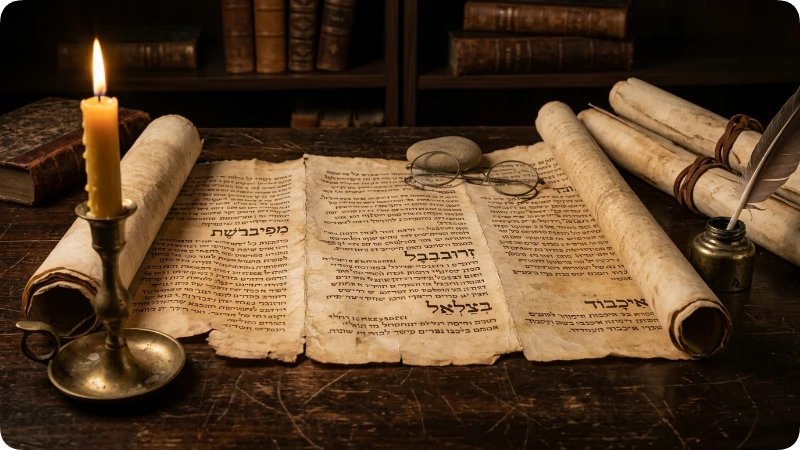
Biblical naming traditions also contain names that can sound startlingly unusual today.
Ichabod
Perhaps the clearest example, meaning “no glory.”
Maher shalal hash baz
This extremely long biblical name appears in the Book of Isaiah. It is memorable primarily because of its extraordinary length and unusual construction.
Zerubbabel
A distinctive biblical name with a strongly ancient sound.
Mephibosheth
Another exceptionally unusual biblical name, especially by modern English naming standards.
Bezalel
Ancient and artistic in feel, but still highly distinctive.
Best aesthetic: biblical / ancient / mysterious / scholarly.
Weird Medieval Names
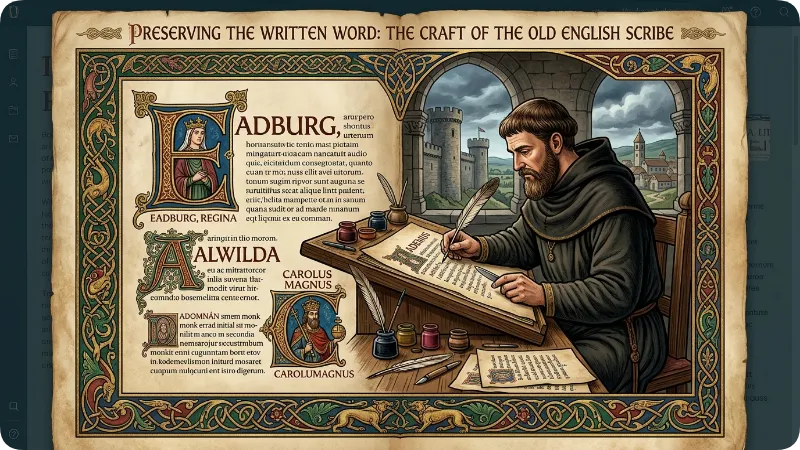
Medieval Europe inherited naming traditions from Latin, Germanic, Celtic, Old English, Norse, and other languages. Many names that seem bizarre today were once recognizable within their communities.
Some interesting examples include:
| Name | Historical feel | Modern aesthetic |
| Eadburg | Old English | Medieval |
| Alwilda | Scandinavian | Warrior princess |
| Bademus | Persian/Latinized | Ecclesiastical |
| Adomnán | Old Irish | Celtic |
| Alphege | Middle English | Gothic medieval |
| Charlemagne | Old French | Royal |
| Clovis | Frankish/French | Ancient royal |
| Bonaventure | French/Latin | Mystical |
Historical name databases preserve many such forms, including Alphege, Alwilda, Adomnán, Bademus, Bonaventure, Charlemagne, and Clovis.
Weirdest Names That Actually Sound Cool Today
Not every unusual historical name feels unusable. Some have aged surprisingly well.
| Name | Meaning / background | Modern vibe |
| Icarus | Greek mythological name | Artistic |
| Attila | Probably related to “little father” | Warrior |
| Clovis | Historical Frankish name | Vintage |
| Alwilda | Legendary Scandinavian figure | Feminine adventure |
| Aurelian | Roman derived name | Elegant |
| Bede | Old English historical name | Minimalist |
| Ahmose | Ancient Egyptian | Mystical |
| Eadburg | Old English | Dark academia |
| Xenodora | Ancient Greek | Fantasy elegance |
| Artaxerxes | Persian royal | Epic |
One useful lesson from historical naming is that unusual does not necessarily mean unusable. A name can sound strange simply because modern ears are no longer accustomed to its original linguistic pattern.
Weird Names With Dark or Gothic Energy
If your interest in the weirdest names is really about finding names with an eerie, mysterious aesthetic, these stand out:
Gothic and mysterious
- Ichabod
- Icarus
- Eadburg
- Agrippa
- Mephibosheth
- Zerubbabel
- Alwilda
- Bademus
Dark academia
- Ichabod
- Agrippa
- Bede
- Aurelian
- Eadburg
- Artaxerxes
Fantasy royalty
- Artaxerxes
- Charlemagne
- Athenodora
- Herakleodora
- Ahmose
- Clovis
Ancient warrior energy
- Attila
- Clovis
- Agrippa
- Artaxerxes
- Ahmose
Name Attribute Guide: How These Names Feel Today
Historical names don’t have modern “lucky” attributes documented in the same way their etymologies can be documented. Lucky numbers, colors, gemstones, and zodiac associations below are modern numerology/aesthetic interpretations, not historical facts.
| Name | Personality vibe | Aesthetic | Modern vs. classic | Nickname potential |
| Artaxerxes | Commanding, intellectual | Imperial fantasy | Ancient/classic | Art, Xerxes |
| Ichabod | Mysterious, eccentric | Gothic | Vintage | Ich, Icky |
| Agrippa | Scholarly, unusual | Roman classic | Ancient | Agri |
| Alwilda | Adventurous, independent | Medieval fantasy | Rare/archaic | Al, Wilda |
| Ahmose | Regal, spiritual | Egyptian mystique | Ancient | Ahmo |
| Icarus | Creative, daring | Celestial myth | Mythic | Icky |
| Attila | Bold, forceful | Warrior | Historical | Atti |
| Eadburg | Serious, scholarly | Old English | Archaic | Ead |
| Clovis | Regal, historic | Medieval royal | Vintage | Clo |
| Aurelian | Refined, luminous | Roman luxury | Classic | Aure, Auri |
Modern numerology note
If a naming website uses numerology, these names can be assigned numbers according to different systems, but the resulting number is not an objective property of the historical name. The same applies to lucky colors, gemstones, days, and zodiac connections.
For authentic historical naming content, etymology and documented cultural context should take priority over these modern interpretations.
Weirdest Names in History for Character Inspiration
Historical names are especially useful for writers because they immediately communicate atmosphere.
For a villain: Artaxerxes, Agrippa, Mephibosheth
For a mysterious hero: Icarus, Aurelian, Clovis
For a fantasy queen: Alwilda, Athenodora, Xenodora
For an ancient ruler: Ahmose, Artaxerxes, Charlemagne
For a gothic character: Ichabod, Eadburg, Bademus
For a warrior: Attila, Clovis, Agrippa
For a scholar: Bede, Agrippa, Aurelian
This is one reason unusual historical names work so well in fantasy, historical fiction, anime inspired character creation, gaming usernames, and dark academia aesthetics: the name itself already feels like part of a story.
Why Historical Names Can Sound So Strange
A name does not exist in isolation. It belongs to a language and a naming system.
A name such as Artaxerxes sounds extraordinary to an English speaking reader because Old Persian phonology and naming structures are unfamiliar. Similarly, Eadburg feels strange because Old English naming patterns are no longer part of everyday English.
Even familiar names can change dramatically through translation and Latinization. Historical records may preserve Greek, Latin, Arabic, Persian, Hebrew, or Old English forms that differ from the names people originally used in their own languages. Behind the Name, for example, identifies Averroes as a Latinized form of the Arabic patronymic ibn Rushd, while Avicenna represents a Latinized form of ibn Sīnā.
So sometimes the “weirdness” belongs more to the modern form of the name than to the original naming culture.
Frequently Asked Questions About the Weirdest Names in History
What is one of the weirdest names in history?
Artaxerxes is an excellent example because of its unusual sound, length, Persian royal history, and dramatic appearance. Other striking examples include Ichabod, Agrippa, Eadburg, and Athenodora.
What is the strangest ancient name?
There is no objective single strangest ancient name. Names such as Artaxerxes, Asclepiodora, Herakleodora, Iapetos, and Ahmose can seem particularly unusual to modern English speakers because their linguistic structures are unfamiliar.
Is Ichabod a real historical name?
Yes. Ichabod is a biblical Hebrew name meaning “no glory.” It appears in the Old Testament.
Is Artaxerxes a real name?
Yes. Artaxerxes was used by several Achaemenid Persian rulers. The name is the Greek form of an Old Persian royal name.
Are weird historical names good for fictional characters?
Absolutely. Historical names can provide authentic unusual sounds without inventing random spellings. Names such as Icarus, Alwilda, Aurelian, Artaxerxes, and Xenodora naturally create strong character impressions.
What is a good weird historical name for a girl?
Alwilda, Eadburg, Xenodora, Athenodora, and Herakleodora offer very different styles, ranging from medieval and mysterious to elaborate Greek fantasy.
What is a good weird historical name for a boy?
Artaxerxes, Agrippa, Ichabod, Bademus, Clovis, and Aurelian are strong choices if you want something rare and historically grounded.
Final Thoughts
The strangest names in history are often strange only because history has moved on.
Artaxerxes was once a royal name. Eadburg belonged to real women in Anglo Saxon England. Ahmose belonged to the world of ancient Egypt. Ichabod came from an established biblical tradition. Alwilda survived through the story of a legendary Scandinavian pirate.
That is what makes unusual historical names so fascinating: behind every unfamiliar combination of letters is a language, culture, person, story, or forgotten naming tradition.
And sometimes the name that sounds the weirdest at first is the one that leaves the strongest impression.

Liam tracks digital culture, internet aesthetics, and social media branding. He creates unique, memorable usernames and handles for creators who want to stand out on TikTok, Instagram, and YouTube. In his free time, he edits aesthetic short-form videos.