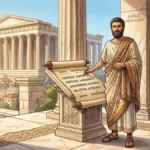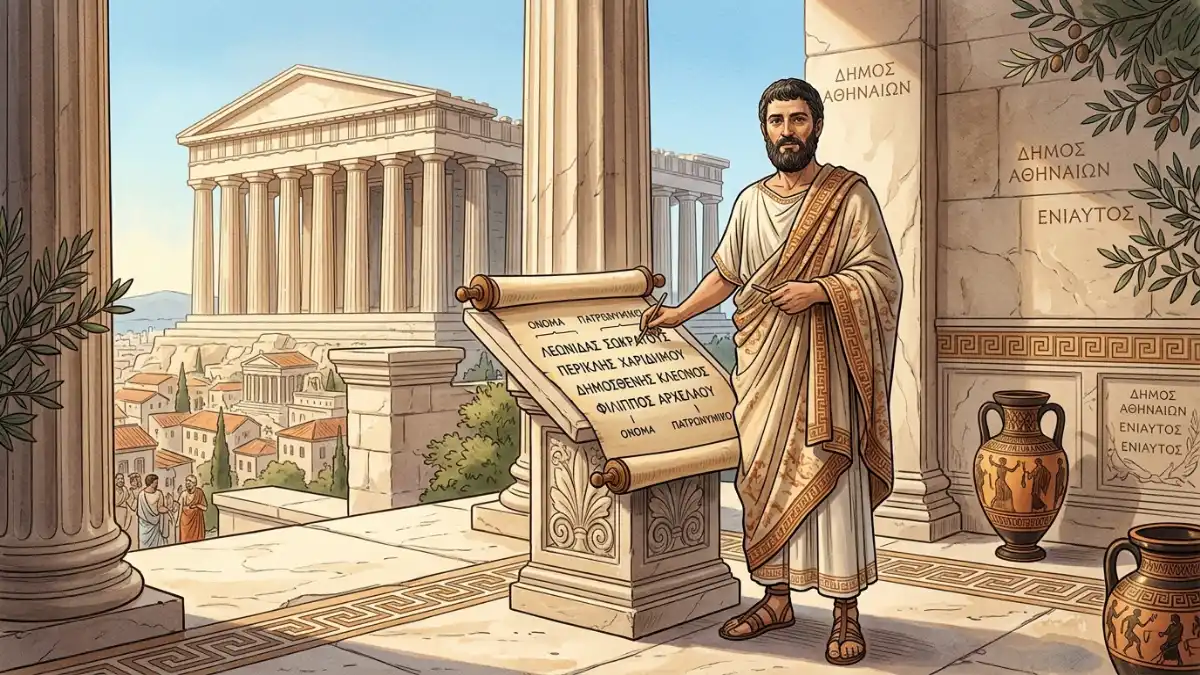
If you are searching for ancient Greek last names, there is one fascinating detail worth knowing first: people in ancient Greece did not generally use hereditary surnames in the modern sense.
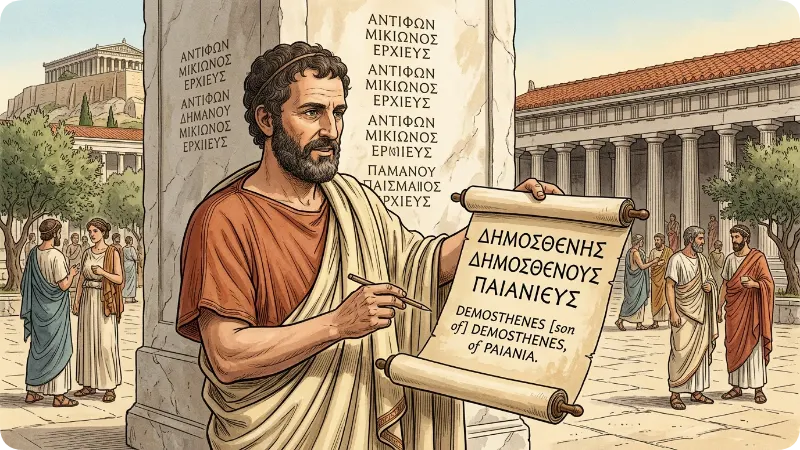
Instead, a person’s identity could be expanded with a father’s name, place of origin, or civic affiliation. In Athens, for example, a man might be identified by his personal name, his father’s name, and his deme, the local civic community to which he belonged.
That difference makes ancient Greek naming especially interesting. Names such as Leonidas, Demosthenes, Alcibiades, Ptolemy, and Aristides carry the atmosphere of antiquity, while historical patronymics and place based identifiers can provide more authentic surname style inspiration.
What Were Ancient Greek Last Names Actually Like?
The modern idea of a fixed family surname can be misleading when applied to ancient Greece.
The Oxford Lexicon of Greek Personal Names explains that ancient Greeks normally had one personal name. Identification could then be expanded with a patronymic, an ethnic indicating origin, or a demotic showing membership in a civic subdivision.
A simplified example would be:
Alexander, son of Philip, of Athens
rather than:
Alexander Philipson
The patronymic commonly appeared as the father’s name in the genitive, for example, Alexandros Philippou, meaning “Alexander, son of Philip.”
So, when modern readers search for ancient Greek surnames, they may actually be looking for one of several different things:
| Type | What it represented | Example |
| Personal name | Individual identity | Socrates |
| Patronymic | Father’s name | Philippou |
| Patronymic suffix | Descent from an ancestor | Priamides |
| Demotic | Civic community or deme | Skambonidai |
| Ethnic | City or regional origin | Athenaios |
| Clan/family association | Lineage or prominent house | Alcmaeonid |
The distinction matters because not every ancient looking Greek name was a hereditary surname.
Ancient Greek Surname Style Names
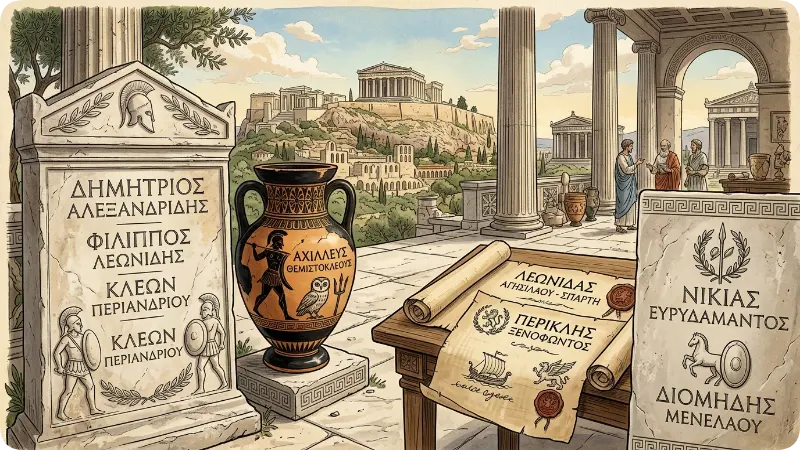
For modern naming purposes, some ancient Greek names work beautifully as surname inspiration even when they were historically patronymics, epithets, or family identifiers rather than fixed surnames.
Patronymic Names
These are particularly useful if you want a surname with an unmistakably ancient Greek character.
| Name | Historical sense | Overall vibe |
| Achilleides | Associated with Achilles | Heroic, legendary |
| Alcmaeonid | Connected with the Alcmaeonid family | Aristocratic, political |
| Heraclid | Descendant of Heracles | Powerful, heroic |
| Leonid | Connected linguistically with Leonidas/Leon | Strong, classical |
| Peleid | Descendant of Peleus | Epic, warrior like |
| Priamid | Descendant of Priam | Trojan, regal |
| Tantalid | Descendant of Tantalus | Mythic, dramatic |
| Aeacid | Descendant of Aeacus | Heroic, ancient |
Patronymic formations using endings such as ides are especially recognizable from Greek epic. Homeric examples include Hektor Priamides, literally “Hector, son of Priam.” Over time, some such forms became independent names rather than functioning strictly as patronymics.
Ancient Greek Family and Lineage Names
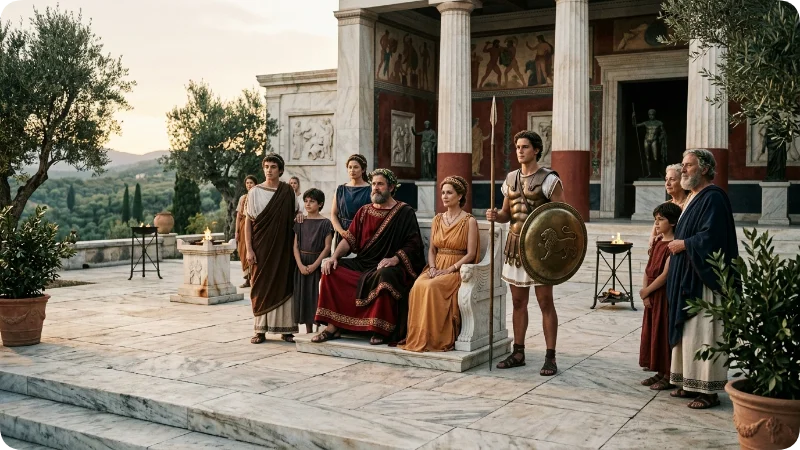
Some names are better understood as famous ancient families or dynasties rather than ordinary surnames.
Alcmaeonid
The Alcmaeonids were a prominent Athenian family associated with several important political figures.
The name has a distinctly aristocratic and historical feel, making it particularly suitable for historical fiction or a classical inspired character.
Vibe: aristocratic • intellectual • political • ancient Athens
Heraclid
Heraclid refers to descendants of Heracles. It has a strong mythological quality and immediately evokes heroic genealogy.
Vibe: heroic • masculine • mythic • warrior
Aeacid
The Aeacids were a legendary lineage descended from Aeacus, associated with figures including Achilles and his son Neoptolemus.
Vibe: epic • noble • warrior • Homeric
Tantalid
The Tantalids were the descendants of Tantalus in Greek mythology.
This is a particularly atmospheric choice because the name feels ancient, tragic, and theatrical.
Vibe: dark • mythological • dramatic • gothic
Ancient Greek Names Inspired by Places
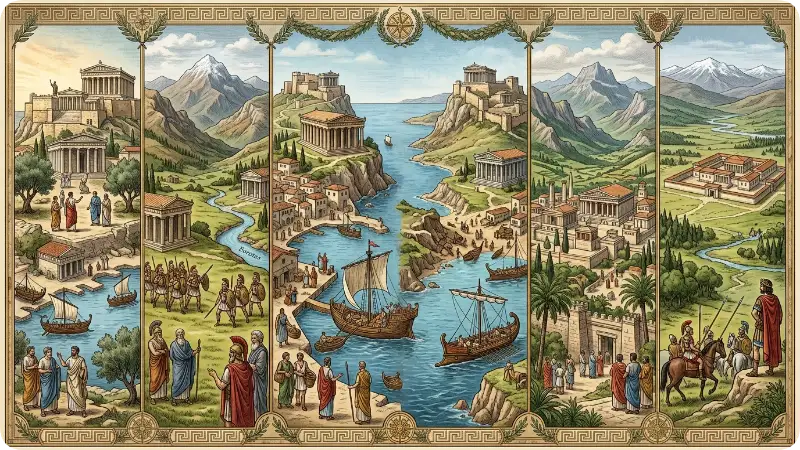
Ancient Greeks could also be identified by their city, region, or civic community. The Greek naming tradition therefore offers a rich source of place based surname inspiration.
The Oxford Lexicon notes that an ethnic could identify someone’s place of origin, while a demotic could identify membership in a civic subdivision such as an Athenian deme.
Some surname style forms include:
| Name | Connection | Aesthetic |
| Athenaios | Athens | Classical, intellectual |
| Spartiate | Sparta | Martial, austere |
| Corinthian | Corinth | Elegant, maritime |
| Rhodian | Rhodes | Coastal, refined |
| Cretan | Crete | Island, rugged |
| Ionic | Ionia | Artistic, ancient |
| Attic | Attica | Scholarly, classical |
| Macedonian | Macedonia | Royal, historical |
| Thessalian | Thessaly | Regional, pastoral |
| Boeotian | Boeotia | Archaic, distinctive |
These should generally be treated as origin descriptors rather than hereditary surnames.
Famous Ancient Greek Names That Feel Like Surnames Today
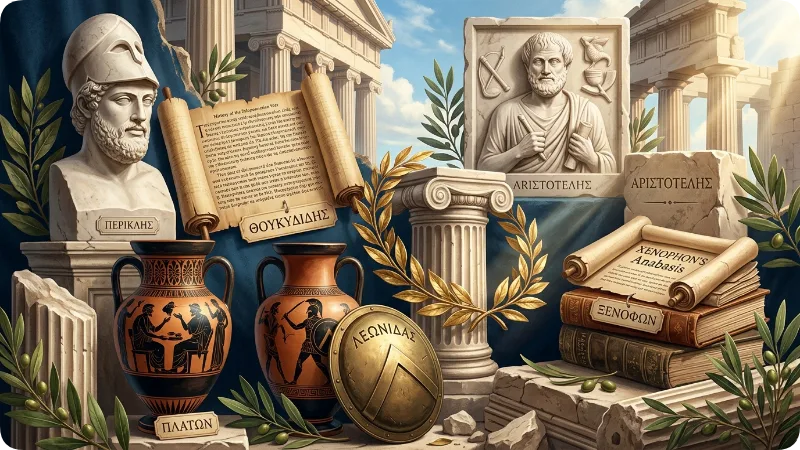
Some ancient names have such a strong visual identity that they can easily be imagined as modern surnames.
Leonidas
Meaning: Commonly connected with leon, “lion”
Origin: Ancient Greek
Gender: Masculine
Vibe: Brave, commanding, heroic
Aesthetic: Warrior • classical • royal
Modern feel: Strongly classical
The name is famously associated with Leonidas I of Sparta, giving it a powerful historical association.
Pericles
Meaning: Traditionally interpreted from Greek elements associated with “very glorious”
Origin: Ancient Greek
Gender: Masculine
Vibe: Intellectual, distinguished, statesmanlike
Aesthetic: Classical • scholarly • refined
Aristides
Meaning: Associated with Aristos, “best” or “excellent”
Origin: Ancient Greek
Gender: Masculine
Vibe: Noble, principled, serious
Aesthetic: Aristocratic • classical • literary
Demosthenes
Meaning: A traditional Greek compound name
Origin: Ancient Greek
Gender: Masculine
Vibe: Powerful, rhetorical, intellectual
Aesthetic: Scholarly • historical • dramatic
Themistocles
Meaning: Traditionally connected with Themis and kleos, “glory”
Origin: Ancient Greek
Gender: Masculine
Vibe: Strategic, commanding, sophisticated
Aesthetic: Imperial • intellectual • classical
Dark and Mysterious Ancient Greek Surname Ideas
If your goal is a name for a fictional character, fantasy world, username, or creative project, ancient Greek mythology provides especially strong dark name inspiration.
Dark Greek inspired choices
- Tantalid , tragic and mythological
- Priamid , ancient and royal
- Aeacid , heroic and severe
- Heraclid , powerful and legendary
- Alcmaeonid , aristocratic and politically charged
- Phocion , restrained and classical
- Xenophon , intellectual and mysterious
- Drakon , sharp, dramatic, and ancient sounding
- Erebus , strongly associated with primordial darkness in Greek mythology
- Thanatos , associated with death personified in Greek mythology
Best aesthetic: gothic mythology • dark academia • ancient fantasy • epic fiction
A caution for authenticity: names such as Erebus and Thanatos are mythological names, not ordinary ancient Greek surnames. They work as Greek inspired character names, but should not be presented as historical family surnames.
Elegant Ancient Greek Surname Ideas
For a softer, refined, almost aristocratic aesthetic, consider:
- Athenaios
- Aristides
- Pericles
- Callias
- Euphemides
- Alcmaeonid
- Aeacid
- Rhodian
- Ionic
- Themistocles
These have a distinctly classical, literary, old world quality rather than the sharper fantasy feeling of names such as Drakon or Tantalid.
Ancient Greek Surnames for Fantasy Characters
Ancient Greek naming conventions work particularly well in fantasy because they naturally suggest lineage.
Heroic
Heraclid, Aeacid, Peleid, Leonid
These feel appropriate for warriors, kings, demigods, and legendary bloodlines.
Royal
Priamid, Macedonian, Athenaios, Alcmaeonid
These suggest courts, dynasties, political families, and ancient kingdoms.
Dark
Tantalid, Erebus, Thanatos, Drakon
These suit villains, cursed bloodlines, mysterious houses, and gothic settings.
Intellectual
Aristides, Pericles, Demosthenes, Themistocles
These have a scholarly, philosophical, or statesmanlike impression.
Ancient Greek Last Names for Boys and Men
If you want a masculine surname style name with an ancient Greek atmosphere, these are particularly distinctive:
| Name | Impression | Style |
| Heraclid | Heroic descendant | Mythological |
| Aeacid | Noble warrior lineage | Epic |
| Peleid | Homeric ancestry | Legendary |
| Priamid | Trojan royalty | Regal |
| Leonid | Lion like strength | Strong |
| Athenaios | From Athens | Classical |
| Aristides | Excellence | Refined |
| Pericles | Glory | Intellectual |
| Demosthenes | Oratorical power | Scholarly |
| Themistocles | Strategic authority | Statesmanlike |
Ancient Greek Names for Girls and Women
Ancient Greek women were also normally identified through personal names rather than hereditary surnames. In public contexts, a woman’s identification could include her father’s or husband’s name, depending on the period and context.
For a historically inspired female character, beautiful ancient Greek personal names include:
- Aspasia
- Diotima
- Sappho
- Phaedra
- Ariadne
- Antigone
- Andromache
- Penelope
- Electra
- Iphigenia
- Cassandra
- Calliope
- Daphne
- Xanthe
These are personal names, not ancient Greek surnames, but they can be paired with historically inspired patronymics or family names for fiction.
Ancient Greek Naming Structure: The Most Authentic Approach
If authenticity matters more than simply finding something that sounds Greek, use the historical naming structure.
A particularly useful model is:
[Personal Name] + [Father’s Name] + [Civic/Origin Identifier]
For example:
Alcibiades, son of Kleinias, of the deme Skambonidai
This reflects the type of identification documented for Athenian citizens. The Oxford Lexicon gives Alcibiades as an example of a personal name followed by patronymic and demotic.
This is much more historically grounded than simply inventing a surname ending in son.
What Do Greek Surname Endings Mean?
Several endings associated with Greek names are useful to understand.
ides
The ending ides can indicate descent from a male ancestor in ancient Greek patronymic formations.
Examples include:
- Priamides , son/descendant of Priam
- Heraclides , descendant of Heracles
- Pelides , descendant/son of Peleus
However, the historical development is important: some ides forms eventually became established personal names rather than continuing to function literally as “son of.”
ios / eios
Another ancient patronymic formation used an adjective derived from the father’s name. This was particularly associated with certain Greek dialect regions.
Genitive patronymics
A father’s name could appear in the genitive:
Alexandros Philippou
meaning:
Alexander, son of Philip.
This was a standard and important form of patronymic identification.
Ancient Greek Surnames vs Modern Greek Surnames
This is one of the most important distinctions for anyone researching Greek family names.
Ancient Greek naming generally centered on a personal name, with patronymics and geographic or civic identifiers added when needed.
Modern Greek surnames, by contrast, belong to later naming traditions in which hereditary family names became established.
So a modern Greek surname should not automatically be labeled an ancient Greek surname simply because it has an old Greek linguistic origin.
For historical accuracy, it is better to describe many ancient examples as patronymics, demotics, ethnics, dynastic names, or lineage names.
Lucky Attributes and Name Vibes
Lucky numbers, colors, gemstones, zodiac connections, and similar attributes are modern naming interpretations, not documented properties of ancient Greek names.
For example, if you are choosing a name for a fictional character, you might create an aesthetic profile like this:
| Name | Personality vibe | Aesthetic | Modern interpretation |
| Heraclid | Fearless, protective | Warrior | Bold |
| Priamid | Regal, tragic | Dark royal | Dramatic |
| Aeacid | Noble, resilient | Epic | Powerful |
| Athenaios | Intelligent, composed | Classical | Sophisticated |
| Tantalid | Mysterious, intense | Gothic | Unforgettable |
| Aristides | Principled, refined | Old world | Elegant |
| Leonidas | Courageous, commanding | Spartan | Strong |
These descriptions are aesthetic interpretations for modern naming, rather than historical beliefs about personality or luck.
How to Choose an Ancient Greek Surname
The best choice depends on the feeling you want the name to create.
For a heroic character:
Heraclid, Aeacid, Peleid, Leonid
For a royal character:
Priamid, Alcmaeonid, Athenaios
Or dark academia:
Aristides, Themistocles, Demosthenes
For gothic fantasy:
Tantalid, Erebus, Thanatos
For historical fiction:
Use a personal name + patronymic + place or civic identifier rather than forcing a modern surname structure.
And for a modern baby or family name:
Be especially careful with “ancient” claims. A name can have ancient Greek roots without having functioned as a hereditary surname in antiquity.
Frequently Asked Questions
Did ancient Greeks have last names?
Not generally in the modern hereditary surname sense. Ancient Greeks normally had a personal name, while a father’s name, place of origin, or civic affiliation could be added to identify them more precisely.
What was a Greek patronymic?
A patronymic identified someone through their father. A common construction used the father’s name in the genitive, such as Alexandros Philippou, meaning “Alexander, son of Philip.”
What does ides mean in Greek names?
In ancient Greek naming, ides could form a patronymic expressing descent from a male ancestor. Famous examples include Priamides, “son of Priam.” Some such forms later became independent names.
Is Heraclid an ancient Greek surname?
It is better described as a lineage or patronymic style name connected with descendants of Heracles rather than a modern style hereditary surname.
Is Priamid a Greek surname?
Priamid is best understood as a modern surname style rendering of a mythological lineage associated with Priam. Priamides is the historically recognizable ancient Greek patronymic form.
What is the most authentic ancient Greek surname format?
For an Athenian style historical character, a personal name followed by the father’s name and, where appropriate, a deme affiliation is more authentic than simply attaching a modern surname.
Are Greek mythology names the same as ancient Greek surnames?
No. Names such as Ariadne, Achilles, Athena, and Heracles are personal or divine/mythological names. They are not automatically surnames.
Final Thoughts
The magic of ancient Greek last names is that they are not really about surnames at all. They reveal a culture where identity could be expressed through family, ancestry, birthplace, civic belonging, and personal reputation.
For historical accuracy, think beyond the modern surname. Explore patronymics such as Priamides, lineage names such as Heraclid and Aeacid, and geographic or civic identifiers such as Athenaios.
And if you are naming a fictional character, you have an even richer palette: heroic, aristocratic, tragic, scholarly, mysterious, or mythic. Ancient Greek naming gives each style a sense of lineage, as though the character’s name carries a story that began generations before them.

Liam tracks digital culture, internet aesthetics, and social media branding. He creates unique, memorable usernames and handles for creators who want to stand out on TikTok, Instagram, and YouTube. In his free time, he edits aesthetic short-form videos.