Featured Snippet
Common Indian last names reflect family heritage, community roots, occupations, geography, and ancestry. Popular Indian surnames such as Sharma, Patel, Singh, Gupta, Verma, Reddy, Nair, and Iyer are widely used across different regions and cultures in India. These last names often carry deep historical, cultural, and linguistic significance while helping preserve family identity across generations.
Emotional Introduction
A last name is more than a family labelit carries stories, traditions, and generations of identity. Across India’s incredible cultural landscape, surnames often reveal ancestral roots, professions, regional connections, and historical journeys.
Whether you’re researching your family history, creating a realistic character, choosing a meaningful surname for a story, or simply exploring Indian naming traditions, common Indian last names offer a fascinating glimpse into one of the world’s richest cultural tapestries.
Some surnames feel powerful and authoritative. Others sound elegant, scholarly, artistic, or deeply rooted in tradition. Together, they form a living record of India’s diversity, connecting people to their heritage while evolving with modern life.
Overview Table
| Last Name | Origin Type | Common Region | Meaning/Association |
| Sharma | Occupational | North India | Scholar, teacher |
| Singh | Title | Pan India | Lion, bravery |
| Patel | Occupational | Gujarat | Village leader |
| Gupta | Occupational | North India | Protector |
| Verma | Honorific | North India | Warrior, noble |
| Reddy | Community Name | Andhra Pradesh, Telangana | Village administration |
| Nair | Community Name | Kerala | Historical warrior class |
| Iyer | Community Name | Tamil Nadu | Tamil Brahmin surname |
| Choudhary | Title | North India | Community leader |
| Mehta | Occupational | Gujarat, Rajasthan | Accountant, administrator |
Most Common Indian Last Names
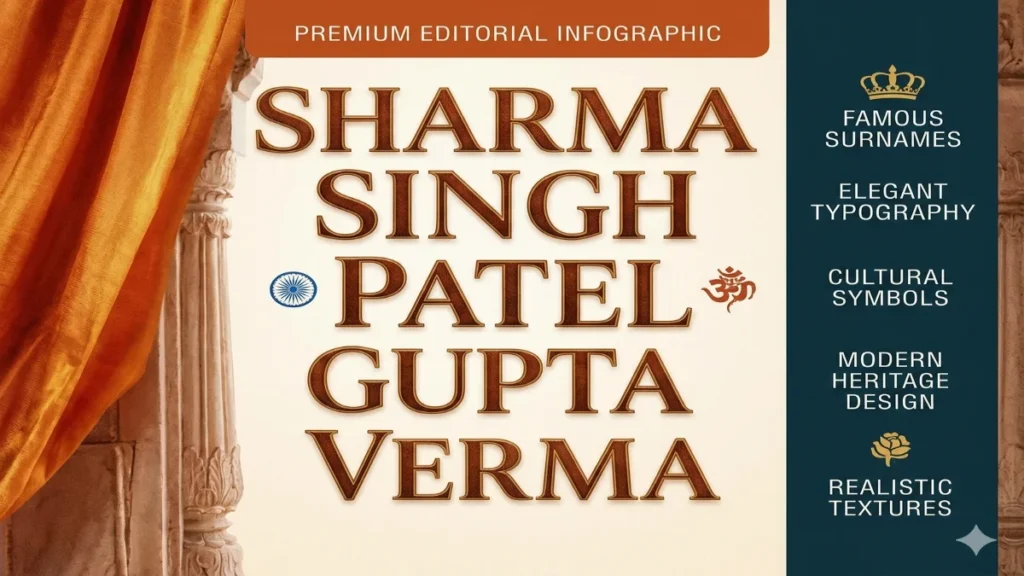
Sharma
One of the most recognizable Indian surnames, Sharma is associated with scholarship, wisdom, and traditional learning. It carries a classic, intellectual energy that remains respected across generations.
Vibe: Educated, respected, timeless
Singh
Perhaps India’s most iconic surname, Singh means “lion” and symbolizes courage, leadership, and strength. Widely used across many communities, it projects confidence and authority.
Vibe: Powerful, bold, heroic
Patel
Originally linked to village leadership and land ownership, Patel remains one of the most common surnames in western India and among global Indian communities.
Vibe: Entrepreneurial, grounded, influential
Gupta
Historically associated with merchants and administrators, Gupta carries a refined, professional image and is one of India’s oldest surviving surnames.
Vibe: Intelligent, professional, established
Verma
Often connected with nobility and social prestige, Verma has remained popular due to its elegant sound and widespread recognition.
Vibe: Sophisticated, balanced, traditional
Choudhary
A surname historically linked with leadership and community governance.
Vibe: Strong, respected, authoritative
Mehta
Associated with accounting, administration, and management roles throughout Indian history.
Vibe: Professional, organized, successful
Jain
A surname connected to followers of Jainism, emphasizing non violence, discipline, and ethical living.
Vibe: Thoughtful, peaceful, refined
Agarwal
A widely recognized business community surname known for entrepreneurship and commercial success.
Vibe: Ambitious, modern, prosperous
Mishra
Traditionally associated with scholarly and priestly backgrounds.
Vibe: Intellectual, classic, cultured
Common North Indian Last Names
North India is home to some of the country’s most recognizable surnames, many influenced by Sanskrit traditions, royal titles, and historical occupations.
Popular examples include:
- Sharma
- Singh
- Gupta
- Verma
- Mishra
- Tiwari
- Pandey
- Yadav
- Chauhan
- Choudhary
Aesthetic Impression
These surnames often feel:
- Traditional yet modern
- Strong and respected
- Family oriented
- Historically rooted
They frequently appear in literature, cinema, politics, and modern professional life.
Common South Indian Last Names
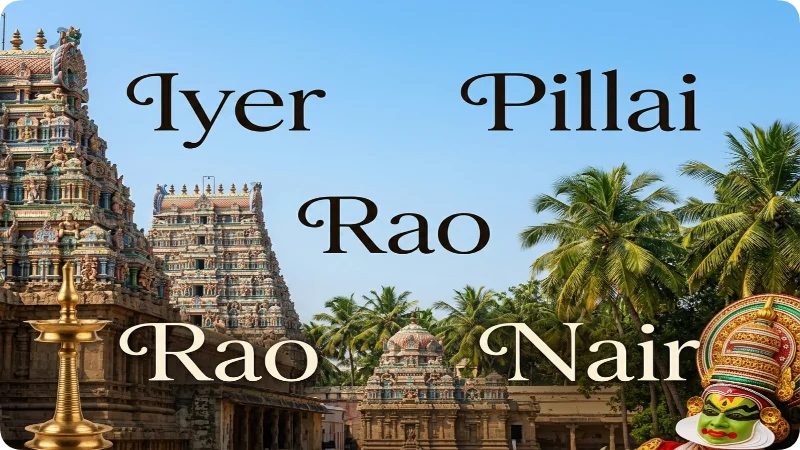
South Indian surnames often reflect linguistic heritage, family lineage, ancestral villages, or community identities.
Popular examples include:
- Reddy
- Nair
- Iyer
- Iyengar
- Menon
- Pillai
- Rao
- Shetty
- Gowda
- Naidu
Aesthetic Impression
South Indian surnames tend to sound:
- Melodic
- Distinguished
- Elegant
- Deeply cultural
Many have remained unchanged for centuries, preserving strong connections to regional heritage.
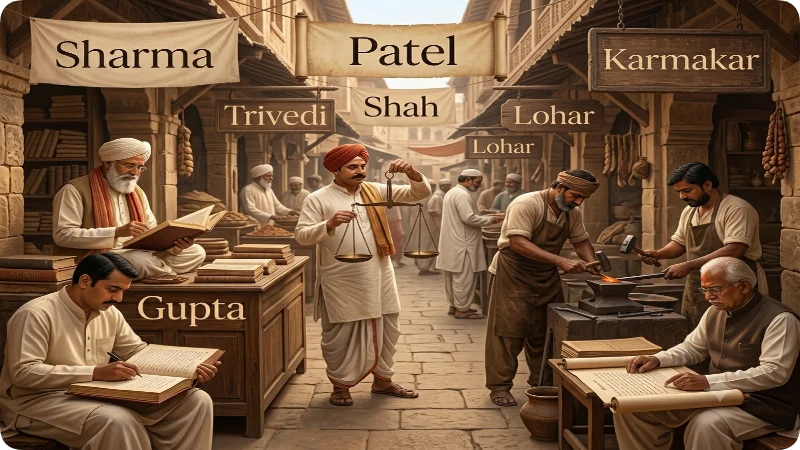
Common Indian Last Names Based on Occupations
Many Indian surnames originally emerged from family professions.
| Last Name | Traditional Occupation |
| Sharma | Scholar/Priest |
| Mehta | Accountant |
| Patel | Village Administrator |
| Gupta | Merchant/Protector |
| Kulkarni | Village Record Keeper |
| Joshi | Astrologer/Scholar |
| Deshmukh | Regional Administrator |
| Bhandari | Treasurer |
| Sutar | Carpenter |
| Soni | Goldsmith |
These surnames reveal how professions shaped identity long before modern family naming systems evolved.
Indian Last Names That Feel Powerful
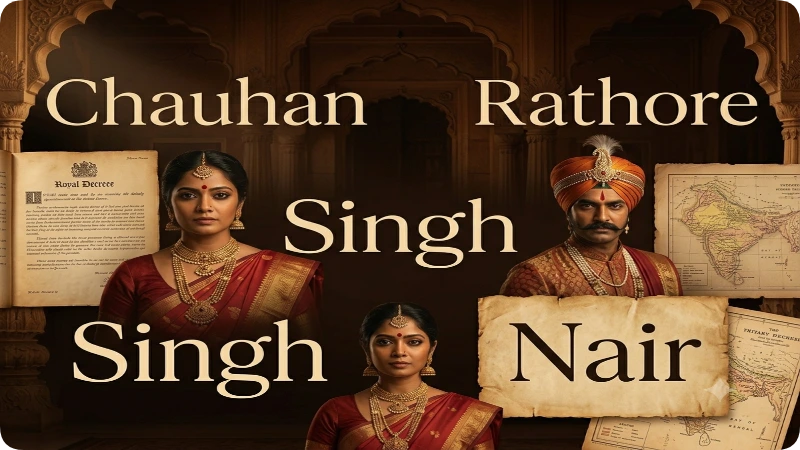
Certain surnames naturally project authority and strength.
Singh
Bold, fearless, instantly recognizable.
Chauhan
Associated with historic warrior lineages.
Rathore
Strong royal and martial associations.
Reddy
Leadership oriented and influential.
Verma
Elegant authority with broad appeal.
Malik
Historically connected with leadership and ownership.
Power Vibe Keywords:
- Leadership
- Prestige
- Confidence
- Legacy
- Influence
Elegant and Sophisticated Indian Surnames
Some Indian last names carry a polished, refined aesthetic that feels timeless.
Mehta
Professional and respected.
Kapoor
Smooth, modern, and internationally recognizable.
Anand
Associated with joy and positivity.
Iyer
Academic and distinguished.
Menon
Sophisticated and culturally rich.
Jain
Minimalist yet elegant.
Luxury Aesthetic:
- Clean
- Refined
- Intelligent
- Professional
- Global friendly
Traditional Indian Last Names With Deep Heritage
These surnames have remained influential for generations.
- Sharma
- Gupta
- Tiwari
- Pandey
- Nair
- Iyer
- Rao
- Pillai
- Desai
- Kulkarni
They often evoke family pride, cultural continuity, and strong ancestral roots.
Indian Last Names Popular Worldwide
As Indian communities have expanded globally, certain surnames have become instantly recognizable around the world.
Patel
Especially prominent in the United States, United Kingdom, Canada, and East Africa.
Singh
One of the most globally recognized Indian surnames.
Shah
Simple, memorable, and internationally adaptable.
Kapoor
Popular through cinema and entertainment.
Gupta
Widely represented in business, academia, and technology sectors.
Nair
Increasingly familiar across international professional communities.
Modern Trends in Indian Last Names
Today’s younger generations are redefining surname traditions in interesting ways.
Hyphenated Surnames
Some families combine both parents’ surnames to preserve dual heritage.
Minimalist Identity
Many professionals use shorter forms of traditional surnames online.
Global Adaptation
Some individuals simplify spellings for international audiences while maintaining cultural identity.
Heritage Revival
Younger generations are increasingly interested in researching family surname origins and preserving ancestral connections.
Social media platforms and genealogy communities have contributed significantly to renewed interest in surname heritage.
How Indian Last Names Reflect Identity
Indian surnames often reveal:
- Family lineage
- Regional origin
- Language background
- Historical profession
- Community affiliation
- Cultural heritage
While modern India is increasingly diverse and interconnected, surnames continue to serve as meaningful links to family history.
Frequently Asked Questions
What is the most common Indian last name?
Singh is often considered one of the most common and widely recognized Indian surnames, followed by names such as Sharma, Patel, Gupta, and Verma.
Do Indian last names have meanings?
Yes. Many Indian surnames originated from occupations, titles, family lineage, regional identities, or historical roles.
Why are Indian surnames so diverse?
India has hundreds of languages, cultures, and regional traditions. This diversity naturally created a wide variety of surname systems.
Are Indian last names connected to geography?
Often, yes. Many surnames indicate a family’s historical region, village, or linguistic background.
Can Indian surnames indicate profession?
Historically, many did. Examples include Mehta, Sharma, Kulkarni, and Sutar, which were connected to traditional occupations.
Which Indian surname is most internationally recognized?
Singh, Patel, Gupta, Shah, and Kapoor are among the most globally recognizable Indian surnames.
Conclusion
Common Indian last names are far more than inherited family labels. They represent centuries of history, cultural evolution, regional diversity, and personal identity. From the scholarly prestige of Sharma and Gupta to the bold strength of Singh and the entrepreneurial legacy of Patel, each surname carries a unique story.
Whether you’re researching ancestry, choosing a character name, exploring cultural traditions, or simply satisfying curiosity, Indian surnames offer a remarkable window into heritage, belonging, and family legacy. Their enduring popularity proves that while times change, the stories carried by names continue to connect generations.

Emma helps authors, screenwriters, and gamers find the perfect names for their fictional characters. She analyzes historical trends and linguistic styles to craft names that carry deep meaning. When she isn’t writing, she loves plotting her next fantasy novel at a local café.