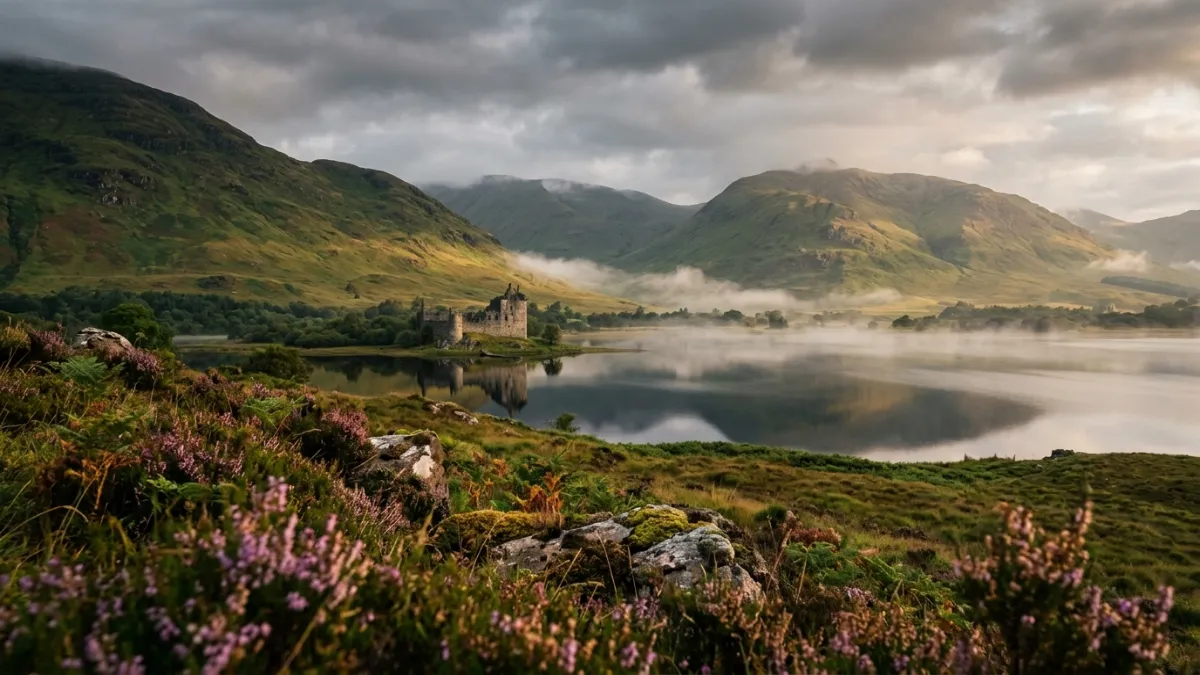
Scotland has a remarkable naming heritage shaped by Gaelic language, Celtic traditions, Norse influence, royal history, clan identities, and centuries of cultural exchange. Scottish names can feel as gentle as a misty Highland morning or as powerful as an ancient castle overlooking the sea.
Some are familiar classics, such as Isla and Alexander. Others, including Eilidh, Lachlan, and Seumas, offer a more distinctive connection to Scottish language and tradition. Scottish surnames such as MacLeod and Campbell can also inspire memorable character names and creative identities.
The best Scottish name is not necessarily the rarest or most historically significant. It is the one whose sound, meaning, cultural background, and overall personality feel right for your purpose.
Scottish Names at a Glance
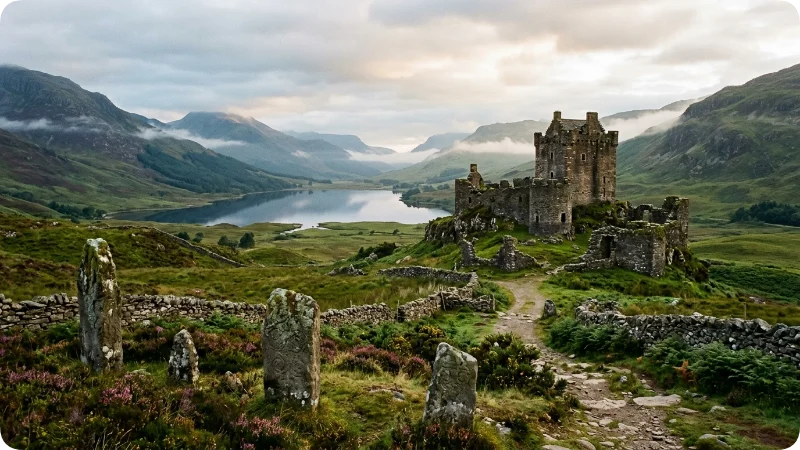
Scottish names come from several overlapping traditions, including Scottish Gaelic, Scots, Norse, and names introduced through Christianity and wider European history. That variety explains why Scottish naming can feel simultaneously ancient, familiar, and refreshingly distinctive.
| Naming style | Examples | Overall vibe |
| Classic Scottish | Angus, Fiona, Duncan | Traditional and confident |
| Scottish Gaelic | Eilidh, Alasdair, Màiri | Cultural and lyrical |
| Soft and elegant | Isla, Iona, Elspeth | Gentle and refined |
| Rugged Highland | Lachlan, Callum, Skye | Earthy and adventurous |
| Royal and historic | Malcolm, Alexander, Stuart | Noble and timeless |
| Rare and distinctive | Eilidh, Sorcha, Ruairidh | Unusual and characterful |
| Scottish surnames | Fraser, Campbell, MacLeod | Strong and heritage rich |
| Modern favorites | Isla, Rory, Finlay | Fresh and approachable |
These categories describe the names’ general aesthetic rather than fixed cultural meanings. A name can fit several styles, and not every name in the table originated exclusively in Scotland.
Popular Scottish Names for Children
If you want a Scottish name that feels authentic without being difficult to wear in everyday life, start with familiar choices. They offer a balance of cultural connection, recognizable spelling, and lasting appeal.
Popularity note: Scotland’s official 2025 birth registration statistics identify Noah and Freya as the most popular boys’ and girls’ names, respectively. Not every name below is Scottish in origin; this selection focuses on names with Scottish usage or strong Scottish associations.
Popular Scottish girl names
Isla
EYE luh · Scottish place name association
Soft, luminous, and effortlessly elegant. Isla is associated with the Scottish island of Islay, although the name’s precise naming history is more complex than a simple island name derivation. It feels modern and internationally wearable.
Vibe: Romantic, natural, minimalist. Nicknames: Izzie, Isa.
Iona
eye OH nuh · Scottish island name
A graceful choice with a peaceful, almost celestial sound. Iona is the name of a Scottish island famous for its early Christian heritage, giving it a meaningful historical connection.
Vibe: Serene, spiritual, understated. Nicknames: Io, Ona.
Fiona
fee OH nuh · Scottish literary usage
Often interpreted as “fair” or “white,” Fiona was popularized as a literary name by Scottish writer James Macpherson. Its sound is feminine and warm without feeling overly delicate.
Vibe: Graceful, friendly, classic. Nicknames: Fi, Fifi.
Maisie
MAY zee · Scottish and British usage
A familiar Scottish favorite with a cheerful, vintage personality. Maisie is a diminutive of Margaret, traditionally associated with the meaning “pearl.”
Vibe: Sweet, lively, vintage. Nicknames: Mae, Mais.
Elspeth
EL speth · Scottish form of Elizabeth
Elspeth feels literary, quietly aristocratic, and distinctly traditional. Its familiar roots give it substance, while its uncommon modern sound makes it stand apart.
Vibe: Refined, bookish, vintage. Nicknames: Elsie, El, Beth.
Popular Scottish boy names
Lachlan
LOCK lən · Gaelic and Scottish usage
A name with a rugged, windswept character. Historically connected with the Gaelic designation for Scandinavia or Norsemen, Lachlan reflects Scotland’s complex Gaelic Norse history.
Vibe: Adventurous, confident, outdoorsy. Nicknames: Lachie, Lach.
Callum
KAL um · Scottish Gaelic form of Columba
Associated with the Latin name Columba, meaning “dove,” Callum combines a strong opening sound with a gentle meaning. It is a lovely choice for parents who want something masculine but approachable.
Vibe: Kind, steady, quietly confident. Nicknames: Cal, Cally.
Duncan
DUN kən · Scottish Gaelic heritage
Duncan has a sturdy, historic quality. Traditionally interpreted as coming from Gaelic elements associated with brown and warrior, it also recalls Scottish royal history.
Vibe: Dependable, bold, timeless. Nicknames: Dunc, Danny.
Rory
ROR ee · Gaelic name used in Scotland
Rory comes from Gaelic elements commonly understood as “red” and “king.” It has an energetic, spirited sound that works equally well for a child, an adult, or a fictional hero.
Vibe: Bold, playful, charismatic. Nicknames: Ro, Ror.
Finlay
FIN lee · Scottish Gaelic tradition
Finlay is rooted in the Gaelic name Fionnlagh. Its traditional elements are associated with fair or white and warrior. The result feels friendly and energetic rather than overly formal.
Vibe: Bright, modern, approachable. Nicknames: Finn, Fin.
Traditional Scottish Gaelic Names
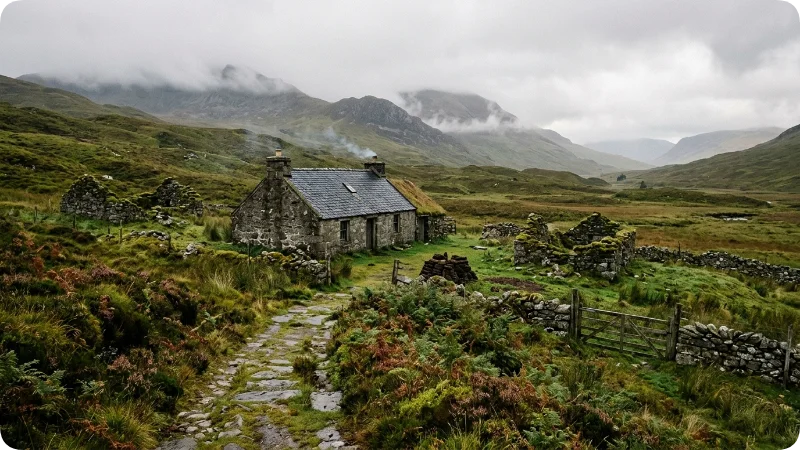
Scottish Gaelic names have a special appeal because their spellings preserve a linguistic tradition that is not always obvious to English speakers. Some have familiar English equivalents; others retain a distinctly Gaelic identity.
The spellings and pronunciations below are useful starting points, but pronunciation can vary with dialect and anglicization. For a name you plan to use, checking with a fluent Gaelic speaker is worthwhile.
scts_judiciary
+1
| Name | Common pronunciation guide | Meaning or background | Impression |
| Eilidh | AY lee | Scottish Gaelic name; often associated with Helen | Soft and lyrical |
| Màiri | MAH ree | Gaelic form of Mary | Warm and traditional |
| Alasdair | AL uh stər | Gaelic form of Alexander | Noble and strong |
| Seumas | SHAY mus | Gaelic form of James | Historic and grounded |
| Ruairidh | ROO ree | Gaelic form related to Rory | Distinctive and spirited |
| Iain | EE an | Gaelic form of John | Simple and timeless |
| Aonghas | OON gəs | Gaelic form of Angus | Ancient and powerful |
| Catrìona | kuh TREE nuh | Scottish Gaelic form of Catherine | Elegant and formal |
| Mòrag | MOH rak | Traditional Scottish Gaelic feminine name | Bold and distinctive |
| Sorcha | SOR uh khuh | Gaelic and Irish name associated with brightness | Bright and mysterious |
Which Gaelic names are easiest to use internationally?
If you want a name with a Gaelic connection that English speakers can generally learn quickly, consider Iain, Màiri, Callum, Alasdair, or Eilidh. Each still benefits from a pronunciation explanation, especially when the name is unfamiliar to the people around you.
For a more distinctive choice, Ruairidh, Aonghas, and Catrìona offer a stronger visual connection to Gaelic spelling.
One important detail: a Gaelic name should not be treated as a decorative spelling of an English name. These forms belong to a living language and culture, so correct pronunciation and respect for their history matter.
Unique Scottish Names With Character
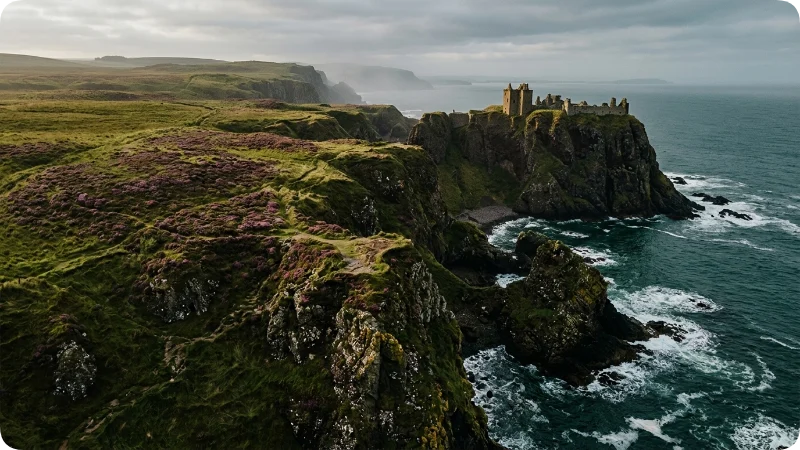
Some of the most memorable Scottish names are not the most obvious ones. They have unusual spellings, older histories, or sounds that stand out without feeling invented.
Eilidh
A beautiful choice for someone who loves soft, flowing names. Eilidh is a Scottish Gaelic feminine name often associated with Helen. Its appearance is distinctive, while its sound is gentle and approachable once learned.
Best for: A traditional Gaelic name with a delicate, modern aesthetic.
Ruairidh
This Gaelic form related to Rory has a spirited, historical feel. Its spelling may be unfamiliar internationally, but it carries a strong Scottish identity.
Best for: Parents who value linguistic heritage and distinctive spelling.
Greer
Greer is a Scottish surname derived given name associated with the surname Gregor. Short, sharp, and self assured, it fits the minimalist trend without feeling overly fashionable.
Best for: A strong, gender flexible contemporary name.
Ailsa
A Scottish name associated with Ailsa Craig, the island in the Firth of Clyde. Ailsa sounds airy and understated, with a familiar rhythm but less everyday familiarity than Isla in many places.
Best for: A nature linked name that feels elegant without being elaborate.
Tavish
A Scottish name related to Thomas through the traditional form Tàmhas. Tavish has an unusual, confident sound that feels suitable for both a modern baby name and a fictional character.
Best for: Someone seeking a recognizable but uncommon sounding masculine name.
More distinctive names to consider
- Brodie — a Scottish surname used as a given name; friendly and energetic.
- Morven — a Scottish name associated with a Highland place name tradition; atmospheric and understated.
- Innes — a Scottish surname and given name with a clean, polished sound.
- Lorna — a literary name introduced by R. D. Blackmore’s novel Lorna Doone; familiar in Scotland and beyond.
- Euan — a Scottish form of Ewan, with a simple, approachable style.
- Struan — a Scottish name linked to place names and Gaelic tradition; sturdy and distinctive.
- Nairn — a Scottish place and surname name with a crisp, modern sound.
- Ailpein — a Gaelic form associated with Alpin; historic and highly distinctive.
These are not all equally rare, and rarity changes by region and generation. Their value lies in their different sounds and cultural associations, not in a promise that no one else will use them.
Scottish Names Inspired by Nature and the Highlands
Scotland’s landscapes make a natural source of naming inspiration. Think deep lochs, heather covered hills, dramatic coastlines, mist, islands, and wide green valleys.
Some names below are directly associated with Scottish geography; others are Scottish used names whose aesthetic suits the landscape. That distinction matters: a name can evoke the Highlands without literally meaning “mountain” or “mist.”
Skye
Nature inspired · Unisex usage
Inspired by the Isle of Skye, this name feels open, adventurous, and modern. It is a natural fit for parents who love place names and want a short, easy to spell choice.
Lomond
Place inspired · Masculine leaning
Associated with Loch Lomond, the name feels broad, grounded, and outdoorsy. It suits a fictional Highland character or someone looking for a less conventional place derived name.
Iona
Island name · Feminine
Iona has a calm, almost meditative atmosphere. Its historical religious association adds depth beyond its soft sound and coastal beauty.
Heather
Plant name · Feminine
Heather refers to the flowering plant common in parts of Scotland. It has a classic nature name feel, with a nostalgic, earthy quality rather than a trendy or futuristic one.
Murray
Scottish surname · Traditionally masculine as a given name
Murray feels grounded, friendly, and quietly strong. It is an established Scottish surname and given name, making it a natural choice for a heritage inspired identity.
Best Scottish names by aesthetic
| Desired aesthetic | Names to explore |
| Soft and romantic | Isla, Iona, Eilidh, Fiona |
| Dark academia | Elspeth, Alasdair, Malcolm, Innes |
| Rugged and outdoorsy | Lachlan, Struan, Angus, Skye |
| Vintage and refined | Màiri, Duncan, Lorna, Stuart |
| Minimalist | Greer, Iain, Ailsa, Euan |
| Fantasy inspired | Ruairidh, Morven, Tavish, Sorcha |
| Regal and dignified | Alexander, Malcolm, Stuart, Elspeth |
These are editorial style groupings, not historical classifications. For example, a name may suit a fantasy character because of its sound even when it has no established mythological meaning.
Scottish Surnames With History and Style
Scottish surnames are useful for more than family history research. They can become first names, middle names, pen names, fictional clan names, or distinctive choices for a character.
Many Scottish surnames developed from family relationships, personal names, places, occupations, or inherited descriptions. The prefixes Mac and Mc commonly reflect a historical “son of” element, although surname histories can be more complicated than a literal modern translation.
| Scottish surname | Background or association | Naming impression |
| Campbell | A major historic Scottish surname; often linked to Gaelic Caimbeul | Established and dignified |
| MacLeod | Patronymic surname associated with the name Leod | Rugged and historic |
| Fraser | Long established Scottish surname | Polished and versatile |
| Douglas | Historic surname and place name | Strong and distinguished |
| Stewart | Associated with the royal Stewart dynasty | Traditional and regal |
| MacKenzie | Scottish surname with Gaelic roots | Modern and confident |
| Murray | Historic Scottish surname | Friendly and grounded |
| Gordon | Scottish surname and place name tradition | Formal and timeless |
| Sinclair | Historic Scottish surname with Norman origins | Elegant and literary |
| Ross | Scottish surname associated with a region in northern Scotland | Short and understated |
| Cameron | Scottish surname derived from a Gaelic nickname commonly interpreted as “crooked nose” | Contemporary and adaptable |
| Grant | Scottish surname with older Norman and Gaelic historical connections | Crisp and confident |
Scottish surnames that work as first names
If you like the surname first name trend, these choices are especially versatile:
- Fraser — professional, polished, and easy to imagine at any age.
- Cameron — familiar, adaptable, and historically used for multiple genders.
- Murray — friendly and traditional without sounding formal.
- Ross — concise, classic, and easy to pair with longer middle names.
- Greer — sleek and distinctive, with a contemporary edge.
- Douglas — substantial and timeless, especially for someone who likes traditional names.
One cultural note: a surname associated with a clan does not automatically establish clan membership or ancestry. If heritage is central to your choice, investigate your family history rather than relying on the name alone.
Scottish Names With Powerful Meanings
A meaningful name can offer something deeper than a beautiful sound. It might suggest wisdom, strength, peace, leadership, or a connection to family history.
The meanings below reflect established name histories where available. Personality descriptions and aesthetic labels are subjective impressions, not claims about the character of someone who bears the name.
| Name | Meaning or established association | Personality vibe | Nickname ideas |
| Callum | “Dove,” through Columba | Peaceful and dependable | Cal |
| Rory | “Red king” | Bold and spirited | Ro |
| Finlay | Gaelic name traditionally associated with fair/white and warrior | Adventurous and friendly | Finn |
| Duncan | Gaelic elements traditionally associated with brown and warrior | Strong and grounded | Dunc |
| Alexander | Greek origin; “defender of men” | Confident and timeless | Alex, Xander |
| Malcolm | Scottish Gaelic name traditionally interpreted as “devotee of Saint Columba” | Serious and distinguished | Mal, Mac |
| Fiona | Scottish literary name often associated with “fair” | Graceful and warm | Fi |
| Margaret | Greek origin through Latin; “pearl” | Classic and refined | Maggie, Maisie |
| Elspeth | Scottish form of Elizabeth; traditionally “God is my oath” | Literary and dignified | Elsie, Beth |
| Sorcha | Gaelic name associated with brightness or radiance | Luminous and distinctive | Sora |
How to choose a name by meaning
If the meaning is your starting point, use it as a filter rather than the only deciding factor.
- For strength: Duncan, Alexander, Alasdair.
- For peace and gentleness: Callum, Iona, Màiri.
- For leadership and confidence: Rory, Malcolm, Stuart.
- For elegance: Fiona, Elspeth, Catrìona.
- For a bright, spirited feeling: Sorcha, Finlay, Eilidh.
A useful naming test is to say the full name aloud, imagine it on a school register or professional introduction, and consider how it sounds alongside siblings’ names. A beautiful meaning matters most when the name also feels natural in everyday life.
Scottish Names for Boys, Girls, and Gender Neutral Choices
Scottish naming traditions include names with established gender associations, names used across genders, and surnames that have become flexible modern given names. Usage can differ across Scotland and other English speaking countries.
Boy names
- Alasdair — a traditional Gaelic form of Alexander; dignified and strong.
- Angus — an established Scottish name with ancient Gaelic roots; sturdy and unmistakable.
- Hamish — the Scottish form of James, with a warm, traditional feel.
- Lachlan — rugged and lyrical, with Gaelic Norse historical connections.
- Euan — concise and approachable, with a classic Scottish feel.
- Struan — distinctive, grounded, and strongly associated with Scottish naming.
- Tavish — unusual and characterful, with connections to the Thomas name family.
- Seumas — the Scottish Gaelic form of James; culturally distinctive.
Girl names
- Catrìona — elegant and traditional, with a clear Gaelic identity.
- Eilidh — gentle and lyrical, especially appealing to lovers of Gaelic names.
- Elspeth — literary, historic, and quietly aristocratic.
- Fiona — warm and familiar, with long standing Scottish literary associations.
- Màiri — a traditional Gaelic form of Mary.
- Morag — bold, unmistakably Scottish, and less conventional internationally.
- Sorcha — bright sounding and distinctive, with Gaelic and Irish usage.
- Ailsa — understated and nature linked through its Scottish place name association.
Scottish gender neutral and surname style names
| Name | Why it works | Style |
| Skye | Place inspired and easy to spell | Natural, modern |
| Greer | Short and confident | Minimalist |
| Cameron | Established across genders in modern usage | Familiar, adaptable |
| Rowan | Nature inspired and widely used across genders | Gentle, contemporary |
| Blair | Scottish surname and place name association | Sleek, polished |
| Ainsley | Scottish surname derived given name | Friendly, versatile |
| Murray | Historic Scottish surname used as a given name | Classic, grounded |
Not every name in this final group is exclusively Scottish in origin, and gender neutral usage varies by country. These are good options if you want a Scottish connection without a strongly gendered sound.
Scottish Names for Fantasy Characters and Fiction
Scottish names work particularly well in fantasy, historical fiction, role playing games, and character creation because their range of sounds can suggest very different personalities.
A Gaelic name can lend authenticity to a character with Scottish cultural roots. A Scottish surname can establish a family or regional identity. A place inspired name can create a sense of landscape without requiring invented lore.
| Character type | Suggested names | Why they fit |
| Highland warrior | Duncan, Angus, Alasdair | Solid, traditional sounds |
| Enigmatic heroine | Sorcha, Morven, Elspeth | Distinctive and atmospheric |
| Noble heir | Malcolm, Stuart, Fraser | Historic and dignified |
| Adventurous protagonist | Lachlan, Rory, Finlay | Energetic and memorable |
| Forest or island spirit | Skye, Iona, Ailsa | Place linked, lyrical sounds |
| Dark academia character | Innes, Greer, Sinclair | Refined and literary |
| Modern fantasy hero | Tavish, Brodie, Cameron | Accessible but characterful |
How to make a fictional Scottish name believable
- Choose a historical or linguistic foundation. Decide If the character’s background is Gaelic speaking, Scots speaking, or connected to another Scottish community.
- Match the name to the setting. A contemporary Scottish teenager, a medieval noble, and a fantasy clan leader may need very different naming styles.
- Use surnames thoughtfully. MacLeod, Campbell, and Fraser are real family names, not generic fantasy decorations.
- Check pronunciation. Unfamiliar Gaelic spelling can be part of a character’s identity, but readers should have a reasonable way to learn the sound.
- Avoid invented meanings. If you create a new name, describe it as fictional rather than assigning it a false Gaelic translation.
For gaming usernames or fantasy aliases, you have more freedom to combine Scottish inspired sounds. For a real baby or a character whose heritage is central to the story, historical and linguistic accuracy deserves more attention.
Scottish Names and Their Modern Popularity
Scottish names move between tradition and contemporary fashion. Some retain a distinctly regional character, while others have become familiar internationally through books, films, celebrities, and changing baby name tastes.
Scotland’s official 2025 birth statistics offer a useful snapshot: Noah ranked first for boys, while Freya ranked first for girls. Isla also remained among the leading girls’ names, and Rory and Finlay appeared in the boys’ top ten.
Three broader trends are worth considering when choosing a Scottish name.
- Short, natural names: Isla, Skye, and Rory appeal to people who prefer names that are easy to say and spell.
- Vintage revival: Elspeth, Duncan, and traditional forms such as Màiri offer a connection to older naming traditions.
- Distinctive cultural spellings: Eilidh, Ruairidh, and Alasdair appeal to people seeking a more direct connection to Scottish Gaelic.
These are style observations, not predictions that a particular name will become more popular. If avoiding a common name matters to you, consult official statistics for the country where the child will be registered.
Traditional versus modern Scottish names
| If you prefer… | Consider… | Why |
| Familiar and versatile | Isla, Rory, Cameron | Easy to recognize in many English speaking settings |
| Historic and traditional | Angus, Duncan, Màiri | Strong connections to Scottish naming history |
| Distinctive Gaelic identity | Eilidh, Ruairidh, Seumas | Retain recognizable Gaelic forms |
| Soft and elegant | Fiona, Iona, Ailsa | Gentle sounds and refined impressions |
| Strong and surname inspired | Fraser, Blair, Greer | Crisp sounds and flexible contemporary usage |
How to Choose the Right Scottish Name
A list of beautiful names is a useful starting point, but the final decision usually comes down to how a name works in real life.
1. Decide what Scottish means to you
Are you honoring family ancestry, exploring Scottish Gaelic, choosing a name inspired by the Highlands, or simply drawn to the sound? These are all valid reasons, but they lead to different choices.
For direct Gaelic heritage, Eilidh or Seumas may be more meaningful than a name that is merely associated with a Scottish location.
2. Balance meaning and sound
A name might have a wonderful meaning but feel awkward with your surname. Try saying the first, middle, and last names together, including any initials.
For example, Isla Fraser has a light, flowing rhythm, while Duncan Fraser feels more grounded and traditional. Neither is inherently better; the effect depends on your preferences.
3. Consider pronunciation and nicknames
If you love Eilidh or Ruairidh, think about If you are comfortable explaining the pronunciation occasionally. That is not a reason to avoid a Gaelic name, but it is worth considering.
Also check If you like its natural nicknames. Lachlan may become Lachie, Finlay may become Finn, and Elspeth may become Elsie.
4. Look beyond trendy aesthetics
A name that fits a dark academia mood board or a romantic Pinterest collection can still be a wonderful choice. Just remember that an aesthetic is not the same as an etymology or cultural tradition.
Likewise, do not feel obliged to choose a rare name. A familiar name with a genuine family connection may be more meaningful than an unusual name selected only for uniqueness.
5. Treat lucky attributes as personal beliefs
Some baby name lists attach lucky numbers, gemstones, colors, weekdays, or zodiac signs to individual names. These assignments are not generally verifiable facts about a name’s historical origin.
If such associations matter to you, choose a particular numerology or astrological tradition and apply it consistently. Do not assume a single universally accepted lucky number or gemstone exists for every Scottish name.
Frequently Asked Questions About Scottish Names
What are the most popular Scottish names?
Scottish naming includes both traditional names and internationally popular choices. In Scotland’s 2025 birth statistics, Noah was the most popular boys’ name and Freya was the most popular girls’ name. Isla, Rory, and Finlay also ranked highly.
What are some authentic Scottish Gaelic names?
Examples include Eilidh, Màiri, Alasdair, Seumas, Iain, Aonghas, and Ruairidh. These names belong to Scottish Gaelic naming traditions, although some have English equivalents or anglicized forms.
What is a beautiful Scottish name for a girl?
Isla, Iona, Fiona, Ailsa, and Eilidh are lovely choices. Isla feels modern and understated, Iona has a peaceful island association, and Eilidh offers a more distinctive Gaelic identity.
What is a strong Scottish name for a boy?
Angus, Duncan, Alasdair, Lachlan, and Malcolm are strong options. Duncan and Malcolm have historic associations, while Lachlan feels adventurous and Alasdair retains a distinctly Gaelic form.
What Scottish names are rare or unusual?
Eilidh, Ruairidh, Aonghas, Struan, and Catrìona may feel unusual to people unfamiliar with Scottish Gaelic. Actual rarity depends on the location and generation, so check local records if rarity is a priority.
Are Scottish and Irish names the same?
No. Scottish Gaelic and Irish are closely related Celtic languages, and some names appear in both traditions. However, their spellings, pronunciations, histories, and regional associations can differ. It is best to check the specific name rather than assume that a Gaelic looking name is exclusively Scottish.
What do Mac and Mc mean in Scottish surnames?
Mac and Mc commonly reflect a historical element meaning “son of.” They appear in many Scottish surnames, including MacLeod and MacKenzie. However, surname origins vary, and the prefix alone does not prove a person’s ancestry or clan affiliation.
Do Scottish names have lucky numbers or gemstones?
There is no universal, historically established lucky number, gemstone, color, or weekday for every Scottish name. Such associations belong to particular numerology, astrological, or modern naming traditions and should be presented as beliefs rather than verified facts.
Conclusion
Scottish names offer a wonderful combination of history, linguistic richness, natural beauty, and individuality. If you prefer the gentle elegance of Isla, the warmth of Callum, the boldness of Angus, or the distinctive Gaelic character of Eilidh, there is a name to suit almost every style.
Start by choosing the feeling you want the name to convey, then explore its meaning, cultural background, pronunciation, and compatibility with your surname. If heritage matters to you, take the extra step of learning the name’s actual history.
The most memorable Scottish name is not simply one that sounds beautiful. It is one that feels meaningful, fits its purpose, and remains a name you are happy to say for years to come.

Sophia explores the history, global origins, and deep etymology behind popular and rare names. She curates beautiful, meaningful baby name guides and historical name lists for families and researchers. She also enjoys learning new languages and traveling.