
Scientific names unlock a hidden language of nature. If you’re a student, wildlife enthusiast, pet lover, researcher, writer, or simply curious about the animal kingdom, understanding scientific names helps you see animals through a new lens. These names are more than labels—they tell stories about evolution, relationships, geography, and discovery.
From the majestic lion to the tiny honeybee, every known animal has a unique scientific identity recognized worldwide. Unlike common names that vary across languages and regions, scientific names provide one universal system for identifying species.
Featured Snippet
Scientific names are internationally recognized twopart Latin or Latinized names used to identify animal species. The first word indicates the genus, and the second identifies the species. For example, the scientific name of a tiger is Panthera tigris, while the domestic dog is Canis lupus familiaris.
What Are Scientific Names for Animals?
Scientific names are standardized names used by scientists to identify and classify living organisms. They follow a system called binomial nomenclature, developed by Swedish botanist and zoologist Carl Linnaeus in the 18th century.
Each animal receives a twopart name:
| Part | Meaning | Example |
| Genus | Group of closely related species | Panthera |
| Species | Specific organism within that genus | leo |
Together, they form the scientific name:
Lion = Panthera leo
This system ensures that scientists across the world refer to the same animal regardless of language or local naming traditions.
Quick Overview of Scientific Naming
| Common Animal | Scientific Name | Animal Group |
| Lion | Panthera leo | Mammal |
| Tiger | Panthera tigris | Mammal |
| Elephant | Loxodonta africana | Mammal |
| Wolf | Canis lupus | Mammal |
| Domestic Dog | Canis lupus familiaris | Mammal |
| Domestic Cat | Felis catus | Mammal |
| Horse | Equus caballus | Mammal |
| Bald Eagle | Haliaeetus leucocephalus | Bird |
| King Cobra | Ophiophagus hannah | Reptile |
| Great White Shark | Carcharodon carcharias | Fish |
Most Famous Scientific Names for Animals

Some scientific names have become nearly as recognizable as the animals themselves.
| Animal | Scientific Name | Meaning & Interesting Insight |
| Lion | Panthera leo | Symbolizes strength, courage, and royalty |
| Tiger | Panthera tigris | Associated with power and wilderness |
| Leopard | Panthera pardus | Known for adaptability and stealth |
| Cheetah | Acinonyx jubatus | Famous for speed and agility |
| Gray Wolf | Canis lupus | Represents loyalty and social intelligence |
| Red Fox | Vulpes vulpes | Symbol of cleverness and adaptability |
| Giant Panda | Ailuropoda melanoleuca | A conservation icon worldwide |
| Polar Bear | Ursus maritimus | Master of Arctic survival |
| Gorilla | Gorilla gorilla | One of humanity’s closest relatives |
| Chimpanzee | Pan troglodytes | Known for advanced intelligence |
These names frequently appear in documentaries, wildlife books, educational resources, and conservation campaigns.
Scientific Names of Popular Mammals
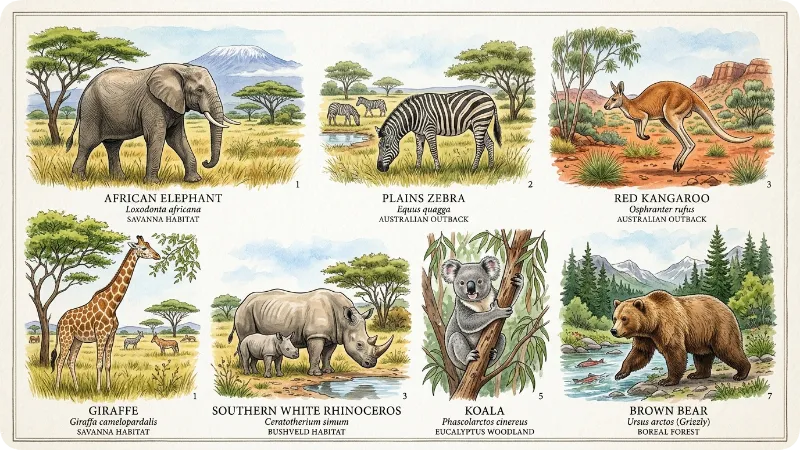
Mammals often capture human imagination because of their intelligence, social behaviors, and emotional expressiveness.
| Mammal | Scientific Name |
| African Elephant | Loxodonta africana |
| Asian Elephant | Elephas maximus |
| Giraffe | Giraffa camelopardalis |
| Zebra | Equus quagga |
| Hippopotamus | Hippopotamus amphibius |
| Rhinoceros | Diceros bicornis |
| Brown Bear | Ursus arctos |
| Koala | Phascolarctos cinereus |
| Kangaroo | Macropus giganteus |
| Sloth | Bradypus variegatus |
The Vibe of Mammalian Names
Many mammal scientific names sound elegant and memorable because they are rooted in Latin and Greek traditions. Names like Ursus arctos and Panthera leo carry a timeless, almost mythical energy that wildlife enthusiasts often admire.
Scientific Names of Birds
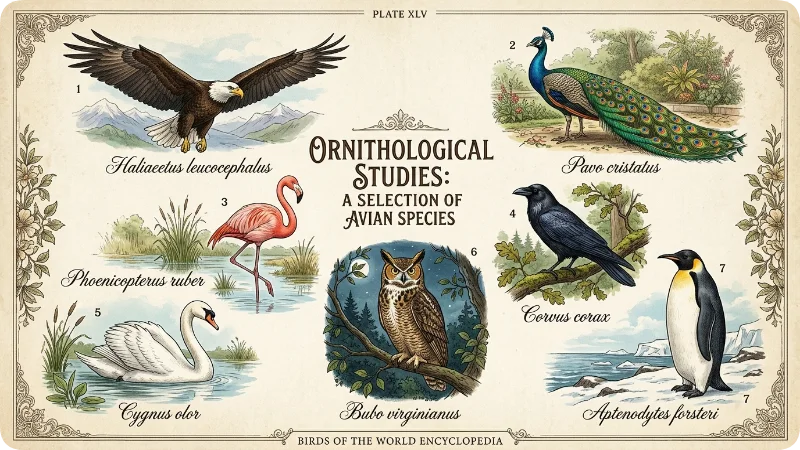
Bird names often reflect beauty, flight, habitat, or distinctive physical traits.
| Bird | Scientific Name |
| Bald Eagle | Haliaeetus leucocephalus |
| Peregrine Falcon | Falco peregrinus |
| Barn Owl | Tyto alba |
| Peacock | Pavo cristatus |
| Ostrich | Struthio camelus |
| Emperor Penguin | Aptenodytes forsteri |
| Flamingo | Phoenicopterus roseus |
| Crow | Corvus brachyrhynchos |
| Raven | Corvus corax |
| Swan | Cygnus olor |
Why Bird Names Sound So Distinctive
Scientific bird names frequently evoke elegance and movement. Names such as Cygnus olor and Phoenicopterus roseus have a sophisticated rhythm that mirrors the graceful appearance of the animals themselves.
Scientific Names of Reptiles and Amphibians
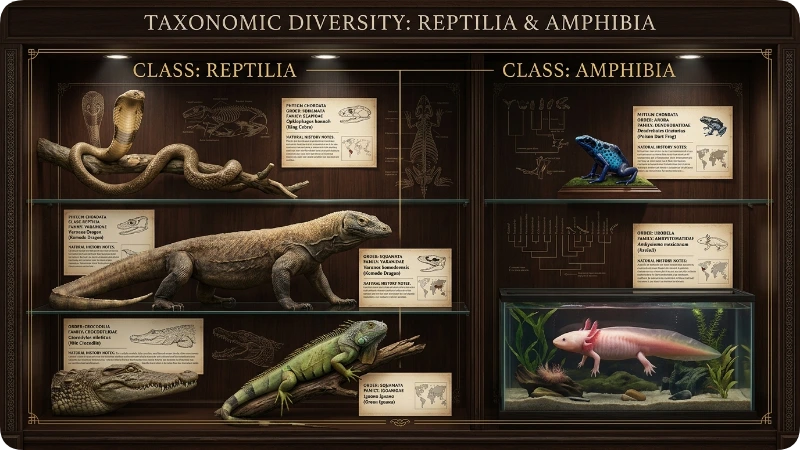
These ancient creatures showcase some of the most intriguing scientific names in zoology.
| Animal | Scientific Name |
| King Cobra | Ophiophagus hannah |
| Komodo Dragon | Varanus komodoensis |
| Green Iguana | Iguana iguana |
| American Alligator | Alligator mississippiensis |
| Nile Crocodile | Crocodylus niloticus |
| Poison Dart Frog | Dendrobates tinctorius |
| Bullfrog | Lithobates catesbeianus |
| Axolotl | Ambystoma mexicanum |
Dark and Ancient Aesthetic
Many reptile names feel mysterious and powerful. Terms like Ophiophagus hannah carry a dramatic, almost fantasy inspired quality that appeals to wildlife writers, gamers, and nature enthusiasts alike.
Scientific Names of Marine Animals
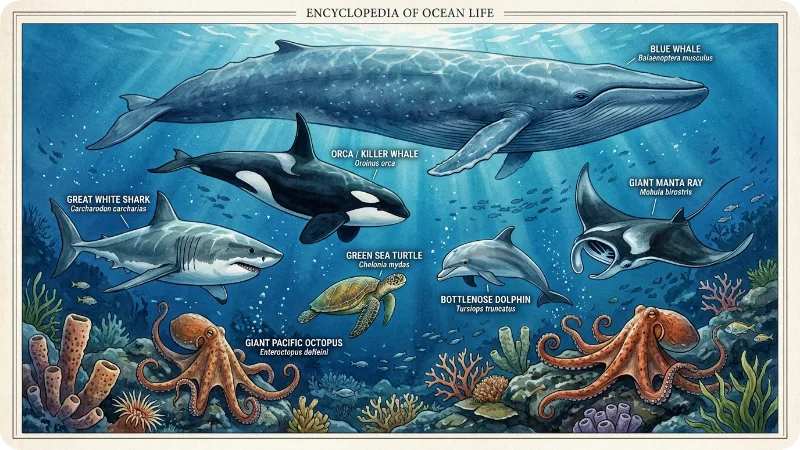
The ocean contains some of Earth’s most extraordinary species.
| Marine Animal | Scientific Name |
| Blue Whale | Balaenoptera musculus |
| Orca | Orcinus orca |
| Great White Shark | Carcharodon carcharias |
| Bottlenose Dolphin | Tursiops truncatus |
| Giant Octopus | Enteroctopus dofleini |
| Sea Turtle | Chelonia mydas |
| Manta Ray | Mobula birostris |
| Walrus | Odobenus rosmarus |
OceanInspired Naming Appeal
Marine scientific names often sound grand, alluring, and adventurous. Their complexity reflects the mystery and vastness of ocean ecosystems.
Scientific Names of Insects
Though small, insects make up most known animal species on Earth.
| Insect | Scientific Name |
| Honey Bee | Apis mellifera |
| Monarch Butterfly | Danaus plexippus |
| Ladybug | Coccinella septempunctata |
| Housefly | Musca domestica |
| Praying Mantis | Mantis religiosa |
| Firefly | Photinus pyralis |
| Dragonfly | Anax junius |
| Mosquito | Aedes aegypti |
Tiny Creatures, Memorable Names
Insect scientific names are often surprisingly beautiful and poetic, especially among butterflies, dragonflies, and beetles.
Why Scientific Names Matter
Scientific names provide benefits that common names cannot.
Universal Communication
Researchers worldwide can identify the same species without confusion.
Greater Accuracy
Many animals have dozens of local names. Scientific naming removes ambiguity.
Evolutionary Understanding
Scientific classification reveals relationships between species.
Conservation and Wildlife Protection
Environmental organizations use scientific names to track endangered populations accurately.
Educational Value
Students gain a deeper understanding of biology, ecology, and biodiversity.
How to Read Scientific Names Correctly
Follow these simple rules:
- The genus name is capitalized.
- The species name is lowercase.
- Both words are italicized.
- Scientific names are usually derived from Latin or Greek.
Correct: Panthera leo
Incorrect: Panthera Leo
Incorrect: panthera leo
Learning these conventions makes scientific literature easier to understand.
Interesting Scientific Names with Unique Meanings
| Scientific Name | Animal | Interesting Fact |
| Ophiophagus hannah | King Cobra | Means “snake eater” |
| Ursus maritimus | Polar Bear | Means “sea bear” |
| Ailuropoda melanoleuca | Giant Panda | Refers to blackandwhite coloration |
| Haliaeetus leucocephalus | Bald Eagle | Means “whiteheaded sea eagle” |
| Apis mellifera | Honey Bee | Means “honeybearing bee” |
These names often describe appearance, behavior, habitat, or distinctive characteristics.
Scientific Names by Animal Category
Powerful Predators
- Panthera leo (Lion)
- Panthera tigris (Tiger)
- Canis lupus (Wolf)
- Orcinus orca (Orca)
- Carcharodon carcharias (Great White Shark)
Gentle Giants
- Loxodonta africana (African Elephant)
- Balaenoptera musculus (Blue Whale)
- Giraffa camelopardalis (Giraffe)
Cute and Beloved Species
- Ailuropoda melanoleuca (Giant Panda)
- Phascolarctos cinereus (Koala)
- Felis catus (Domestic Cat)
Rare and Fascinating Creatures
- Ambystoma mexicanum (Axolotl)
- Varanus komodoensis (Komodo Dragon)
- Chelonia mydas (Green Sea Turtle)
Frequently Asked Questions
What is a scientific name in biology?
A scientific name is the internationally accepted Latinized name used to identify a species. It consists of a genus and species designation.
Why do animals have scientific names?
Scientific names create a universal system that eliminates confusion caused by multiple common names.
Who invented scientific naming?
The modern system of binomial nomenclature was developed by Carl Linnaeus in the 18th century.
Are scientific names always Latin?
Most are Latin or Latinized forms, though many originate from Greek words or honor people and places.
What is the scientific name of a dog?
The domestic dog is classified as Canis lupus familiaris.
What is the scientific name of a cat?
The domestic cat is known scientifically as Felis catus.
Why are scientific names italicized?
Italicization distinguishes scientific names from ordinary text and follows international biological conventions.
Conclusion
Scientific names for animals are far more than technical labels. They connect us to the history of discovery, reveal evolutionary relationships, and provide a universal language for understanding Earth’s incredible biodiversity. If you’re learning biology, creating wildlife content, researching species, or simply satisfying your curiosity, scientific names offer a fascinating gateway into the natural world.
From the regal Panthera leo to the graceful Cygnus olor and the powerful Orcinus orca, every scientific name tells a story. Learning them transforms ordinary animal knowledge into a deeper appreciation of life on our planet.

Emma helps authors, screenwriters, and gamers find the perfect names for their fictional characters. She analyzes historical trends and linguistic styles to craft names that carry deep meaning. When she isn’t writing, she loves plotting her next fantasy novel at a local café.