PCSK9 inhibitors are a group of cholesterol lowering medicines designed to help people manage high LDL cholesterol, often called “bad cholesterol.” Their names may sound technical, but understanding the differences between these medications can make them easier to recognize and discuss with a healthcare professional.
If you are researching PCSK9 inhibitor drug names, comparing brand names with generic names, or learning which medicines belong to this category, this guide offers a clear overview.
What Are PCSK9 Inhibitors?
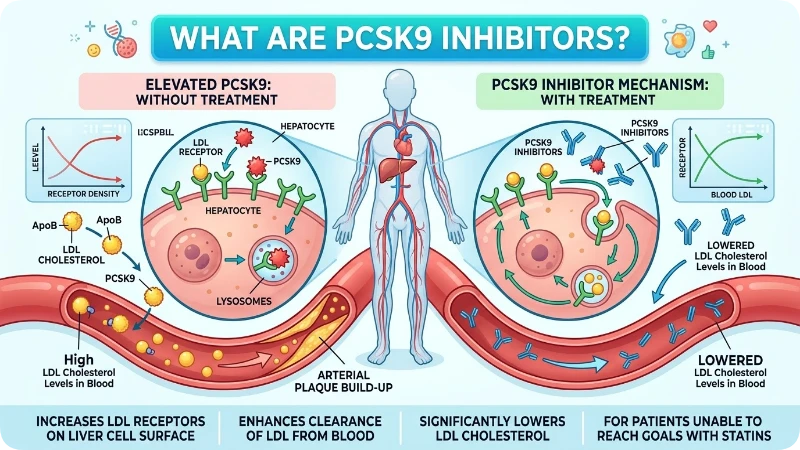
PCSK9 inhibitors are prescription medications that help lower LDL cholesterol by allowing the liver to remove more cholesterol from the bloodstream.
They are particularly useful for certain people with familial hypercholesterolemia, established cardiovascular disease, or persistently high LDL cholesterol despite other treatments.
The two main monoclonal antibody PCSK9 inhibitors are Repatha (evolocumab) and Praluent (alirocumab). Leqvio (inclisiran) is another PCSK9 targeting medicine that works through RNA interference.
Complete List of PCSK9 Inhibitor Names
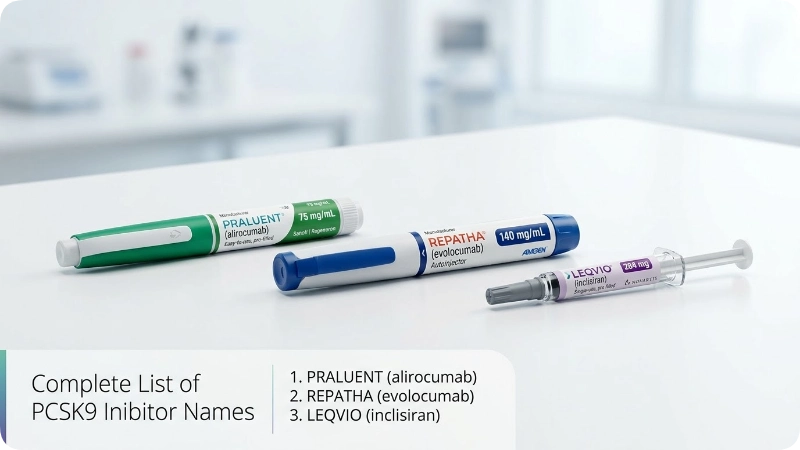
Here is a quick reference to the major approved PCSK9 targeting medications.
| Brand Name | Generic Name | Drug Type |
| Repatha | Evolocumab | Monoclonal antibody |
| Praluent | Alirocumab | Monoclonal antibody |
| Leqvio | Inclisiran | Small interfering RNA (siRNA) |
These medicines differ in their mechanisms, dosing schedules, approved uses, and availability by country.
1. Repatha (Evolocumab)
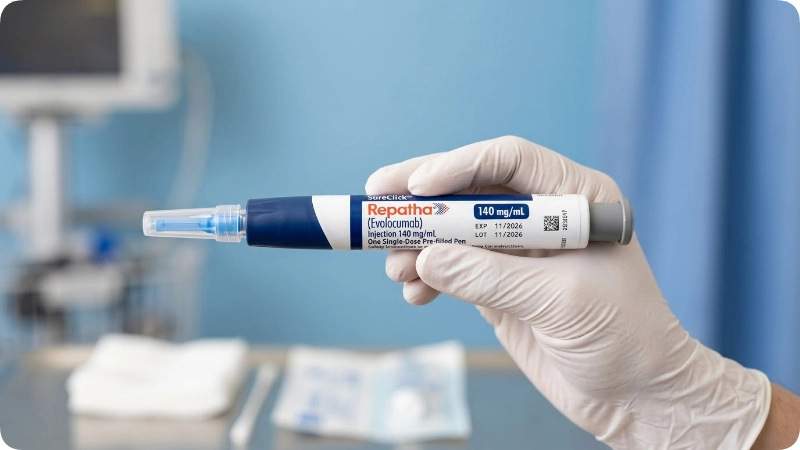
Brand name: Repatha Generic name: Evolocumab Drug class: PCSK9 monoclonal antibody Pronunciation: eh VOH loh kyoo mab
Repatha is an injectable medication that blocks the PCSK9 protein, helping the liver clear more LDL cholesterol from the blood.
Key characteristics
- Used to lower LDL cholesterol in eligible patients.
- Available as an injection.
- Common dosing schedules include every two weeks or once monthly, depending on the prescribed regimen.
- May be used alongside statins or other cholesterol lowering therapies.
Personality and naming impression: Repatha has a modern pharmaceutical brand identity. Its name is distinctive and relatively easy to recognize in medical discussions.
2. Praluent (Alirocumab)
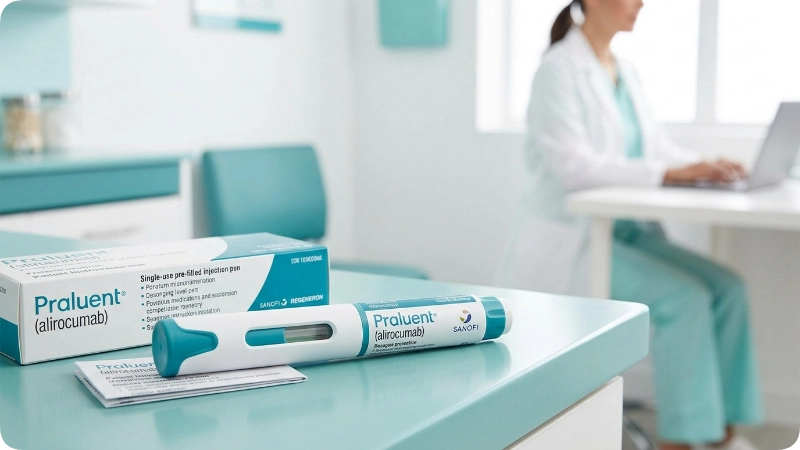
Brand name: Praluent Generic name: Alirocumab Drug class: PCSK9 monoclonal antibody Pronunciation: al ih ROK yoo mab
Praluent is another injectable PCSK9 inhibitor that helps reduce LDL cholesterol by preventing PCSK9 from interfering with LDL receptors in the liver.
Key characteristics
- Prescribed for certain patients with high LDL cholesterol.
- Available in prefilled injection devices.
- Commonly administered every two weeks, with some regimens allowing monthly dosing.
- Can be combined with other lipid lowering medicines.
Naming impression: Praluent has a polished, clinical sounding pharmaceutical name, while its generic name identifies the active drug.
3. Leqvio (Inclisiran)
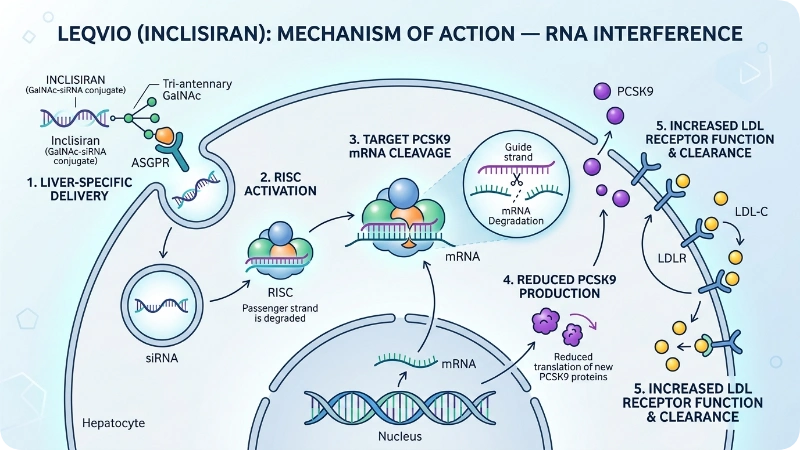
Brand name: Leqvio Generic name: Inclisiran Drug class: Small interfering RNA (siRNA) therapy
Leqvio differs from Repatha and Praluent because it reduces the production of PCSK9 in the liver rather than directly neutralizing circulating PCSK9.
Key characteristics
- Administered by a healthcare professional.
- Given initially, again at three months, and then every six months.
- Designed for long term LDL cholesterol management.
- May be prescribed alongside other cholesterol treatments.
Its less frequent maintenance dosing makes it a distinct option for eligible patients.
PCSK9 Inhibitors vs. Other Cholesterol Medicines
Not every cholesterol lowering medication is a PCSK9 inhibitor. Understanding the distinction helps avoid confusion when researching drug names.
| Medication | Drug Category |
| Repatha | PCSK9 monoclonal antibody |
| Praluent | PCSK9 monoclonal antibody |
| Leqvio | PCSK9 targeting siRNA |
| Lipitor (atorvastatin) | Statin |
| Crestor (rosuvastatin) | Statin |
| Zetia (ezetimibe) | Cholesterol absorption inhibitor |
| Nexletol (bempedoic acid) | ATP citrate lyase inhibitor |
Statins and ezetimibe work through different pathways. They are not members of the PCSK9 inhibitor drug class.
How Do PCSK9 Inhibitors Work?
PCSK9 is a protein involved in regulating LDL receptors in the liver.
These receptors help remove LDL cholesterol from the bloodstream. When PCSK9 interferes with them, fewer receptors remain available to clear cholesterol.
PCSK9 targeting medications help interrupt this process.
- Repatha and Praluent: Block the PCSK9 protein.
- Leqvio: Reduces the liver’s production of PCSK9.
The result is increased LDL receptor availability and lower LDL cholesterol levels.
Frequently Asked Questions
What are the names of PCSK9 inhibitors?
The three major PCSK9 targeting medication names are Repatha (evolocumab), Praluent (alirocumab), and Leqvio (inclisiran).
What is the most commonly known PCSK9 inhibitor?
Repatha and Praluent are widely recognized PCSK9 monoclonal antibody medications. Which one is appropriate depends on individual medical circumstances.
Is Leqvio a PCSK9 inhibitor?
Leqvio is a PCSK9 targeting cholesterol lowering medicine. It uses small interfering RNA to reduce PCSK9 production in the liver.
Are Repatha and Praluent the same drug?
No. Both target PCSK9, but they contain different active ingredients: evolocumab and alirocumab, respectively.
Are PCSK9 inhibitors better than statins?
They are not universally better. Statins remain a standard treatment for many patients, while PCSK9 targeting medicines may be added or considered, when additional LDL reduction is needed.
Are PCSK9 inhibitors pills or injections?
The currently established medicines discussed here are administered by injection rather than taken as conventional oral tablets.
Conclusion
PCSK9 inhibitor names become easier to remember when grouped by brand and generic name:
- Repatha — Evolocumab
- Praluent — Alirocumab
- Leqvio — Inclisiran
Although all three target the PCSK9 pathway, they work differently and have distinct dosing schedules. A healthcare professional can determine which option is appropriate based on cholesterol levels, cardiovascular risk, medical history, and treatment goals.

Sophia explores the history, global origins, and deep etymology behind popular and rare names. She curates beautiful, meaningful baby name guides and historical name lists for families and researchers. She also enjoys learning new languages and traveling.